Join our Email List
Series
Volume 30
Environment in History: International Perspectives
See Related
History JournalsEmail Newsletters
Sign up for our email newsletters to get customized updates on new Berghahn publications.
Empire of Tropicality
Climatic Determinism in US-American Medicine and Public Health, 1898–1924
Julia Engelschalt
262 pages, 18 b&w illus., bibliog., index
ISBN 978-1-80768-217-0 $135.00/£104.00 / Hb / Published (May 2027)
eISBN 978-1-80768-218-7 eBook
Reviews
... [A] genuinely original contribution to the study of medical and environmental history. It centers the discursive production of the American tropics by medical and public health experts. Blending archival research with theoretical argumentation, this work sheds light on tropicality as an inherently imperial form of medical environmentalism which played a major role in the development of medicine and public health in the early twentieth-century United States. Sarah Ehlers, Deutsches Museum
Description
Bridging medical, environmental, and global history, Empire of Tropicality explores the role of medical expertise in shaping American perceptions of geography, climate, and empire between the Spanish-American War of 1898 and the mid-1920s. It sheds light on the ways in which public health officials of American empire produced knowledge about the newly conquered tropical territories of Cuba, Puerto Rico, Panama, and the Philippines, helping to define how these places were understood in relation to the United States. Moreover, it demonstrates how climate-deterministic ideas about “the tropics” became embedded in early twentieth-century public health campaigns targeting the Southern United States.
Julia Engelschalt is Assistant Professor in Modern History at the Technical University of Darmstadt, Germany. She holds a PhD in history from Bielefeld University. Her doctoral thesis, upon which this book is based, was awarded the Georg Uschmann Prize 2025 in the History of Science and Medicine of the German National Academy of Sciences Leopoldina. Her research interests are located at the intersection of environmental, medical, global and imperial history, the history of ideas, and the history of nutrition and hunger.
Subject: History: 20th Century to PresentEnvironmental Studies (General)Colonial History
Area: Latin America and the CaribbeanNorth America
Contents
Of Related Interest...

Civilizing Nature
National Parks in Global Historical Perspective
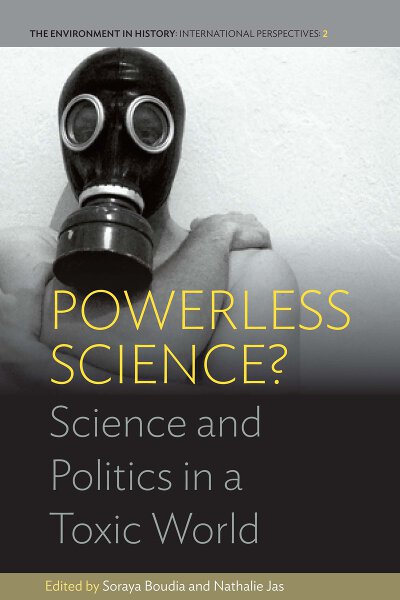
Powerless Science?
Science and Politics in a Toxic World
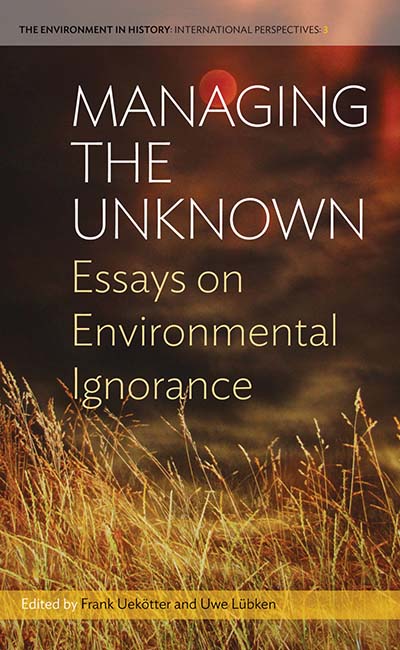
Managing the Unknown
Essays on Environmental Ignorance