Capacity Building in Ethnographic Comparison

by Rachel Douglas-Jones and Justin Shaffner, editors of Hope and Insufficiency: Capacity Building in Ethnographic Comparison
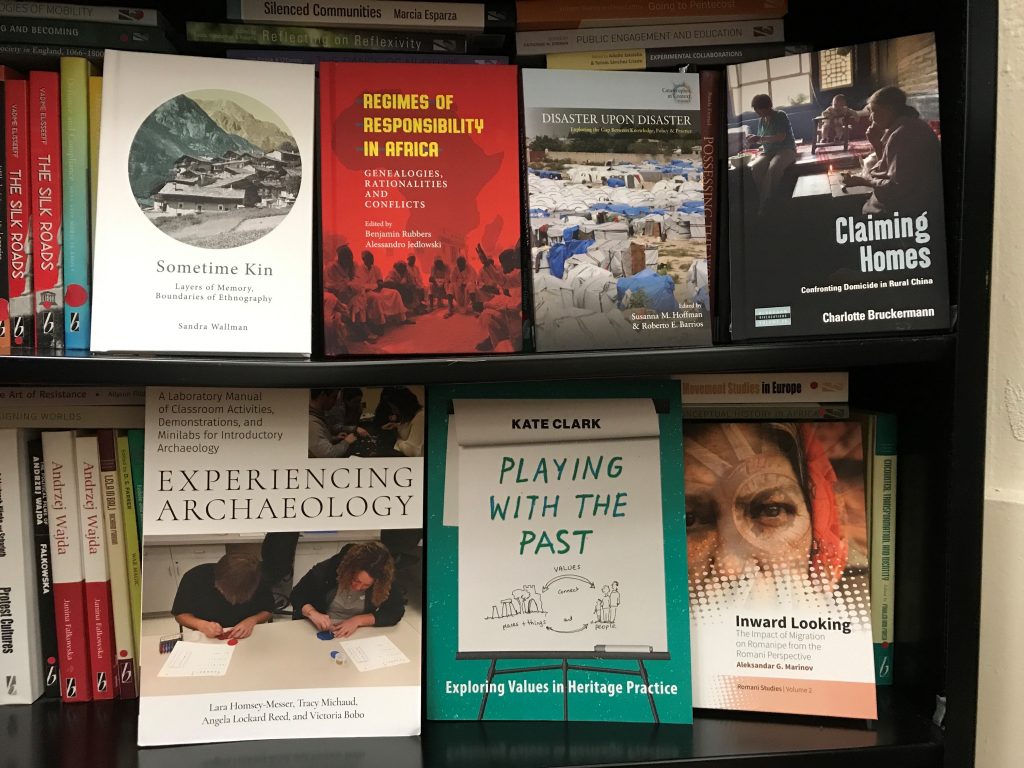
We open our new edited collection Hope and Insufficiency by traveling the world in workshops. Three capacity building events, ranging from Paramaribo to Addis Ababa, sketched as thumbnails, form our introductory paragraph. These three events, drawn from thousands, simply demonstrate the breadth of topics to which it is applied. Capacity building, or its more recent iteration as capacity development, is, we argue, both ubiquitous and under-theorised within the social sciences. The title of our book identifies characteristics of capacity building’s intervention: as we put it, hope and insufficiency interplay in a way that makes the idea of capacity building persuasive.

Continue reading “Capacity Building in Ethnographic Comparison”

Excerpt: Austrian “Gypsies” in the Italian archives

Paola Trevisan


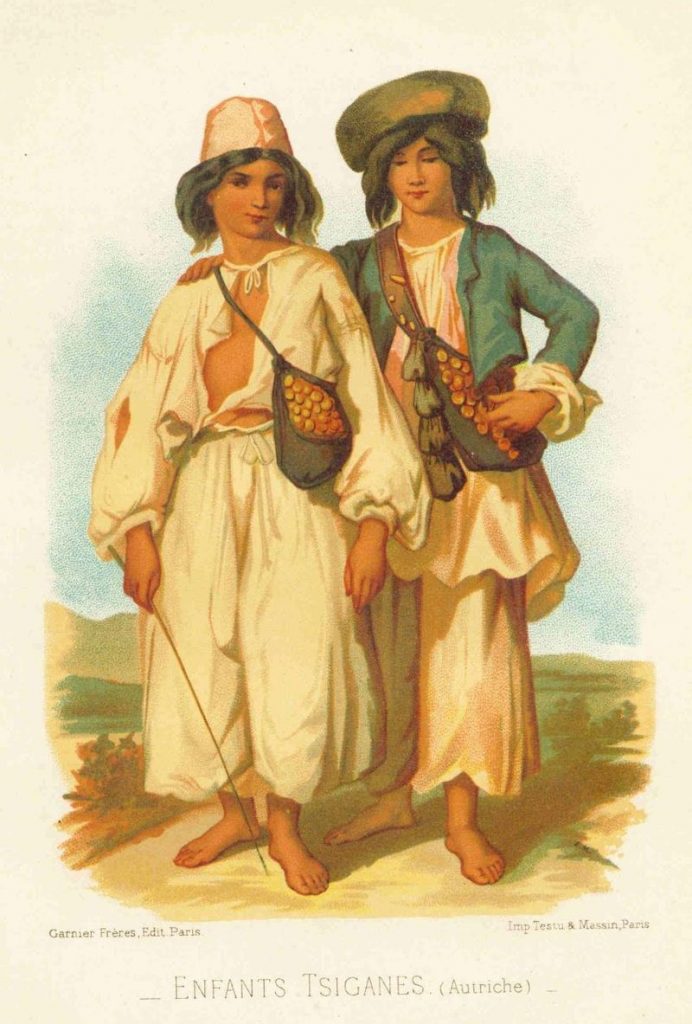
In the spirit of Gypsy, Roma, Traveller History Month in June, we invite you to read the following excerpt from “Austrian ‘Gypsies’ in the Italian archives: Historical ethnography on multiple border crossings at the beginning of the twentieth century” by Paola Trevisan.

This article is featured in Focaal: Journal of Global and Historical Anthropology, a part of the Berghahn Open Anthro collection of open-access journals.

Pictured: Chromolithograph entitled Enfants Tsiganes (Autriche) [Gipsy Children, Austria]; published by Garnier, Paris, printed by Testu & Massin, Paris (Public Domain)

Continue reading “Excerpt: Austrian “Gypsies” in the Italian archives”

Marcel Mauss, a gift to the social sciences

mauss

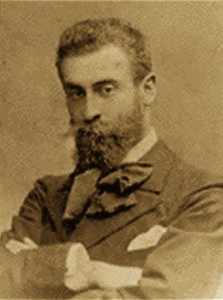
Marcel Mauss (May 10, 1872—Feb. 10, 1950), celebrated author of The Gift and nephew of Émile Durkheim, was a French sociologist and anthropologist whose contributions include a highly original comparative study of the relation between forms of exchange and social structure. His views on the theory and method of ethnology are thought to have influenced many eminent social scientists.

In the spirit of his birthday, we are delighted to present volumes from the Publications of the Durkheim Press series, with special attention to The Nature of Sociology and Techniques, Technology, and Civilization. Recently released in paperback, these volumes offer students an ideal introduction to Mauss’s writings and theories.


Continue reading “Marcel Mauss, a gift to the social sciences”

Karl Marx as a Young Journalist

By Rolf Hosfeld

HosfeldKarl

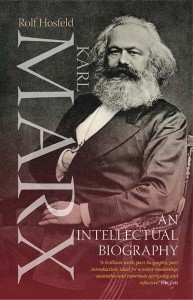
Excerpted by Karl Marx: An Intellectual Biography by Rolf Hosfeld, Translated from the German by Bernard Heise

Karl Marx was born May 5, 1818. As a young man he was a journalist and an editor for Rheinische Zeitung, a liberal-socialist newspaper published in Germany. The paper was previously edited by Adolf Friedrich Rutenberg, who favored opinionated feuilletons, before Marx replaced him and gained recognition for his practical, evidence-based approach.

Moses Hess was the first communist Karl Marx personally encountered. Both were from the Rhineland, came from bourgeois families, and were under the influence of Hegel’s philosophy. Marx made an “impos­ing impression” on Hess upon their first acquaintance in Septem­ber 1841. After their initial encounter Hess had the sense of having met the “greatest, perhaps the only real philosopher now living,” one who would soonHess was referring here to the lecture halls of Bonn Univer­sity“draw upon him the eyes of Germany.”
Continue reading “Karl Marx as a Young Journalist”

Most Popular #BerghahnOpenAnthro Articles of 2020

Berghahn Open Anthro is a subscribe-to-open model being piloted by Berghahn Books in partnership with Libraria, a group of researchers who are also supporting a number of other publishers hoping to adopt this model should the pilot prove successful. This model was developed in part through a 2019 ground-breaking collaborative meeting between publishers, libraries, funders, and OA experts.

Continue reading “Most Popular #BerghahnOpenAnthro Articles of 2020”

The Children of Gregoria

Dogme Ethnography of a Mexican Family

Now available, THE CHILDREN OF GREGORIA: DOGME ETHNOGRAPHY OF A MEXICAN FAMILY, by Regnar Kristensen and Claudia Adeath Villamil, is the latest volume in the ETHNOGRAPHY, THEORY, EXPERIMENT series. It portrays a struggling Mexico told through the story of the Rosales family. Regnar Kristensen expands on the authors’ process of dogme ethnography below.

Continue reading “The Children of Gregoria”