Populist radical right parties and (trans)national environmental issues

Nature and CultureThis is a guest post written by Bernhard Forchtner, contributor to Volume 10: Issue 2 of the journal Nature and Culture . Bernhard Forchtner is a contributor to the article titled “The Nature of Nationalism: ‘Populist Radical Right Parties’ on Countryside and Climate.”

Conversations about “populist radical right parties” (Cas Mudde) in contemporary Europe usually turn to issues such as asylum seekers, ‘foreigners’ and the European Union. What tends to surprise audiences, however, are stories about far-right ecology. Environmental issues are, after all, issues supposedly covered by ‘the left’. However, even if far-right actors across Europe have hardly prioritised environmental protection over the last decades, these actors do intervene in such debates, making the latter meaningful on the basis of their nationalist stance. And maybe, this should not surprise us in the first place given that nature protection, in its beginnings in the 19th century, was often pushed by rather conservative forces.

In the article The Nature of Nationalism, my colleague Christoffer Kølvraa and I thus ask whether and how different types of “populist radical right parties”, the more mainstream Danish People’s Party and the more radical British National Party, have addressed the topic of the national countryside and the transnational issue of climate change.

Although differences in the ‘radicalism’ of the position of these actors exist, these differences are not fundamental. Instead, there is a fundamental difference in how national countryside and transnational climate are assessed. With regards to the countryside, both parties are ardent defenders of what they view as a quintessential national space, a position underpinned by what we call a nationalist symbolic aesthetics. That is, both parties frame the countryside in terms of its natural splendour coupled with a claim for historical continuity of the national community in this territory, thereby making manifest the political sovereignty the people enjoy over the land. In relation to the nature of climate too, the British National Party goes much further than the Danish People’s Party, the former voicing strong scepticism (if not denial) regarding the thesis of (man-made) climate change – something the latter rather insinuates. However, both parties share a symbolic materialism via which international bodies, arguably necessary in the fight against an inherently transnational phenomenon, are criticised as they apparently endanger national sovereignty and classical nationalist ideas of self-sufficiency. When nationalists justify their stance on environmental issues and claim that “we all hold our land in trust for future generations” (British National Party), one should not simply dismiss their arguments as strategic in order to attract voters. Instead, their notion of ecology and environmental protection is deeply embedded in their ideology.

While the topic has received rather scant attention in the literature to date, and thus research charters much previously unmapped territory, the topic has also proven to be challenging – something noticeable in particular in conversations with environmental activists. While the climate politics of “populist radical right parties” are easily rejected by these activists, many of their more subtle positions, for example on invasive species, cannot easily be distinguished from mainstream and even left-wing arguments. Where they exist, these similarities need to be taken seriously! As the modernization of the far-right across Europe does not seem to lose steam, more and more related, counter-intuitive cases emerge. Currently, a group of German neo-Nazis (Balaclava Küche) promotes veganism within their scene. Partly due to environmental concerns, they do so through their YouTube channel but have also offered catering service at neo-Nazi concerts, etc. In a series of interviews conducted after the completion of The Nature of Nationalism, actors (previously) belonging to “populist radical right parties” voiced ‘traditional’ views on a far-right ecology. For example, interviewees lamented about what they perceive as a cultural crisis which ignores the laws of nature. Instead, nations should be viewed as (eco)systems which – if too much alien elements enter – lose their natural equilibrium and collapse. Subsequently, “nomadic cultures and races” were rejected in favor of rooted (“sesshafte”) people who supposedly care for the environment. This can easily take an anti-Semitic twist but definitely contains a rejection of “foreigners” who are not committed to the beauty of ‘our’ country the way ‘natives’ supposedly are.

What these interviews have shown is that differences between these groups are worth investigating. While our paper foregrounds similarities based on a shared ideological ground, subsequent case-studies should equally focus on differences between various actors within a national space or across boundaries. There is work to do as these actors seem to have a future in, at least European, politics.

Learn more about the journal Nature and Culture

July is National Park & Recreation Month

Each year since 1985, Americans have celebrated National Park and Recreation Month during the month of July to recognize the importance of parks and recreation in establishing and maintaining the quality of life for, and contributing to the physical, economic and environmental well-being of communities.


Berghahn is happy to present some of its relevant Environmental Studies titles:

_________________________________________________________________


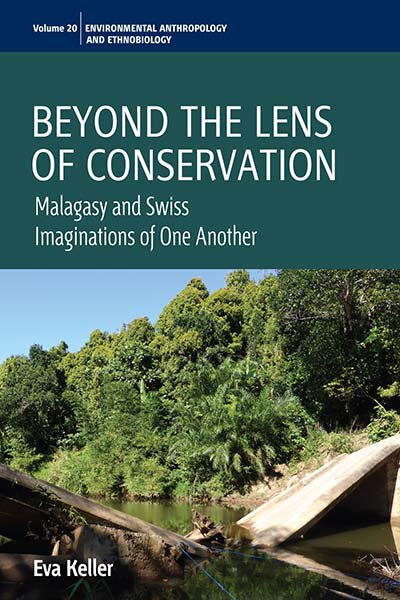
BEYOND THE LENS OF CONSERVATION
Malagasy and Swiss Imaginations of One Another
Eva Keller

Volume 20, Environmental Anthropology and Ethnobiology

Continue reading “July is National Park & Recreation Month”

Bastille Day

July 14th is a celebration of French National Day or commonly known to the English speaking countries as Bastille Day. The day commemorates the beginning of the French Revolution with the storming of the Bastille on the 14th July 1789 and symbolizes the end of absolute monarchy and the birth of sovereign Nation. It is also a day of la Fête de la Fédération, a joyous celebration in 1790 that honored the new French Republic and commemorated the one year anniversary of the storming of the Bastille.


Berghahn is delighted to suggest a selection of French Studies titles, along with some Berghahn Journals articles to browse through:

_____________________________________________________________


THE BOURGEOIS REVOLUTION IN FRANCE (1789-1815)
Henry Heller

Volume 5: Berghahn Monographs in French Studies Series

Continue reading “Bastille Day”

In History

June 25, 1991: Croatia and Slovenia Declare Independence; War Between Croatia and Serbia Begins:

The provinces of Croatia and Slovenia declare their independence from Yugoslavia. Slovenia breaks off without violence. However, within two days the Yugoslav army, representing Serbia, attacks Croatia and a long war between the two countries begins. This is the start of nearly a decade of conflict in the region as Yugoslavia slowly breaks apart.

______________________________

On related subjects from Berghahn Central & Eastern Europe List:

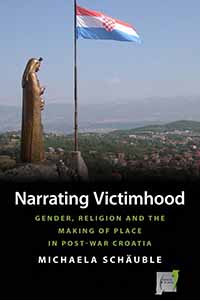
NARRATING VICTIMHOOD
Gender, Religion and the Making of Place in Post-War Croatia
Michaela Schäuble

Volume 11, Space and Place

Continue reading “In History”

World Refugee Day

The United Nations’ (UN) World Refugee Day is observed on June 20 each year. This event  draws public’s attention to the millions of refugees and Internally displaced persons worldwide who have been forced to flee their homes due to war, conflict and persecution.


“These problems do not disappear just because we do not hear about them. There is so much more happening around the world than what is communicated to us about the top stories we do hear. We all need to look deeper and discover for ourselves…. What is the problem? Where is it? How can we help to solve it?” – ANGELINA JOLIE, Notes from My Travels: Visits with Refugees in Africa, Cambodia, Pakistan and Ecuador

———————————————————————————————————————————–

In marking this year’s observance, Berghahn is pleased to feature a selection of books of related interest, and offer a 25% discount on all Refugee and Migration Studies titles. For the next 30 days use discount code WRD15 at checkout.

Continue reading “World Refugee Day”

World Environment Day

World Environment Day is held each year on 5th June. It is one of the principal vehicles through which the United Nations (UN) stimulates worldwide awareness of the environment and enhances political attention and action.

To mark this year’s observation, we welcomes you explore a free virtual issue from Berghahn Journals comprised of interdisciplinary articles examining Climate Change: http://bit.ly/1potKpB

Berghahn is pleased to showcase new and forthcoming titles in our Environmental Studies range. Each title featured below delivers informed comment on a number of key issues, and we are delighted to offer a 25% discount on all Environmental Studies titles for the next 30 days. At checkout, simply enter the code WED15.


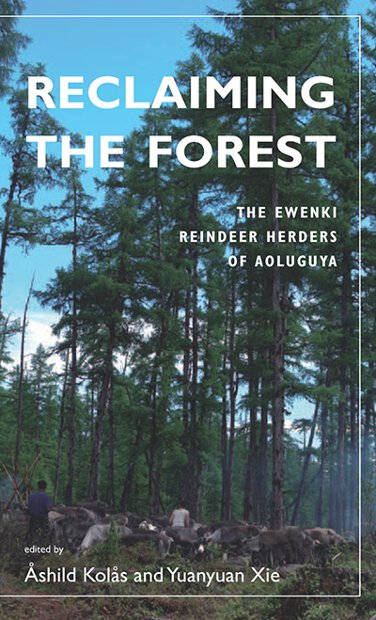
RECLAIMING THE FOREST
The Ewenki Reindeer Herders of Aoluguya
Edited by Åshild Kolås and Yuanyuan Xie
Foreword by F. Georg Heyne

Continue reading “World Environment Day”

Historians Relate to Present Echoes of their Work

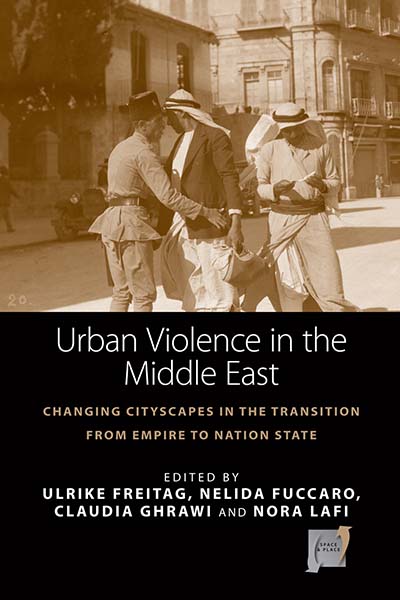
Urban Violence in the Middle EastCovering a period from the late eighteenth century to today, Urban Violence in the Middle East explores the phenomenon of urban violence in order to unveil general developments and historical specificities in a variety of Middle Eastern contexts. Below, contributors to the volume tell about their personal relationship as historians to present echoes of their work.
Continue reading “Historians Relate to Present Echoes of their Work”

May is Asian-Pacific American Heritage Month

Asian Pacific American Heritage Month (APAHM) is a celebration of the culture, traditions, and history of Asian Americans and Pacific Islanders in the United States.

———————————————————————————————————————————–

Berghahn is happy to present several series and a selection of books on studies of Asia-Pacific cultures, societies, and histories.


Asia-Pacific Studies: Past and Present Series

The forces of globalization in the Asia-Pacific—the most economically dynamic region of the world—are bringing about profound social, political and cultural changes in everyday lives, affecting the world both within and beyond the region. New social and cultural formations, such as the rise of the middle classes, the spread of new mass-media and virtual technologies, and the burden of environmental pressures, present challenges to global social theories. Meanwhile, the past casts a lingering shadow, with historical conflicts adding fuel to current tensions over a wide range of issues. This book series provides an outlet for cutting-edge academic research on the politics, histories, societies, and cultures of individual countries in the Asia-Pacific together with overviews of major regional trends and developments.


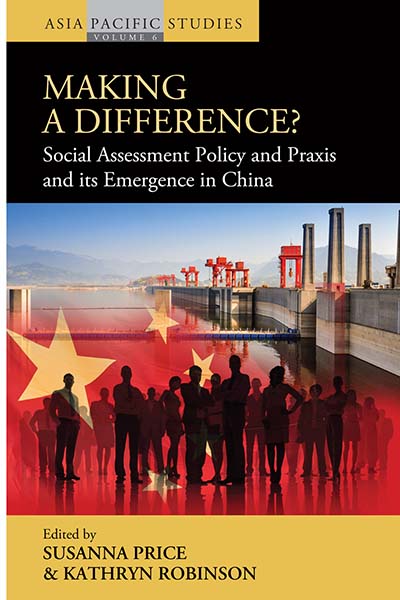
MAKING A DIFFERENCE?
Social Assessment Policy and Praxis and its Emergence in China
Edited by Susanna Price and Kathryn Robinson

Continue reading “May is Asian-Pacific American Heritage Month”

Simulated Shelves: Browse April 2015 New Books

We are delighted to present a selection of our newly published April 2015 titles from our core subjects of Anthropology, Educational Studies, Genocide Studies, History, Politics, Refugee & Migration Studies, and Theory & Methodology in Anthropology, along with a selection of our New in Paperback titles.


We are especially excited to announce the publication of WHAT IS EXISTENTIAL ANTHROPOLOGY? edited by Michael Jackson and Albert Piette

“This is a book whose time has come . . . Focusing on themes like contingency, the open-endedness of life projects, and the lived tension between emergent properties like security and freedom, existential anthropology attends to the human condition rather than just culture.” · Don Seeman, Emory University

———————————————————————————————————————————–


WHAT IS EXISTENTIAL ANTHROPOLOGY?
Edited by Michael Jackson and Albert Piette

Continue reading “Simulated Shelves: Browse April 2015 New Books”

International Workers’ Day

May 1st is International Workers’ Day (also known as May Day) which is a celebration of the international labour movement and left-wing movements. It commonly sees organized street demonstrations and marches by working people and their labour unions throughout most of the world. It is a national holiday in more than 80 countries.

———————————————————————————————————————————–

To honor the holiday, Berghahn is happy to present a selection of relevant titles that explore the importance, the struggles and history of labor throughout the world.


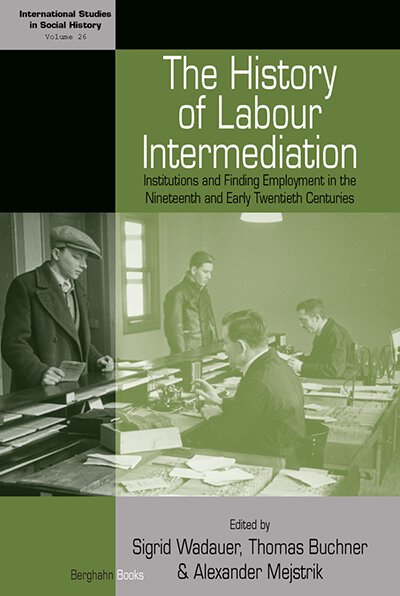
THE HISTORY OF LABOUR INTERMEDIATION
Institutions and Finding Employment in the Nineteenth and Early Twentieth Centuries
Edited by Sigrid Wadauer, Thomas Buchner, and Alexander Mejstrik

Continue reading “International Workers’ Day”