World Refugee Day

The United Nations’ (UN) World Refugee Day is observed on June 20 each year. This event  draws public’s attention to the millions of refugees and Internally displaced persons worldwide who have been forced to flee their homes due to war, conflict and persecution.


“These problems do not disappear just because we do not hear about them. There is so much more happening around the world than what is communicated to us about the top stories we do hear. We all need to look deeper and discover for ourselves…. What is the problem? Where is it? How can we help to solve it?” – ANGELINA JOLIE, Notes from My Travels: Visits with Refugees in Africa, Cambodia, Pakistan and Ecuador

———————————————————————————————————————————–

In marking this year’s observance, Berghahn is pleased to feature a selection of books of related interest, and offer a 25% discount on all Refugee and Migration Studies titles. For the next 30 days use discount code WRD15 at checkout.
Continue reading “World Refugee Day”

Observing 102nd Anniversary of Armenian Genocide


April 24 marks the 102nd anniversary of the Armenian Genocide, and tens of thousands are expected to march to commemorate the event.

In recognizing the significance of the occasion we would like to bring to your attention a small but select number of titles which deliver scholarly expertise and informed opinion around the subject.


Continue reading “Observing 102nd Anniversary of Armenian Genocide”

Space and Place

Unlike a painting or a sculpture, architectural sites cannot be work of a single artist. They arise from collaborations among historical figures, architects, engineers, bankers, and many more. Some structures become much more than just a place to live, work, worship or be entertained, instead they become symbols embedded with cultural knowledge, history and social value.


Berghahn is delighted to bring Space and Place Series to your attention. This series provides ethnographically rich analyses of the cultural organization and meanings of these sites of space, architecture, landscape, and places of the body. Contributions examine the symbolic meanings of space and place, the cultural and historical processes involved in their construction and contestation, and how they communicate with wider political, religious, social, and economic institutions.

———————————————————————————————————————————-


Volume 15 Forthcoming! 

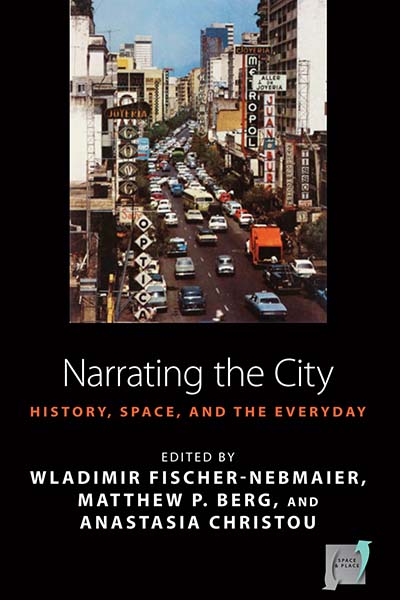
NARRATING THE CITY
Histories, Space and the Everyday
Edited by Wladimir Fischer-Nebmaier, Matthew P. Berg, and Anastasia Christou

Continue reading “Space and Place”

Migration: A World on the Move

On this day, November 12, 1954, Ellis Island, the gateway to America, shut it doors after processing more than 12 million immigrants since opening in 1892. Today, an estimated 40 percent of all Americans can trace their roots through Ellis Island, located in New York Harbor off the New Jersey coast.

United Nations has estimated that more people than ever are living abroad. In 2013, 232 million people, or 3.2 percent of the world’s population, were international migrants, compared with 175 million in 2000 and 154 million in 1990. The magnitude and complexity of international migration makes it an important force in development and a high-priority issue for both developing and developed countries.


———————————————————————————————————————————–

Browse some of Berghahn relevant titles on Refugee & Migration Studies:


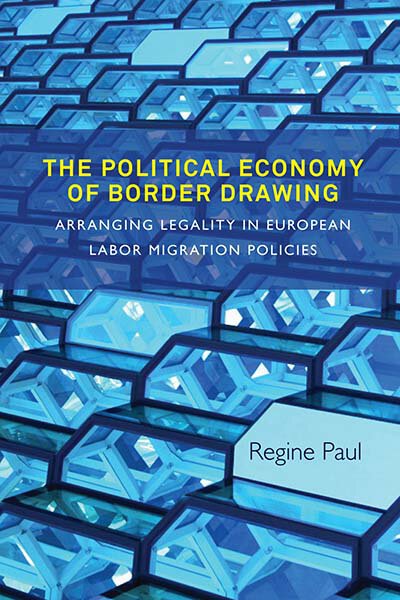
THE POLITICAL ECONOMY OF BORDER DRAWING
Arranging Legality in European Labor Migration Policies
Regine Paul

Continue reading “Migration: A World on the Move”

World Food Day #WFD2014

World Food Day is a day of action against hunger. On October 16th people around the world come together to declare their commitment to eradicate hunger by starting a conversation, learning and educating about food, farming, and hunger. This World Food Day celebrates family farmers for growing our food and caring for the earth. #Toast a Farmer!

———————————————————————————————————————————–

Berghahn is delighted to present some of its relevant titles:


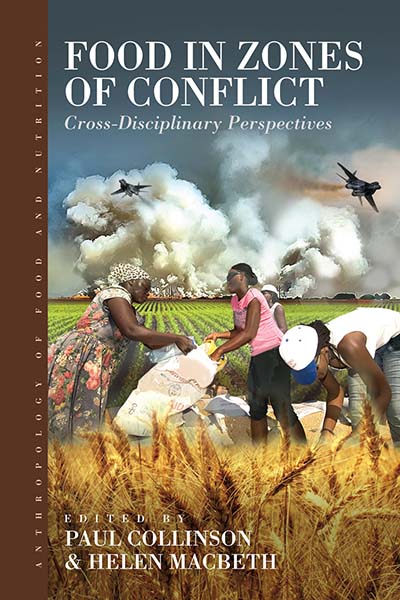
FOOD IN ZONES OF CONFLICT
Cross-Disciplinary Perspectives
Edited by Paul Collinson and Helen Macbeth
Foreword by Hugo Slim

Volume 8, Anthropology of Food & Nutrition

Continue reading “World Food Day #WFD2014”

Simulated Shelves: Browse September’s New Books

We are delighted to present a selection of our newly published, and soon to be published, September titles from our core subjects of Conflict Studies, Film Studies, Gender Studies, Genocide Studies, History and Religious Studies along with a selection of our New in Paperback titles.

——————————————————————————————————————–


FOOD IN ZONES OF CONFLICT
Cross-Disciplinary Perspectives
Edited by Paul Collinson and Helen Macbeth
Foreword by Hugo Slim

Volume 8, Anthropology of Food & Nutrition Continue reading “Simulated Shelves: Browse September’s New Books”

The Wounds of our Warriors

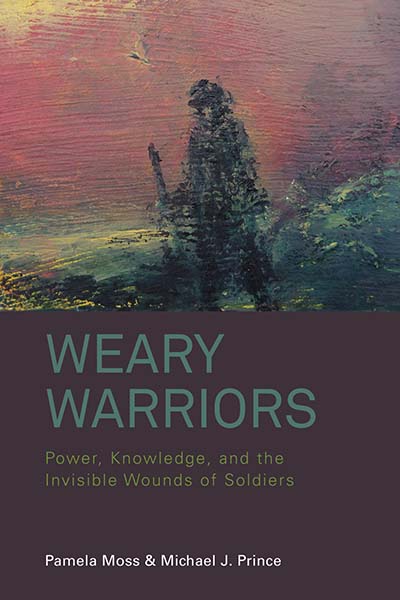
Just because one cannot see wounds does not mean they are not there. Pamela Moss and Michael J. Prince analyze war-derived psychological trauma in their co-authored volume, Weary Warriors: Power, Knowledge, and the Invisible Wounds of Soldiers. Following, the authors share their personal backgrounds and further insight into their volume.


________________________________


How were you drawn to the topic of invisible wounds of combatants?


Michael J. Prince: In a personal way, my interest in the subject of weary warriors comes from being the son of a Second World War veteran. My father served in the Royal Canadian Air Force overseas as flying officer, wireless operator and air gunner, so I grew up in a family in which these topics were, at times, discussed. In a professional way, my work on developments in welfare states highlighted the significant place of wars, soldiers, and veterans in the struggles around the formation of social programs.

Continue reading “The Wounds of our Warriors”

Simulated Shelves: Browse June’s New Books

We’re delighted to offer a selection of soon-to-be-published titles from our core subjects of Anthropology, Medical Anthropology, History, Sociology, Travel & Tourism and Urban Studies. The following list of new volumes is complete with brief descriptions of the books and a peek at each cover. 

_________________________________

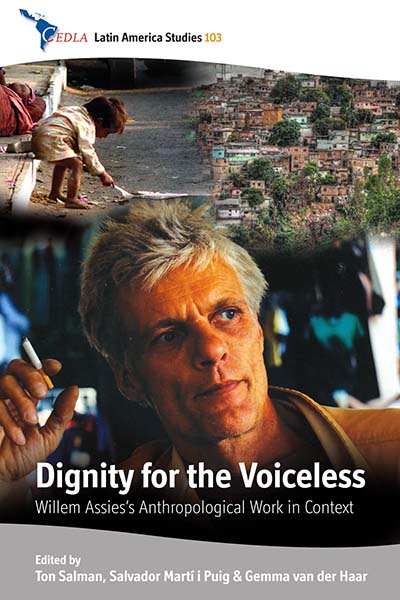
DIGNITY FOR THE VOICELESS

Willem Assies’s Anthropological Work in Context

Edited by Ton Salman, Salvador Marti i Puig, and Gemma van der Haar Continue reading “Simulated Shelves: Browse June’s New Books”

Past, Present, Future Changes: An Anthropologist Looks at Africa

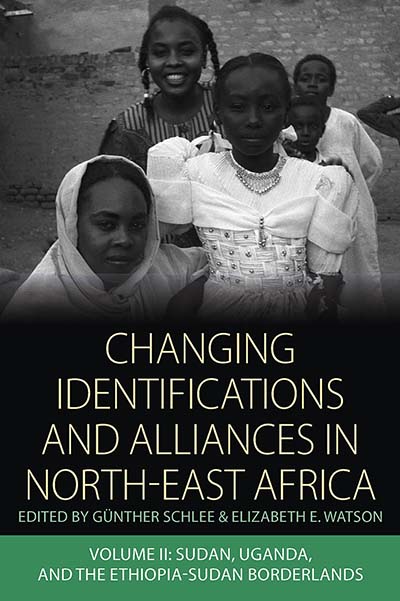
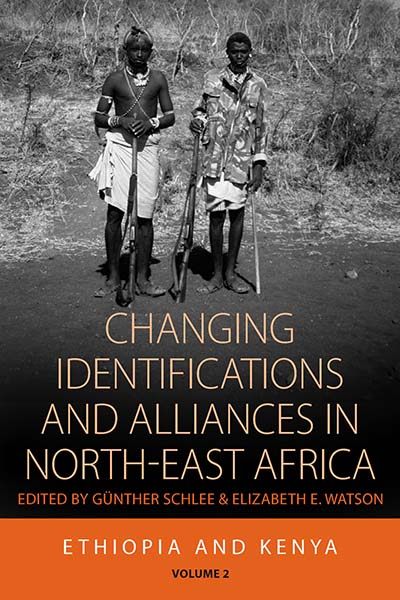
Günther Schlee traces old steps and tracks steps forward since the original publication of Changing Identifications and Alliances in North-East Africa, Volume 1 and Volume 2. The paperback versions were published in October. Following, Schlee rounds out the two-part interview with a reflection on the book’s release, and where he is proceeding within the field.


The first half of this interview is available here.

_____________________________________________________


Berghahn Books: To what extent did the initial release of the book contribute to debates among current and future academics within the field?


Günther Schlee: People use these two books as an introduction to the region. But it has also been taken up by people who have little to do with Africa. They have taken an interest in the theoretical issues we make.


Continue reading “Past, Present, Future Changes: An Anthropologist Looks at Africa”

Africa, from an Anthropologist’s-Eye View

Changing Identifications and Alliances in North-East Africa, originally published in 2009, was published in paperback in October. The two-volume collection, made up of Volume I: Ethiopia and Kenya and Volume II: Sudan, Uganda, and the Ethiopia-Sudan Borderlands, gives an overall view of the North-East of the continent and addresses the importance of the group dynamic, as it plays into politics, cultural identity, and war and peace. Co-editor Günther Schlee discusses the beginning of the collection, with its roots planted where his studies of Africa began — and how they are growing.


___________________________________________

Berghahn Books: What drew you to the study of Africa, specifically northeast Africa?


Günther Schlee: Like many students in the 1970s, I was fascinated by South America. When I studied anthropology and linguistics at Hamburg, I took Spanish up to the highest level. I read a lot about South America and followed the volatile politics of that continent very closely. When it was time to think about a PhD project, I was determined to do field research in South America. In order to identify a location and to enable myself to write a decent research proposal, I decided to go there on an exploratory visit on my own expense.

Continue reading “Africa, from an Anthropologist’s-Eye View”