Continue reading “Berghahn Journals: New Issues Published in July”
 Join our Email List





 The following is a guest blog post from Torsten Cress, author of the article “Social Situations and the Impact of Things: The Example of Catholic Liturgy” appearing in Nature and Culture Volume 10, Issue 3.
Continue reading “Social Situations and the Impact of Things: The Example of Catholic Liturgy”
The following is a guest blog post from Stefan Böschen, Jochen Gläser, Martin Meister, and Cornelius Schubert, guest editors of Nature and Culture Volume 10, Issue 3.
Our interest in compiling this special issue was sparked by a curious imbalance that prevails in the recent turn to materiality in social research. The current proclamations for (re)considering materiality are mostly levelled at theoretical conceptualizations. Framing materiality as a theoretical challenge is of course necessary, but this debate has little to say about how to deal with materiality in terms of empirical research. We think that considering materiality as a purely theoretical challenge is taking the second step before the first. What might be even worse is that decoupling conceptual treatments of material agency from empirical research makes the “material” of material agency itself disappear behind abstract concepts. It seems that although there is substantial interest in the research on materiality and agency, there also is a marked carelessness, if not helplessness, to how deal with this challenge in empirical research.
Continue reading “Material Agency as a Challenge to Empirical Research?”


Anthropology of the Middle East
In this issue, we present contributions that deal with museums, museology and their approaches to the new social situations through which they must navigate.
This issue features a special section on settler-colonial mobilities
This issue covers a range of topics including fieldwork relations, street art, economic practices, and more.
Anthropological Journal of European Cultures
The thematic focus of this issue is Urban Place-making Between Art, Qualitative Research and Politics.
French Politics, Culture & Society
This issue explores themes of race and racism in France.
The Cambridge Journal of Anthropology
The issue’s special section on ‘Intimacy Revisited’ features articles that situate dominant understandings of ‘intimacy’ in its associations with sexuality, but then expand to examine intimacy as a much broader empirical issue.
This special issue is motivated by the question of why materiality is so difficult to deal with in terms of research methods. As a whole, the contributions illustrate the variety of research problems in the social sciences to which material agency matters, as well as the methodological challenges included in the empirical investigation of things.
This special issue is devoted to Victorian literature and science.
The 2015 United Nations Climate Change Conference will be held in Paris from November 30 to December 11. It will be the 21st yearly session of the Conference of the Parties to the 1992 United Nations Framework Convention on Climate Change (UNFCCC) and the 11th session of the Meeting of the Parties to the 1997 Kyoto Protocol. The conference objective is to achieve a legally binding and universal agreement on climate, from all the nations of the world. Leadership of the negotiations is yet to be determined. Learn more about the conference here.
Below, we invite you to explore our latest titles related to climate change.
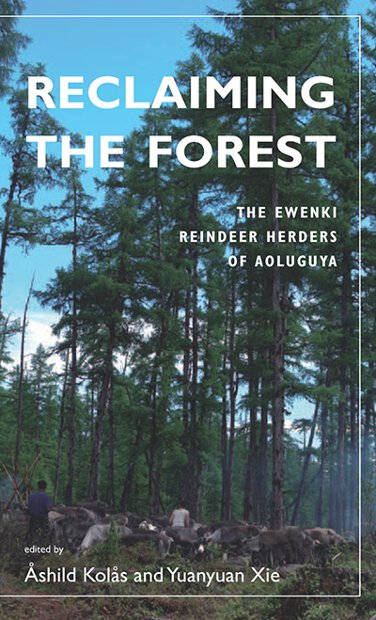 RECLAIMING THE FOREST
The Ewenki Reindeer Herders of Aoluguya
Edited by Åshild Kolås and Yuanyuan Xie
Foreword by F. Georg Heyne
Below is an electronic interview between the Berghahn blog editor and Annina Schneller, contributor to the latest issue of the journal Nature and Culture. Annina Schneller is a contributor to the article titled “Design Rhetoric: Studying the Effects of Designed Objects” which appears in Volume 10, Number 3.
Annina Schneller, how come a philosopher does research about design?
Philosophy is a highly theoretical science and I always felt a lack of sensuality, a detachment from real experience and the problems we encounter in everyday life. I am interested in the practical aspects of ordinary life and in grasping‚ the bigger picture’, which also means to transcend disciplinary borders. In my research, conceptual, theoretical questions merge with practice-based questions of creation and effect in design.
You are following a rhetorical approach to design. What does that mean?
In analogy to rhetorics – the art of speech – I try to define a system that enables us to analyse design, but also to instruct designers for practice. Both rhetoric and design are intrinsically effect oriented. Their success lies in creating a certain reaction in a public. In my research, I try to find out which elements of design – colour, shape, material, composition etc. – are apt to create effects in the beholder or user and how this interrelation can be purposefully shaped. My article in Nature and Culture presents a design rhetorical view by referring to different practice-based research projects I have been working on. I particularly focus on the methodological problems that have occurred in identifying design effects and pinning down design rules.
How does this kind of design research link to the issues of Nature and Culture?
The impact of design is of concern for cultural studies, since design objects constitute a large part of human culture. Most of the things that surround us, we work with, we enjoy or that stand in our way are products of design. The boundary between natural and artificial objects can be questioned by reference to design: Many of the seemingly natural things such as plants or rivers can nowadays be seen as infiltrated by human design endeavours. So, if the apple in the supermarket has been designed to look fresh and crisp, does it belong to nature or culture now?

European Comic Art
Volume 8, Issue 1
Articles in this edition of ECA pursue the theme of boundary crossing by examining negotiations between the national and the transnational from several different angles, including subject matter, influences, and critical traditions.
Continue reading “Hot Off the Presses – New Journal Issues Published in July”
This is a guest post written by Bernhard Forchtner, contributor to Volume 10: Issue 2 of the journal Nature and Culture . Bernhard Forchtner is a contributor to the article titled “The Nature of Nationalism: ‘Populist Radical Right Parties’ on Countryside and Climate.”
Conversations about “populist radical right parties” (Cas Mudde) in contemporary Europe usually turn to issues such as asylum seekers, ‘foreigners’ and the European Union. What tends to surprise audiences, however, are stories about far-right ecology. Environmental issues are, after all, issues supposedly covered by ‘the left’. However, even if far-right actors across Europe have hardly prioritised environmental protection over the last decades, these actors do intervene in such debates, making the latter meaningful on the basis of their nationalist stance. And maybe, this should not surprise us in the first place given that nature protection, in its beginnings in the 19th century, was often pushed by rather conservative forces.
In the article The Nature of Nationalism, my colleague Christoffer Kølvraa and I thus ask whether and how different types of “populist radical right parties”, the more mainstream Danish People’s Party and the more radical British National Party, have addressed the topic of the national countryside and the transnational issue of climate change.
Although differences in the ‘radicalism’ of the position of these actors exist, these differences are not fundamental. Instead, there is a fundamental difference in how national countryside and transnational climate are assessed. With regards to the countryside, both parties are ardent defenders of what they view as a quintessential national space, a position underpinned by what we call a nationalist symbolic aesthetics. That is, both parties frame the countryside in terms of its natural splendour coupled with a claim for historical continuity of the national community in this territory, thereby making manifest the political sovereignty the people enjoy over the land. In relation to the nature of climate too, the British National Party goes much further than the Danish People’s Party, the former voicing strong scepticism (if not denial) regarding the thesis of (man-made) climate change – something the latter rather insinuates. However, both parties share a symbolic materialism via which international bodies, arguably necessary in the fight against an inherently transnational phenomenon, are criticised as they apparently endanger national sovereignty and classical nationalist ideas of self-sufficiency. When nationalists justify their stance on environmental issues and claim that “we all hold our land in trust for future generations” (British National Party), one should not simply dismiss their arguments as strategic in order to attract voters. Instead, their notion of ecology and environmental protection is deeply embedded in their ideology.
While the topic has received rather scant attention in the literature to date, and thus research charters much previously unmapped territory, the topic has also proven to be challenging – something noticeable in particular in conversations with environmental activists. While the climate politics of “populist radical right parties” are easily rejected by these activists, many of their more subtle positions, for example on invasive species, cannot easily be distinguished from mainstream and even left-wing arguments. Where they exist, these similarities need to be taken seriously! As the modernization of the far-right across Europe does not seem to lose steam, more and more related, counter-intuitive cases emerge. Currently, a group of German neo-Nazis (Balaclava Küche) promotes veganism within their scene. Partly due to environmental concerns, they do so through their YouTube channel but have also offered catering service at neo-Nazi concerts, etc. In a series of interviews conducted after the completion of The Nature of Nationalism, actors (previously) belonging to “populist radical right parties” voiced ‘traditional’ views on a far-right ecology. For example, interviewees lamented about what they perceive as a cultural crisis which ignores the laws of nature. Instead, nations should be viewed as (eco)systems which – if too much alien elements enter – lose their natural equilibrium and collapse. Subsequently, “nomadic cultures and races” were rejected in favor of rooted (“sesshafte”) people who supposedly care for the environment. This can easily take an anti-Semitic twist but definitely contains a rejection of “foreigners” who are not committed to the beauty of ‘our’ country the way ‘natives’ supposedly are.
What these interviews have shown is that differences between these groups are worth investigating. While our paper foregrounds similarities based on a shared ideological ground, subsequent case-studies should equally focus on differences between various actors within a national space or across boundaries. There is work to do as these actors seem to have a future in, at least European, politics.
Each year since 1985, Americans have celebrated National Park and Recreation Month during the month of July to recognize the importance of parks and recreation in establishing and maintaining the quality of life for, and contributing to the physical, economic and environmental well-being of communities.
Berghahn is happy to present some of its relevant Environmental Studies titles:
_________________________________________________________________
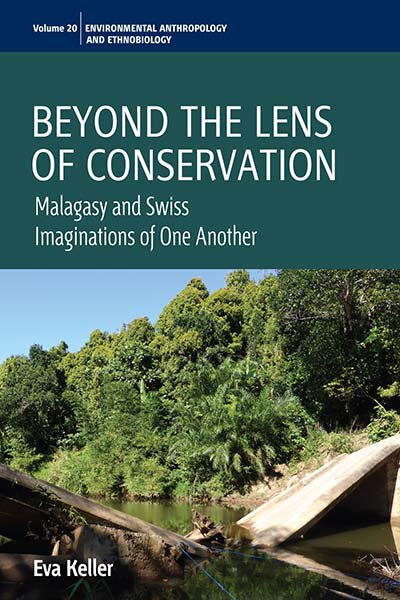 BEYOND THE LENS OF CONSERVATION
Malagasy and Swiss Imaginations of One Another
Eva Keller
Volume 20, Environmental Anthropology and Ethnobiology