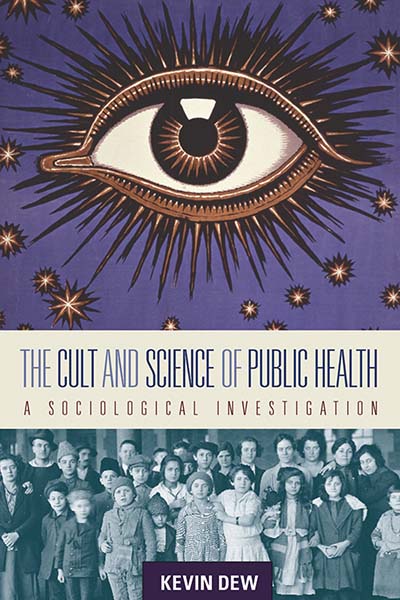
With World Health Day coming up April 7, the paperback release of Kevin Dew’s exploration of public health is quite timely. The Cult and Science of Public Health: A Sociological Investigationwas published originally in February 2012 and will be published as a paperback this month. Below is a brief description of the book, and the author’s reflection on its reception since the initial publication.
________________________________________________
As a cult of humanity, public health provides a moral force in society that replaces ‘traditional’ religions in times of great diversity or heterogeneity of peoples, activities and desires. This is in contrast to public health’s foundation in science, particularly the science of epidemiology. The rigid rules of ‘scientific evidence’ used to determine the cause of illness and disease can work against the most vulnerable in society by putting sectors of the population at a disadvantage.
If you could modify the human population to be more intelligent or more beautiful, would you? When this idea of eugenics — or selectively breeding a population with more “desirable” traits — was first popularized in the twentieth century, such contemporary figures as Winston Churchill, Theodore Roosevelt, H.G. Wells, and, not surprisingly, Adolf Hitler, were supporters. Now, with renewed interest in the science of eugenics, editors Calum MacKellar and Christopher Bechtel explore the unsavory aspects and issues in The Ethics of the New Eugenics, to be published this month. Following, the editors explain what led them to study this science, and what may be ahead for the field.
___________________________________________
What drew you to the study of eugenics?
Calum MacKellar:Over the many years that I have worked in the field of human bioethics, I have always suspected that the topic of eugenics would eventually come back to haunt society.
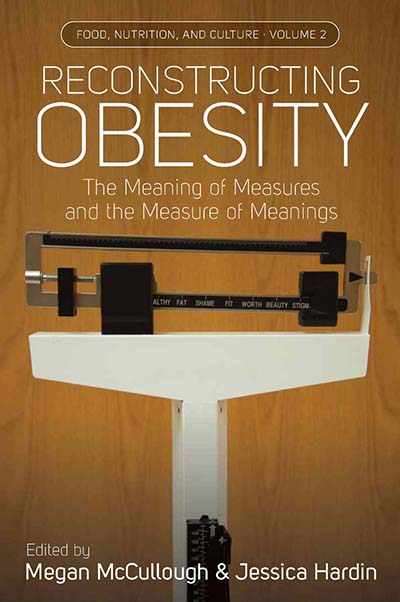
Obesity is a worldwide problem, and affecting more people all the time. In their timely collection, editors Jessica Hardin and Megan McCullough examine this growing epidemic in their soon-to-be-released book, Reconstructing Obesity: The Meaning of Measures and the Measure of Meanings.The editors analyze the cultural causes and effects to open a new discussion about fatness and obesity.
_________________________________
I asked my students, fresh off a lively discussion about dieting and religious fasting, if any of them would consider taking a new course I was designing called,“Fatness and Obesities.” Only one student raised her hand. What if I change the course’s title – but not its content – to “The Politics of Body Size”? At this suggestion, they all raised their hands. What is the difference?
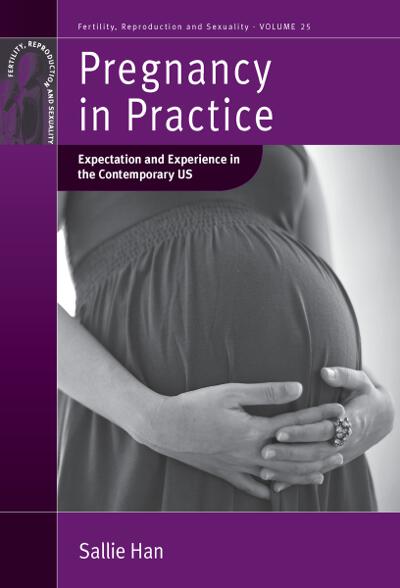
Parents preparing to welcome a new bundle of joy follow certain conventions, from decorating the nursery to deciding on baby names, explains Sallie Han in her newly released volume, Pregnancy in Practice: Expectation and Experience in the Contemporary US. Below the author discusses the recent royal birth along these guidelines and explains that though they may be parents of the future King of England, Prince William and Duchess Kate Middleton are perhaps not so different from common parents as thought.
______________________________________
The Duchess of Cambridge and I have this in common: We shared a due date. She is the new mother of a future King of England. I am the new author of a book, Pregnancy in Practice: Expectation and Experience in the Contemporary US. I believe that the period of gestation for my book has been considerably longer.
More than a simple parenting choice, breastfeeding becomes a matter of feminist and activist discussion in Charlotte Faircloth’s book Militant Lactivism?published in March 2013 by Berghahn Books. Below, the author introduces us to the movement for public breastfeeding with an excerpt from her book.
Militant Lactivism? is a book based on research with women in London and Paris who are members of La Leche League (LLL), an international breastfeeding support organisation. The text focuses on the accounts of a small but significant population of mothers within LLL who practise ‘attachment parenting’. This is a style of care which endorses close parent-child proximity and typically involves long-term, on-cue breastfeeding, baby ‘wearing’ and co-sleeping as part of a ‘family bed’ philosophy. It is becoming increasingly popular in both the US and the UK, and has recently received a lot of publicity following a particularly provocative TIME magazine feature, amongst other coverage.
HD: I started my research on AIDS in Tanzania as a master student. AIDS hadn’t been at the center of “mainstream anthropology” in the mid-1990s, at least not in Western Europe, and I wanted to do “something useful” for my thesis project. Initially, my fieldwork on HIV/AIDS focused on the moral discourses of young men and women on sexuality, modernity, and social transformation in the context of the epidemic in western Tanzania. Later on, this led me to the study of social and kinship relations and how they transform in the context of illness, death, and rural-urban mobility.
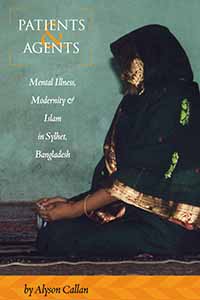
Note: Berghahn has just published Alyson Callan’s Patients and Agents: Mental Illness, Modernity and Islam in Sylhet, Bangladesh, an ethnographic study that explores how changes in the global economy have led to an increase in daughters marrying outside of their local kinship network, which in turn has increased their vulnerability to mental illness. An excerpt with images from Chapter 6 follows an introductory note from the author.
__________________________________________
Bangladesh is one of only five countries in the world where women have a shorter life expectancy than men. The low status of women in Bangladesh is underpinned by the virilocal rule of residence. As daughters leave their natal home to live with their husband’s family at the time of marriage, it is argued that nurturing them is regarded as a relative waste of resources, compared to nurturing sons who will stay and contribute to the wealth of the household.
However, women’s oppression is not experienced in a uniform way. Older women achieve a higher status as mothers, and, as mother-in-laws, may oppress their sons’ wives. The concept ‘woman’ does not occupy a single analytical category and the status of women varies according to the role they occupy. In this excerpt I suggest that the ‘Ma’ icons seen in most rural households provides evidence that the mother is revered on a par with Allah.
The mother in symbolic opposition to Allah
[There is] a tension evident in Bengali culture between the law of the father and the law of the mother. The popular Indian conception of the mother as self-sacrificing overlies an unconscious fantasy of the phallic, castrating mother (Nandy 1990). Bagchi (1990) suggests that Bengali culture is particularly prone to employing this threatening aspect of the mother. The powerful and murderous Kali, who dances on the corpse of her consort Shiva, is a goddess who enjoys greatest popularity amongst Bengalis (Fuller 1992). Wilce (1998a) argues that in Bangladesh mothers are feared and placed in symbolic opposition to Allah. He cites this famous passage from the Hadith: in answer to the question, ‘To whom do I owe the most respect?’ the Prophet replied, ‘Your mother.’ His answer remained the same when pressed to declare the second and third persons deserving respect. ‘Father’ was listed fourth [1998: 108].
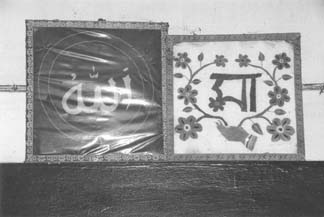
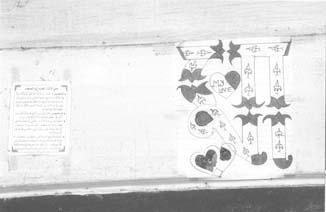
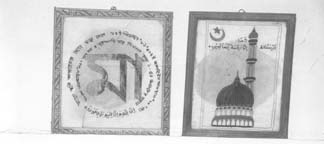
Another quotation commonly recited in Sylhet is ‘Heaven is under the mother’s feet’, meaning that obedience to the mother is the path to heaven. Yet whilst the mother-in-law in Sylhet is feared, conscious representations of the mother portray her to be loving and all-forgiving, if not to say indulgent. This latter attribute seems to me to be diametrically opposed to Allah who takes a meticulous account of his subjects’ good and bad works, doling out punishment and rewards as appropriate on Judgement Day. That the mother is revered on a par with Allah is demonstrated by the prevalence of ‘Ma’ iconography (ma is short for amma – mother). (Muslim) lorry drivers have ‘Ma’ painted on the front of their trucks; posters are sold reproducing poems and pictures celebrating the mother. Most strikingly of all, ‘Ma’ embroidery samplers and other ‘Ma’ icons are hung up on the wall next to Islamic icons – Allah’s name in Arabic, Qur’anic verse, pictures of Mecca. I saw these ‘Ma’ icons in every rural household that had grown-up children present; it was explained that ‘we have maya (love) for Allah and amma above everything else; for amma because she has suffered greatly for us’.
Figure 6.1: A ‘Ma’ embroidery sampler is hung to the right of Allah’s name in Arabic
Figure 6.2. Lines from the Qur’an on the left; handwritten ‘Ma’ decoration on the right
Figure 6.3. Left: Ma icon commemorating the date of death of the household’s mother; the Arabic reads: ‘Allah, we came from you and we will return to you’. Right: the mosque at Madina with lines from the Qur’an.
Alyson Callan is a psychiatrist and anthropologist. She currently works as a consultant psychiatrist in Brent for the Central and North West London NHS Foundation Trust.
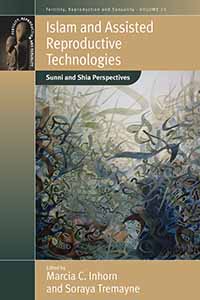
Islam and Assisted Reproductive Technologiesis the result of a wonderful conference workshop, held from 18 to 20 September 2009 at Yale University in New Haven, Connecticut, on the theme of “Islam and the Biotechnologies of Human Life.” Following a day of public presentations, the contributors to this volume remained at Yale for an intensive, two-day workshop discussion of their conference papers, which have ultimately become the polished chapters of this edited volume.
To our knowledge, this volume is unique, for it represents the work of nearly all of those scholars whose research focuses on Islam and assisted reproductive technologies (ARTs). Meeting (often for the first time), discussing our work, and producing this volume together has been an immensely rewarding experience. For us as co-conveners, the project and the process have been especially gratifying, for we have been able to bring together our junior colleagues, many of whom are producing nuanced, field-based research on ARTs in a variety of Islamic settings. As a result, all of the chapters in this volume can be said to be original, timely, and “cutting edge,” reflecting the rapidly evolving ART landscape in the Muslim world in the second decade of the new millennium. Continue reading “From Idea to Book- Islam and Assisted Reproductive Technologies: Sunni and Shia Perspectives” →
 Join our Email List






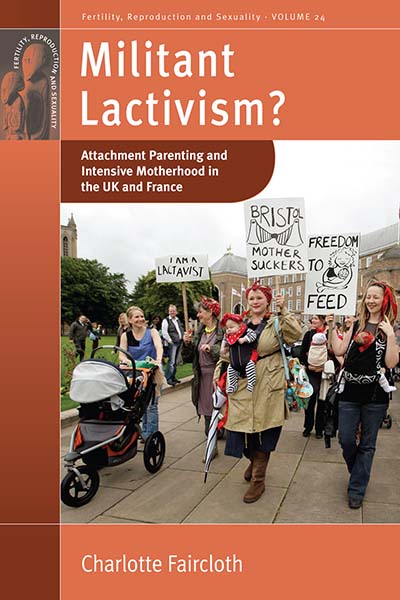 Militant Lactivism? is a book based on research with women in London and Paris who are members of La Leche League (LLL), an international breastfeeding support organisation. The text focuses on the accounts of a small but significant population of mothers within LLL who practise ‘attachment parenting’. This is a style of care which endorses close parent-child proximity and typically involves long-term, on-cue breastfeeding, baby ‘wearing’ and co-sleeping as part of a ‘family bed’ philosophy. It is becoming increasingly popular in both the US and the UK, and has recently received a lot of publicity following a particularly provocative TIME magazine feature, amongst other
 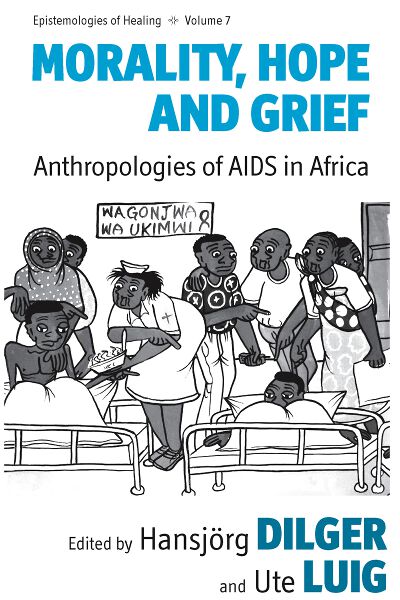 Hansjörg Dilger is the editor, along with Ute Luig, of
  Post-Cosmopolitan Cities: Explorations of Urban Coexistence