Cameras on the Nation’s Darkest Hour

Recent BBC Culture article, Christian Petzold: How Germans today confront the Nazis, takes a look at how the attitude of German filmmakers has changed in the past 15 years and how the cinema is turning the cameras on the nation’s darkest hour in films and TV. Read more on what Nina Hoss, an actress in the latest German film to address the war and its aftermath Christian Petzold’s Phoenix, has to say bbc.com/culture

———————————————————————————————————————————–

Browse some of Berghahn’s relevant titles on the topic of Nazi portrayal and postwar cinema in Germany & Europe.
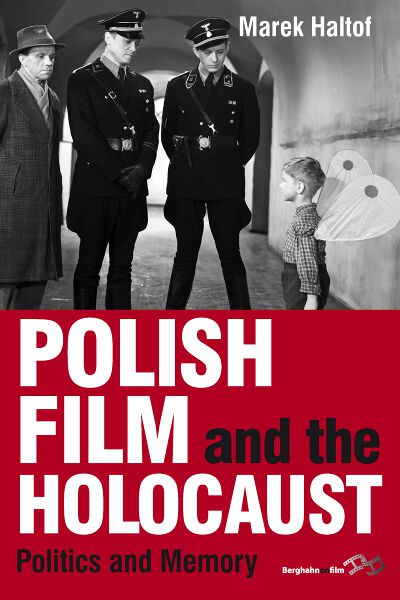
 

POLISH FILM AND THE HOLOCAUST
Politics and Memory
Marek Haltof
Continue reading “Cameras on the Nation’s Darkest Hour”

Simulated Shelves: Browse September’s New Books

We are delighted to present a selection of our newly published, and soon to be published, September titles from our core subjects of Conflict Studies, Film Studies, Gender Studies, Genocide Studies, History and Religious Studies along with a selection of our New in Paperback titles.

——————————————————————————————————————–


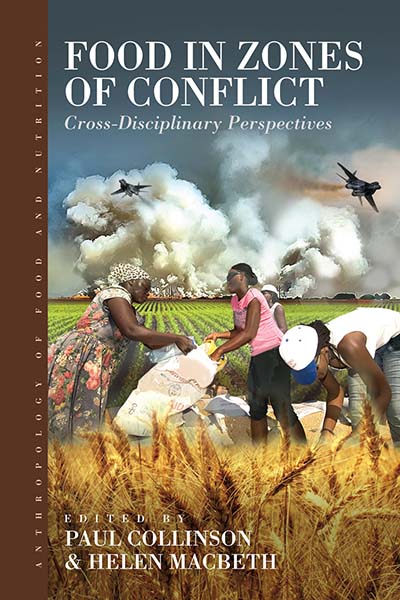
FOOD IN ZONES OF CONFLICT
Cross-Disciplinary Perspectives
Edited by Paul Collinson and Helen Macbeth
Foreword by Hugo Slim

Volume 8, Anthropology of Food & Nutrition Continue reading “Simulated Shelves: Browse September’s New Books”

Women in History

Eighty six years ago on June 18, 1928, Amelia Earhart became the first woman to fly across the Atlantic as a passenger aboard a Fokker tri-motor aircraft that was piloted by Wilmer Stultz and Louis Gordon. Just four years later, in 1932 Amelia Earhart was the first woman to fly solo nonstop across the Atlantic Ocean. She completed her 2,026 mile journey in under 15 hours after departing from Harbour Grace, Newfoundland.

Forty five years later on same date, June 18, 1983, Sally Ride became the first American woman to fly to space as a crew member on space shuttle Challenger for STS-7.

To celebrate women in history we invite you to browse through some of our Gender Studies titles:

_________________________________________________________________


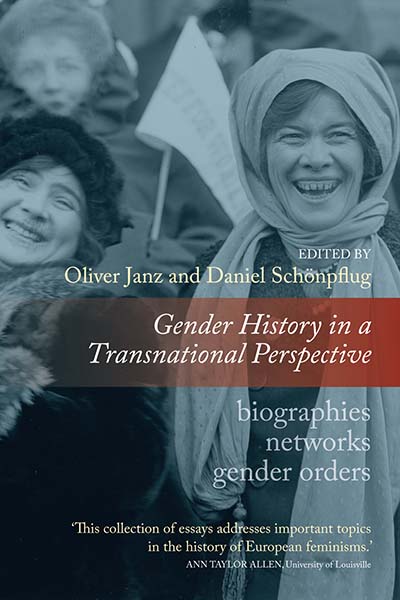
GENDER HISTORY IN A TRANSNATIONAL PERSPECTIVE
Networks, Biographies, Gender Orders
Edited by Oliver Janz and Daniel Schönpflug Continue reading “Women in History”

Photographed History: Exposing the Holocaust


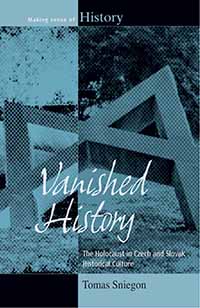
In an earlier post (which can be read here), author Tomas Sniegon shared the events that led him to study the Holocaust in a post-World War II context, a course of study which has led to a publication of Vanished History: The Holocaust in Czech and Slovak Historical Culture. Following is a selection of his photographs from his travels during his study to illuminate this hidden Holocaust history. 

Continue reading “Photographed History: Exposing the Holocaust”

Revealing the ‘Vanished History’ of the Holocaust

Although in Slovakia, Bohemia and Moravia (parts of Czechoslovakia), more than a quarter million lives were claimed during the Holocaust, these deaths have been mostly concealed in post-World War II Czech and Slovak history. A Czech native himself, author Tomas Sniegon shines a light on this cover up in Vanished History: The Holocaust in Czech and Slovak Historical Culture, to be published this month. Following, Sniegon uses the example of Oskar Schindler — famous as the protagonist of the 1993 film Schindler’s List — to explain just how much was hidden from citizens of the Czech Republic and Slovakia.


_____________________________

Film hero Oskar Schindler, played by Liam Neeson, entered the 1990s in the Steven Spielberg’s film Schindler’s List as a new symbol of a so-called “Good citizen of the Third Reich,” which provoked both positive and negative reactions worldwide. However, very few at the same time knew that the real Oskar Schindler — far more complicated than the film character — had never lived in Germany until the World War II and thus actually had never been a “genuine-German German.”

Continue reading “Revealing the ‘Vanished History’ of the Holocaust”

Simulated Shelves: Browse May’s New-Book Library

This month, Berghahn’s library will expand by eleven books. The soon-to-be-published titles make up a distinct lot, ranging from Abigail Loxham’s Cinema at the Edges to Anne Eriksen’s Antiquities to Heritage to Philip Ther’s The Dark Side of Nation-States. The following list of new volumes is complete with brief descriptions of the books and a peek at each cover.

_____________________________


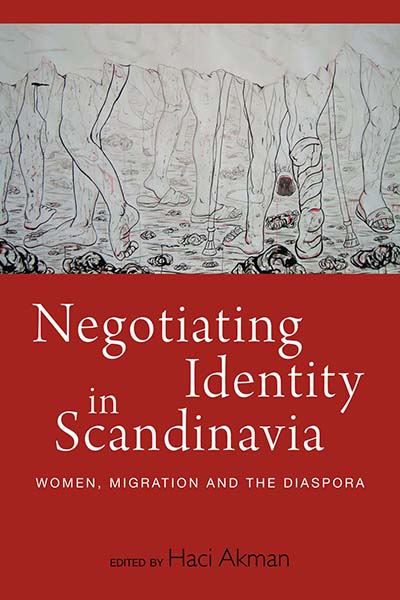
NEGOTIATING IDENTITY IN SCANDINAVIA

Women, Migration and the Disaspora

Edited by Haci Akman

Continue reading “Simulated Shelves: Browse May’s New-Book Library”

Storms, Sickness, Suspicions: The Darker Side of Migration

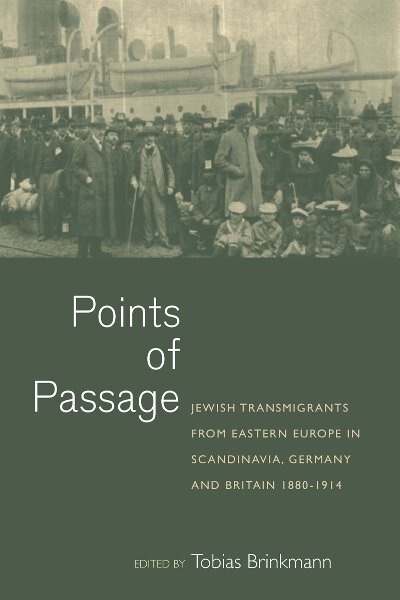
In Points of Passage: Jewish Migrants from Eastern Europe in Scandinavia, Germany, and Britain 1880-1914, published last October, contributors reveal some of the less-savory aspects of immigration (of which there were many). Following, in an excerpt from the newly published volume, editor Tobias Brinkmann gives two examples of passengers enduring misery before arriving on the supposed paradise of North American soil. This is the second entry about the book; read the former here.
_______________________________________

The essay collection “Points of Passage” seeks to shift attention from the well-known success story of Jewish immigration in the United States to the journey. On which paths did Jewish (and other) migrants travel from Eastern Europe to the ports on the North Sea and across the Atlantic between the 1880s and the 1920s, and which obstacles did they face? Researching the paths of migration can be much more challenging than studying immigration.

Continue reading “Storms, Sickness, Suspicions: The Darker Side of Migration”

Egress and Ingress: Exploring ‘Points of Passage’

Ellis Island in New York City is a historically recognized entrance point for European migrants to the United States. But if this is so well-known, then why do we know so little about the points of departure? This is one of many research questions that informed the writing of Points of Passage: Jewish Migrants from Eastern Europe in Scandinavia, Germany, and Britain 1880-1914, published last October. Following, an excerpt from the volume — bookended by comments from editor Tobias Brinkmann — delves deeper into these queries.


 _________________________________________


When I began researching the history of Jewish migrations in the 1990s I concentrated on immigrants. I collected sources on the settlement of Jewish immigrants from small villages in the Central and Eastern European countryside in Chicago between 1840 and 1900. Within a few years the immigrants built a Jewish community, prospered economically and became respected members of Chicago’s social and political circles. My first book concentrated on two major research questions that continue to drive immigration studies: the impact of forces strengthening or weakening ethnic communities, and the impact of assimilation processes on immigrants.

Continue reading “Egress and Ingress: Exploring ‘Points of Passage’”

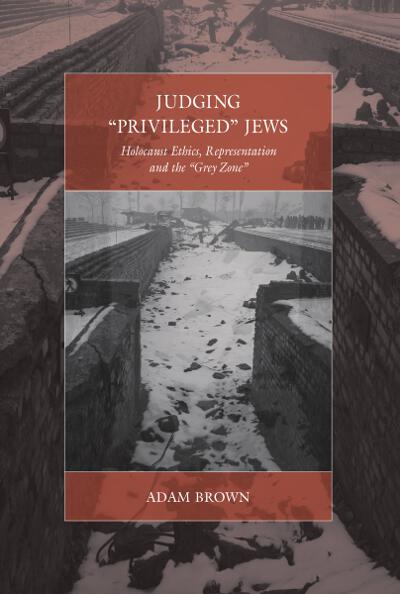
A ‘Privileged’ Prisoner is Still a Prisoner

In German concentration camps, some Jewish prisoners were selected by their Nazi captors to hold more-advantaged positions within the population of the camp. This not only allowed them some protections, but also made them targets of disdain from other victims. Author Adam Brown sheds light on these “privileged” few in his volume Judging “Privileged” Jews: Holocaust Ethics, Representation, and the “Grey Zone,” published in July of last year. Following, Brown discusses about the origins of his interest in the Holocaust in general, and in this inspirational “Grey Zone,” in particular.


________________________________________________


The evolution of my book, Judging “Privileged” Jews: Holocaust Ethics, Representation and the “Grey Zone,” was – like most books no doubt – somewhat long and complex. To take the long-term view, the project began when I heard the moving personal stories spoken by survivor guides on a high school trip to the Jewish Holocaust Centre in 1999. As a non-Jewish teenager with next to no background knowledge of the event, the visit to the JHC inspired a lasting curiosity and sense of obligation to find out more.

Continue reading “A ‘Privileged’ Prisoner is Still a Prisoner”

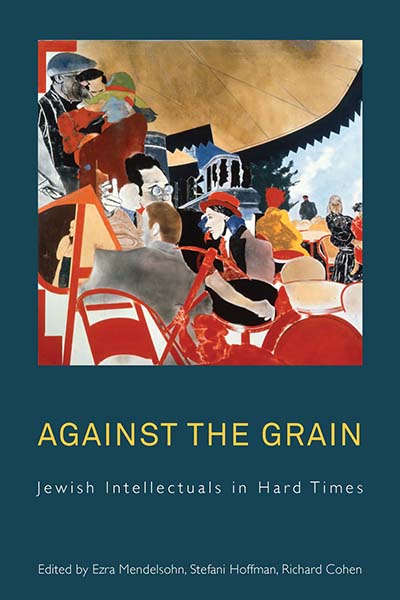
Looking ‘Against the Grain’ at German-Jewish Intellectuals

German-Jewish intellectuals in the twentieth century are the focus of Against the Grain: Jewish Intellectuals in Hard Times, published this month. The volume, edited by Ezra Mendelsohn, Stefani Hoffman, and Richard I. Cohen, looks at the key figures of German-Jewish thought: Scholem, Strauss, and Kohn, and examines how such thinkers reacted to, and were impacted by, the collection of crises lived by Central European Jews. Below, co-editor Mendelsohn speaks about the volume’s potential to “stir” the field and what brought him to the study in the first place.


____________________________________________


Berghahn Books: What drew you to the study of the trials and tribulations of Jewish men and women in the twentieth century?


Ezra Mendelsohn: The main reason resides in my  interest in the history of my own family.  Both my parents were born in Tsarist Russia, and both ended up in the United States, having lived for some time in British Palestine. 

Continue reading “Looking ‘Against the Grain’ at German-Jewish Intellectuals”