Populist radical right parties and (trans)national environmental issues

Nature and CultureThis is a guest post written by Bernhard Forchtner, contributor to Volume 10: Issue 2 of the journal Nature and Culture . Bernhard Forchtner is a contributor to the article titled “The Nature of Nationalism: ‘Populist Radical Right Parties’ on Countryside and Climate.”

Conversations about “populist radical right parties” (Cas Mudde) in contemporary Europe usually turn to issues such as asylum seekers, ‘foreigners’ and the European Union. What tends to surprise audiences, however, are stories about far-right ecology. Environmental issues are, after all, issues supposedly covered by ‘the left’. However, even if far-right actors across Europe have hardly prioritised environmental protection over the last decades, these actors do intervene in such debates, making the latter meaningful on the basis of their nationalist stance. And maybe, this should not surprise us in the first place given that nature protection, in its beginnings in the 19th century, was often pushed by rather conservative forces.

In the article The Nature of Nationalism, my colleague Christoffer Kølvraa and I thus ask whether and how different types of “populist radical right parties”, the more mainstream Danish People’s Party and the more radical British National Party, have addressed the topic of the national countryside and the transnational issue of climate change.

Although differences in the ‘radicalism’ of the position of these actors exist, these differences are not fundamental. Instead, there is a fundamental difference in how national countryside and transnational climate are assessed. With regards to the countryside, both parties are ardent defenders of what they view as a quintessential national space, a position underpinned by what we call a nationalist symbolic aesthetics. That is, both parties frame the countryside in terms of its natural splendour coupled with a claim for historical continuity of the national community in this territory, thereby making manifest the political sovereignty the people enjoy over the land. In relation to the nature of climate too, the British National Party goes much further than the Danish People’s Party, the former voicing strong scepticism (if not denial) regarding the thesis of (man-made) climate change – something the latter rather insinuates. However, both parties share a symbolic materialism via which international bodies, arguably necessary in the fight against an inherently transnational phenomenon, are criticised as they apparently endanger national sovereignty and classical nationalist ideas of self-sufficiency. When nationalists justify their stance on environmental issues and claim that “we all hold our land in trust for future generations” (British National Party), one should not simply dismiss their arguments as strategic in order to attract voters. Instead, their notion of ecology and environmental protection is deeply embedded in their ideology.

While the topic has received rather scant attention in the literature to date, and thus research charters much previously unmapped territory, the topic has also proven to be challenging – something noticeable in particular in conversations with environmental activists. While the climate politics of “populist radical right parties” are easily rejected by these activists, many of their more subtle positions, for example on invasive species, cannot easily be distinguished from mainstream and even left-wing arguments. Where they exist, these similarities need to be taken seriously! As the modernization of the far-right across Europe does not seem to lose steam, more and more related, counter-intuitive cases emerge. Currently, a group of German neo-Nazis (Balaclava Küche) promotes veganism within their scene. Partly due to environmental concerns, they do so through their YouTube channel but have also offered catering service at neo-Nazi concerts, etc. In a series of interviews conducted after the completion of The Nature of Nationalism, actors (previously) belonging to “populist radical right parties” voiced ‘traditional’ views on a far-right ecology. For example, interviewees lamented about what they perceive as a cultural crisis which ignores the laws of nature. Instead, nations should be viewed as (eco)systems which – if too much alien elements enter – lose their natural equilibrium and collapse. Subsequently, “nomadic cultures and races” were rejected in favor of rooted (“sesshafte”) people who supposedly care for the environment. This can easily take an anti-Semitic twist but definitely contains a rejection of “foreigners” who are not committed to the beauty of ‘our’ country the way ‘natives’ supposedly are.

What these interviews have shown is that differences between these groups are worth investigating. While our paper foregrounds similarities based on a shared ideological ground, subsequent case-studies should equally focus on differences between various actors within a national space or across boundaries. There is work to do as these actors seem to have a future in, at least European, politics.
Learn more about the journal Nature and Culture

July is National Park & Recreation Month

Each year since 1985, Americans have celebrated National Park and Recreation Month during the month of July to recognize the importance of parks and recreation in establishing and maintaining the quality of life for, and contributing to the physical, economic and environmental well-being of communities.


Berghahn is happy to present some of its relevant Environmental Studies titles:

_________________________________________________________________


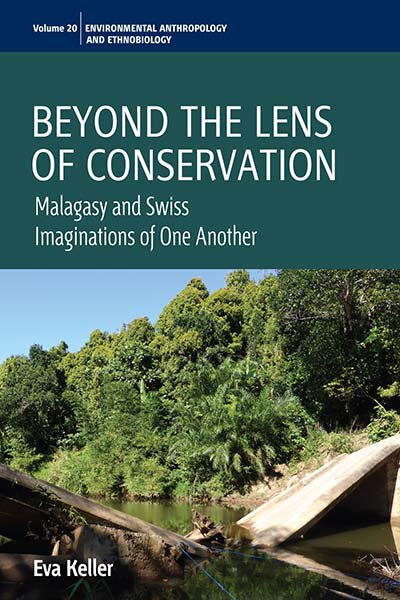
BEYOND THE LENS OF CONSERVATION
Malagasy and Swiss Imaginations of One Another
Eva Keller

Volume 20, Environmental Anthropology and Ethnobiology

Continue reading “July is National Park & Recreation Month”

Simulated Shelves: Browse May 2015 New Books

We are delighted to present a selection of our newly published May 2015 titles from our core subjects of Anthropology, Environmental Studies, File & Media Studies, History, and Urban Studies, along with a selection of our New in Paperback titles.


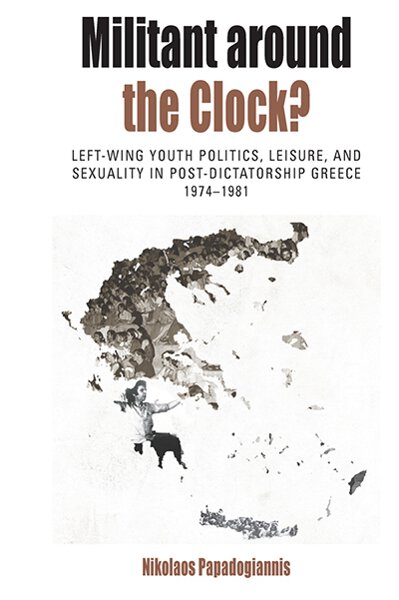
We are especially excited to announce the publication of Militant Around the Clock? by Nikolaos Papadogiannis.

“An original, well-researched book that provides a fresh perspective on youth and leisure in contemporary history by looking at Greece in the 1970s.” · Frank Trentmann, Birkbeck College, University of London

———————————————————————————————————————————–


MILITANT AROUND THE CLOCK?
Left-Wing Youth Politics, Leisure, and Sexuality in Post-Dictatorship Greece, 1974-1981
Nikolaos Papadogiannis

Volume 13, Protest, Culture & Society

Continue reading “Simulated Shelves: Browse May 2015 New Books”

World Environment Day

World Environment Day is held each year on 5th June. It is one of the principal vehicles through which the United Nations (UN) stimulates worldwide awareness of the environment and enhances political attention and action.

To mark this year’s observation, we welcomes you explore a free virtual issue from Berghahn Journals comprised of interdisciplinary articles examining Climate Change: http://bit.ly/1potKpB

Berghahn is pleased to showcase new and forthcoming titles in our Environmental Studies range. Each title featured below delivers informed comment on a number of key issues, and we are delighted to offer a 25% discount on all Environmental Studies titles for the next 30 days. At checkout, simply enter the code WED15.


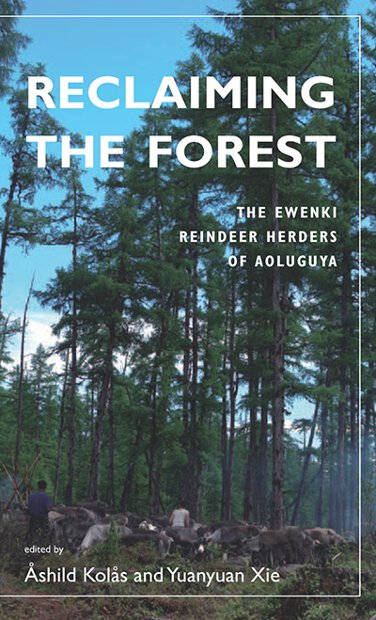
RECLAIMING THE FOREST
The Ewenki Reindeer Herders of Aoluguya
Edited by Åshild Kolås and Yuanyuan Xie
Foreword by F. Georg Heyne

Continue reading “World Environment Day”

Earth Day

Each year, Earth Day — April 22 — marks the anniversary of what many consider the birth of the modern environmental movement in 1970. Earth Day 1970 capitalized on the emerging consciousness, channeling the energy of the anti-war protest movement and putting environmental concerns front and center. The very first Earth day celebration brought 20 million Americans to the streets to peacefully demonstrate for environmental protection. The day finally united groups that shared common values and have been fighting against oil spills, polluting factories and power plants, raw sewage, toxic dumps, pesticides, freeways, the loss of wilderness, and the extinction of wildlife. It is now coordinated globally by the Earth Day Network, and celebrated in more than 192 countries each year, reaching out to hundreds of millions of people. Get involved to build a better future!

———————————————————————————————————————————–

In celebration of Earth Day, we are delighted to offer free access to a special virtual issue that focuses on Climate Change and features articles from a range of history, politics, and anthropology journals. http://journals.berghahnbooks.com/_uploads/Climate_Change_VI.pdf

———————————————————————————————————————————–

Happy Earth Day from Berghahn! Visit our web and for the next 30 days use code AAG15 at checkout to receive 25% discount on our Environmental Studies titles.

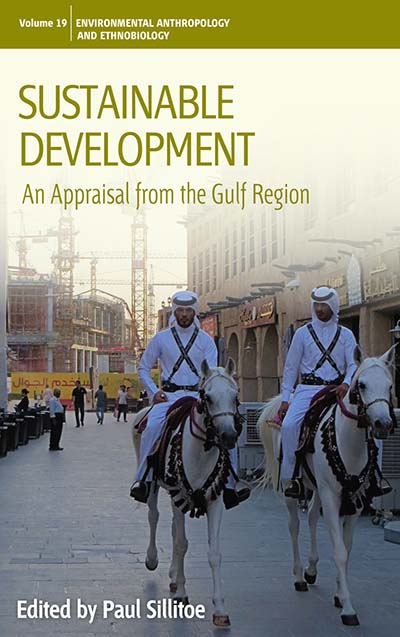
SUSTAINABLE DEVELOPMENT
An Appraisal from the Gulf Region
Edited by Paul Sillitoe

Continue reading “Earth Day”

Simulated Shelves: Browse March 2015 New Books

We are delighted to present a selection of our newly published March 2015 titles from our core subjects of Anthropology, Colonialism, Education, Global Health, History, Medical Anthropology, Politics, Theory & Methodology in Anthropology, and Urban Studies, along with a selection of our New in Paperback titles.

We are especially excited to announce the publication of the paperback edition of CIVILIZING NATURE edited by Bernhard Gissibl, Sabine Höhler and Patrick Kupper.

“This book makes a unique contribution to the conservation literature by enhancing one’s understanding and appreciation of the cultural meaning of nature conservation through the lens of national park development. […] Highly recommended.” · Choice

———————————————————————————————————————————–

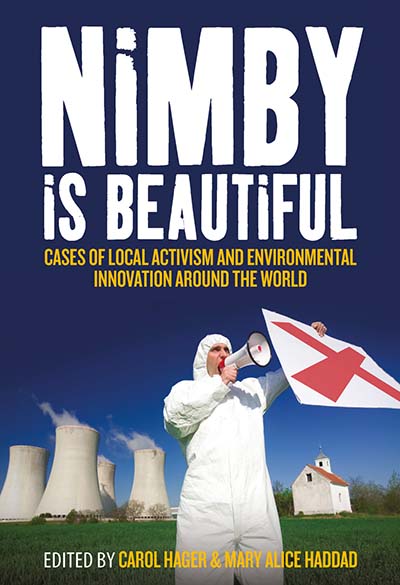
NIMBY IS BEAUTIFUL
Cases of Local Activism and Environmental Innovation Around the World
Edited by Carol Hager and Mary Alice Haddad

Continue reading “Simulated Shelves: Browse March 2015 New Books”

Visions of The Other: Swiss & Malagasy See, But Do They Understand?

Where do Switzerland and Madagascar meet, and what do the people of each place think of those in the other? Eva Keller, in her recently published Beyond the Lens of Conservation: Malagasy and Swiss Imaginations of One Another, in seeking to connect these two places winds up highlighting the disconnect between them. Following, the author offers a brief glimpse into the volume from two directions: from a Swiss classroom looking at Madagascar and from a Malagasy man looking at a national park.


_______________________________


Read the following extract of a conversation which took place in a Swiss classroom with pupils aged between 11 and 12. My questions are in italics.


What do you know about Madagascar?


Takschan: I think there are cannibals there, I think, the people, like they eat the flesh.

Continue reading “Visions of The Other: Swiss & Malagasy See, But Do They Understand?”

Getting Reacquainted with The Cambridge Journal of Anthropology

The Cambridge Journal of Anthropology


We are delighted to announce that 2015 marks the fourth volume year that the Cambridge Journal of Anthropology has been published through Berghahn. The original journal of this name was an in-house publication based at Cambridge University, with a remit to provide a space in which innovative material and ideas could be tested.


The new Cambridge Journal of Anthropology builds on that tradition and seeks to produce new analytical tool-kits for anthropology or to take all such intellectual exploration to task. Re-acquaint yourself with the journal by exploring the special sections outlined below.


We hope you’ll be inspired by these innovative approaches that push at the boundaries of anthropology to bring you fresh insights from pioneering scholars in the field.


Volume 32
Number 2, Autumn 2014
Special Section: Risks, Ruptures and Uncertainties: Dealing with Crisis in Asia’s Emerging Economies
Asia’s ongoing economic transformation has created a variety of unexpected ruptures, discontinuities and opportunities in the lives of local citizens across the region. The articles in this section contribute to an understanding of local responses to, and strategies for coping with, risk and uncertainty as multidimensional, interwoven aspects of daily life, guided by social, economic and moral considerations.

  
Volume 32
Number 1, Spring 2014
Special Section: Epidemic Events and Processes
The articles in this collection bring together epidemiology and social anthropology. They take us through epidemics critically distinguished as crises and as events, and through epidemics understood analytically as syndemics and as productive of both proliferating ‘projects’ and a compelling quest for ever-growing intelligence and ‘real-time’ surveillance. In this collection, we see the importance of a social anthropological understanding of the human subjects that epidemics, and responses to them, can constitute–and we glimpse some of the interagentivity in the treatment responses through which the lethal problem of ‘resistance’ can be created. In the case of ‘epidemics’ in this present issue, we see the import of anthropological material as it brings to the fore issues which, in another disciplinary language, are the historically contingent ‘externalities’ of ‘disease events’.

  
Volume 31
Number 1, Spring 2013
Special Section – Climate Histories and Environmental Change: Evidence and its Interpretation. Guest Editor David Sneath
The papers in this special section explore different visions of the environment and how they engender particular ways of seeing evidence of climatic and environmental change. A key aspect of such distinctive understandings seems to be the attribution of agency within conceptions of the environment that in each case are entangled with humans. Notions of the anthropogenic and non-equilibrial environments are explored in several of the papers collected here, along with ongoing debates surrounding the concept of the Anthopocene. An awareness of climate change has brought new urgency to the project of grasping our entangled environments in the diversity of their human understandings.

  
Volume 30
Number 2, Autumn 2012
Special Section
Thisspecial section reconsiders recent anthropological accounts of ‘Naturalism’, a term increasingly used as a shorthand for a bundle of purportedly western attitudes to nature, reality and mind/body distinctions. Anthropologists and others tend to invoke ‘Naturalism’ as a foil for descriptions of alternative ontologies elsewhere (such as animism or perspectivism), or alternatively, as a philosophical account of the world which is belied by Euroamericans’ own practices. By contrast, the papers in this section attempt to take naturalism seriously as an ethnographic object in its own right: who, if anyone, is a ‘naturalist’ and what do naturalist commitments look like and entail in practice?


For a free sample issue of the journal, click here.

Simulated Shelves: Browse January 2015 New Books

We are delighted to present a selection of our newly published January 2015 titles from our core subjects of Anthropology, Economics, Environmental Studies, Film Studies, History, Jewish Studies, Medical Anthropology, and Politics, along with a selection of our New in Paperback titles.


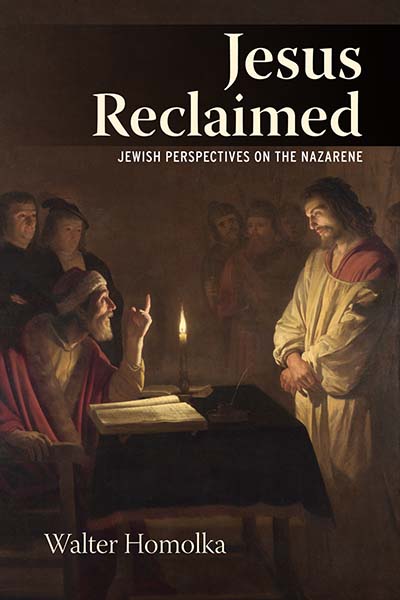
We are especially excited to announce the publication of JESUS RECLAIMED: Jewish Perspectives on the Nazarene by Walter Homolka

“This book offers a constructive contribution to the debates on the theological significance of Jewish and Christian approaches to the historical Jesus. The author’s knowledge of Jewish and Christian discourses on both sides of the Atlantic is impressive.” · Werner G. Jeanrond, University of Oxford

———————————————————————————————————————————–


JESUS RECLAIMED
Jewish Perspectives on the Nazarene
Walter Homolka
Translated by Ingrid Shafer


Continue reading “Simulated Shelves: Browse January 2015 New Books”