#MuseumWeek 2015

Museum Week is international: more than 800 museums, galleries and cultural institutions from across the UK, Europe, the Americas, Asia and Oceania — 29 countries in total — are officially participating in this, the first ever international Museum Week on twitter, March 23-29. ‪#‎MuseumWeek‬ 2015!

Happy Museum Week from Berghahn! Read a FREE virtual issue on Museums from Berghahn Journalshttp://bit.ly/P0ugcB  

———————————————————————————————————————————–

Berghahn is delighted to present some of the latest Museum Studies titles:


Museums and Collections Series: This series explores the potential of museum collections to transform our knowledge of the world, and for exhibitions to influence the way in which we view and inhabit that world. It offers essential reading for those involved in all aspects of the museum sphere: curators, researchers, collectors, students and the visiting public.
 

Forthcoming! Volume 8

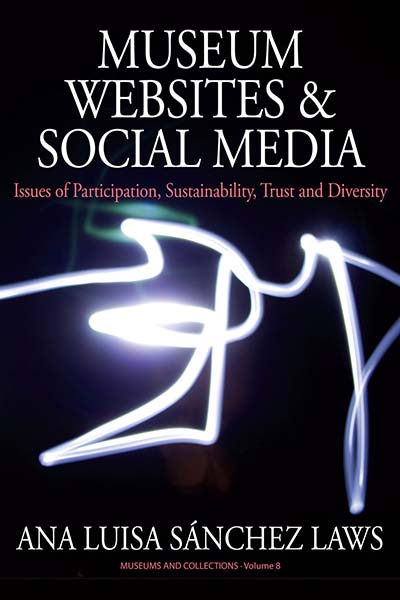
MUSEUM WEBSITES AND SOCIAL MEDIA
Issues of Participation, Sustainability, Trust and Diversity
Ana Luisa Sánchez Laws
Continue reading “#MuseumWeek 2015”

Reinventing Holiday

In advance of the approaching holiday, on Monday, October 6th, the Seattle City Council unanimously voted to redesignate the federal Columbus Day holiday as Indigenous Peoples’ Day to reflect that Native Americans were living on the continent before Christopher Columbus’s 15th Century arrival. Reinventing the holiday to a more politically correct and inclusive would celebrate the contributions and culture of the people on the other side of the New World discovery story.

Minneapolis voted in April to replace Columbus Day, while several states, including Alaska, Hawaii and Oregon do not acknowledge the holiday which became a U.S. federal holiday in 1937.

——————————————————————————————————————–


Berghahn recognizes the significance of indigenous cultures and is happy to present some of its relevant titles:


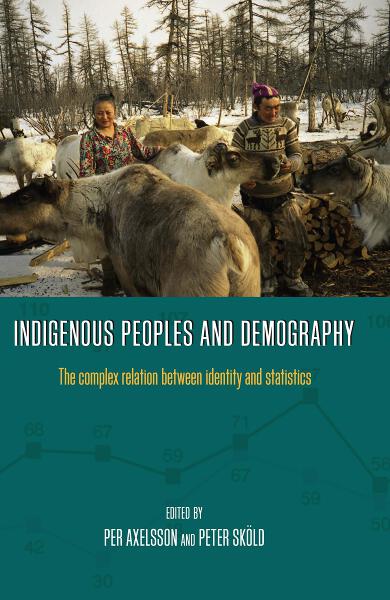
INDIGENOUS PEOPLES AND DEMOGRAPHY
The Complex Relation between Identity and Statistics
Edited by Per Axelsson and Peter Sköld

Continue reading “Reinventing Holiday”

Marking Museum Week: #AskTheCurator or View the Book

This week hundreds of museums across the United Kingdom and Europe are participating in Twitter’s first Museum Week campaign. Each day during this week is associated with a hashtag, from #DayInTheLife to #MuseumMemories, all intended to hit on various delightful aspects of the museum world. Today’s hashtag, #AskTheCurator is an opportunity to engage with museum experts. But for those who prefer to engage with experts the classic way — by way of their books — we have curated a collection of some of our Museum Studies titles in the following gallery.

_______________________________________

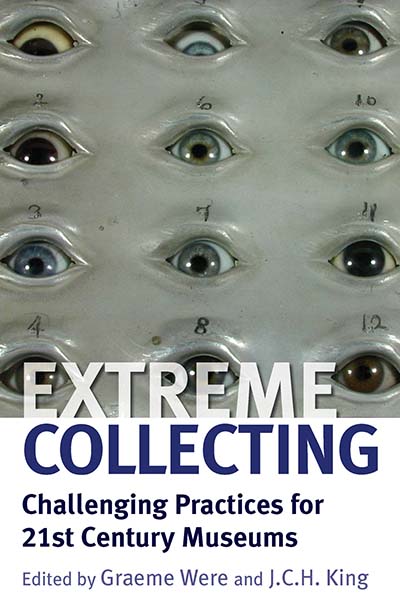
EXTREME COLLECTING

Challenging Practices for 21st Century Museums

Edited by Graeme Were and J. C. H. King

By exploring the processes of collecting, which challenge the bounds of normally acceptable practice, this book debates the practice of collecting ‘difficult’ objects, from a historical and contemporary perspective; and discusses the acquisition of objects related to war and genocide, and those purchased from the internet, as well as considering human remains, mass produced objects and illicitly traded antiquities. Much of the book engages with the question of the limits to the practice of collecting as a means to think through the implementation of new strategies. Continue reading “Marking Museum Week: #AskTheCurator or View the Book”

The Importance of Being Nourished

Nutrition is essential to human life, no matter one’s cultural background or period in which one lived. Human Diet and Nutrition in Biocultural Perspective: Past Meets Present, published in 2010 and recently available as an ebook, follows this fundamental building block of life and its impact on society from prehistoric to contemporary times, across the world. Following, volume editors Tracy Prowse and Tina Moffat discuss the most (and least) enjoyable aspects of editing a collection, changes in the study of human diet, and the way forward in the Anthropology of diet and nutrition.


___________________________________________


Berghahn Books: What drew you to the study of health and nutrition?


Tracy Prowse: I really like food. Seriously, I’ve always been interested in diet and nutrition in past populations.


Tina Moffat: I started out in infant mortality studies and child health and realized quickly that nutrition is a major component of child health. 

Continue reading “The Importance of Being Nourished”

SETI: An Alien Concept?

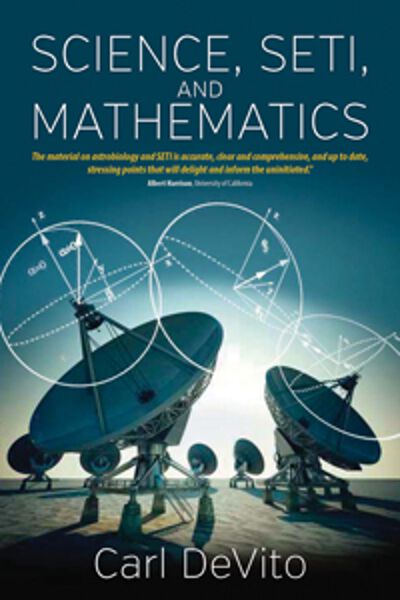
If there is extra-terrestrial life in the Universe, how might it communicate? In Science, SETI, and Mathematics, to be published this month, author Carl DeVito seeks to answer this question in a conversational way, explaining the role of mathematics in the Search for Extra-Terrestrial Intelligence (SETI). DeVito explores the science and history behind the search, and shares the many questions associated with it, especially those regarding language and communication.


_________________________________


The early workers in the search for extra-terrestrial intelligence were concerned with the technical problems of sending and receiving radio signals across inter-stellar distances.
 

Slowly, however, the deeper questions inherent in this endeavor rose to prominence: questions about the nature of intelligence, the nature of language, and the philosophical/psychological motivation behind this search.

Continue reading “SETI: An Alien Concept?”

Likelihood of Contact Depends on the Lifetimes of Civilizations

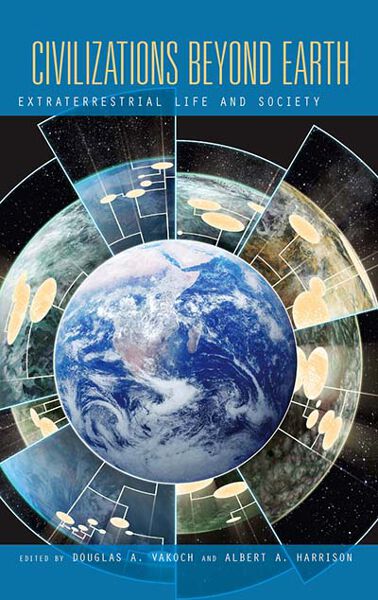
If alien civilizations are anything like terrestrial civilizations, earthly beings may never encounter beings from outer space. Civilizations Beyond Earth contributor Alan J. Penny says our greatest chance for interaction will hinge on the longevity and attention span of an alien society — which must be long enough to give us a chance to interact.


________________________________________

To consider the number of extraterrestrial civilizations that may be out there and which we can detect by their emission of radio signals, we need to think about the likelihood that a star may host a planet with a civilization that can broadcast such signals.


But we also need to think about how long such civilizations last.

Continue reading “Likelihood of Contact Depends on the Lifetimes of Civilizations”

A New Model for Interstellar Communication

Communication between great distances is nearly instantaneous and is becoming faster every day. But when discussing communication with beings outside of our solar system, emails and text messages are still not fast enough to span the light-years of distance in one person’s lifetime. Civilizations Beyond Earth: Extraterrestrial Life and Society contributor Carl L. DeVito proposes that perhaps communication to the far reaches of space is about leaving a mark or a legacy, much like great civilizations of yore left for modern-day humans.


________________________________


The laws of physics and the discoveries of astronomy place serious restrictions on interstellar communication.


Stars are light-years apart, and the special theory of relativity tells us that there are restrictions on the speed at which information can be exchanged. The times involved in sending and receiving messages, which may exceed many generations, rule out a dialogue.

Continue reading “A New Model for Interstellar Communication”

Extra-Terrestrial Life: Good or Bad News?

Is there life beyond Earth? And how will the human race — specifically our media — react if there is? Civilizations Beyond Earth: Extraterrestrial Life and Society, which will be released as a paperback this month, is a collection of essays that address the (plausible) possibility that we are not alone in the universe. If that is true, and if we do one day make contact — wonders contributor Morris Jones — how will news outlets portray such an event? And will that lead to worldwide awe or global panic?


________________________________________________________


Let’s assume that evidence of intelligent extraterrestrial life is discovered tomorrow.


Continue reading “Extra-Terrestrial Life: Good or Bad News?”

Life Beyond Earth? Survey Says…

In 2005, a survey of 1,000 U.S. men and women of various backgrounds revealed that 6 in 10 Americans believe in the possibility of extraterrestrial life. If this slice of the public is correct, what does it mean for our world? That is one of the questions editors Douglas A. Vakoch and Albert A. Harrison attempt to answer through the collection Civilizations Beyond Earth: Extraterrestrial Life and Society, which was released in paperback August 2013. Below, volume contributor George Pettinico begs the question of the American reaction: How will the U.S. react if we discover life outside of our blue planet?

_____________________________________________


Imagine the day, if and when it should come, that the Search for Extraterrestrial Intelligence (SETI) confirms there is indeed intelligent life on other planets.


Continue reading “Life Beyond Earth? Survey Says…”

The Hearth of the Home

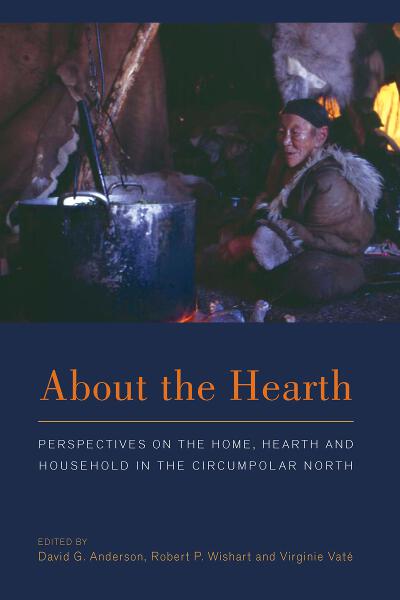
Editors David G. Anderson, Robert P. Wishart, and Virginie Vaté look from many angles—history, cosmology, and architecture—at the idea of home in About the Hearth: Perspectives on the Home, Hearth and Household in the Circumpolar North, which will be published next month. Below, co-editor Wishart discusses the importance of home and shares a bit about how life is constructed in the Arctic North.


__________________________________________________

Berghahn Books: What drew you ‘to the hearth,’ or to the study of the home in the circumpolar north?


Robert P. Wishart: For myself it came originally through observations on the importance of building cabins among the Gwich’in.

Continue reading “The Hearth of the Home”