#MuseumWeek 2015

Museum Week is international: more than 800 museums, galleries and cultural institutions from across the UK, Europe, the Americas, Asia and Oceania — 29 countries in total — are officially participating in this, the first ever international Museum Week on twitter, March 23-29. ‪#‎MuseumWeek‬ 2015!

Happy Museum Week from Berghahn! Read a FREE virtual issue on Museums from Berghahn Journalshttp://bit.ly/P0ugcB  

———————————————————————————————————————————–

Berghahn is delighted to present some of the latest Museum Studies titles:


Museums and Collections Series: This series explores the potential of museum collections to transform our knowledge of the world, and for exhibitions to influence the way in which we view and inhabit that world. It offers essential reading for those involved in all aspects of the museum sphere: curators, researchers, collectors, students and the visiting public.


Forthcoming! Volume 8

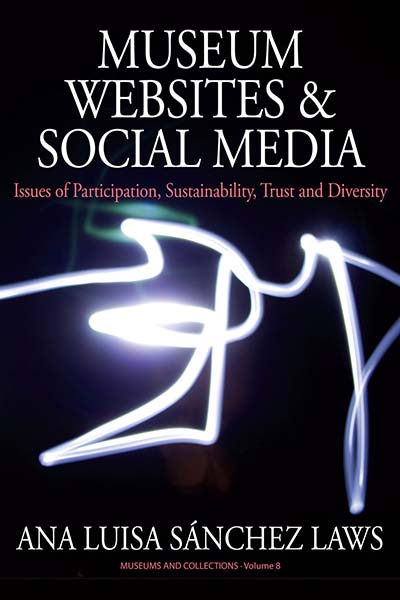
MUSEUM WEBSITES AND SOCIAL MEDIA
Issues of Participation, Sustainability, Trust and Diversity
Ana Luisa Sánchez Laws

Continue reading “#MuseumWeek 2015”

Visions of The Other: Swiss & Malagasy See, But Do They Understand?

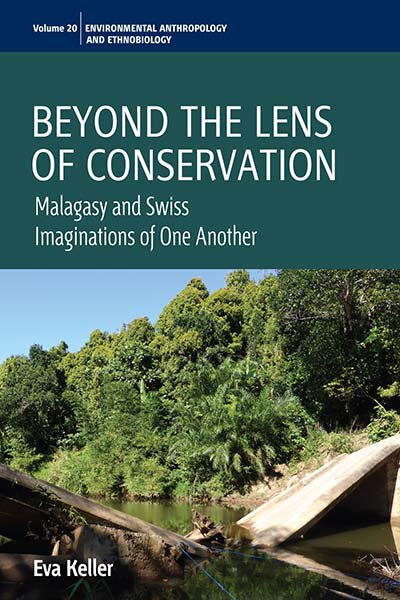
Where do Switzerland and Madagascar meet, and what do the people of each place think of those in the other? Eva Keller, in her recently published Beyond the Lens of Conservation: Malagasy and Swiss Imaginations of One Another, in seeking to connect these two places winds up highlighting the disconnect between them. Following, the author offers a brief glimpse into the volume from two directions: from a Swiss classroom looking at Madagascar and from a Malagasy man looking at a national park.


_______________________________


Read the following extract of a conversation which took place in a Swiss classroom with pupils aged between 11 and 12. My questions are in italics.


What do you know about Madagascar?


Takschan: I think there are cannibals there, I think, the people, like they eat the flesh.

Continue reading “Visions of The Other: Swiss & Malagasy See, But Do They Understand?”

Fertility, Reproduction and Sexuality

Today (March 18th) is Goddess of Fertility Day, a time when Aphrodite and other gods and goddesses of fertility are honored by pagans throughout the world in celebration of life and fertility.

———————————————————————————————————————————–

Understanding the complex and multifaceted issue of human reproduction has been, and remains, of great interest both to academics and practitioners. Fertility, Reproduction and Sexuality series includes studies by specialists in the field of social, cultural, medical, and biological anthropology, medical demography, psychology, and development studies. Current debates and issues of global relevance on the changing dynamics of fertility, human reproduction and sexuality are addressed. Below is a selection of forthcoming & newly published titles within the series:


Volume 30 Forthcoming!

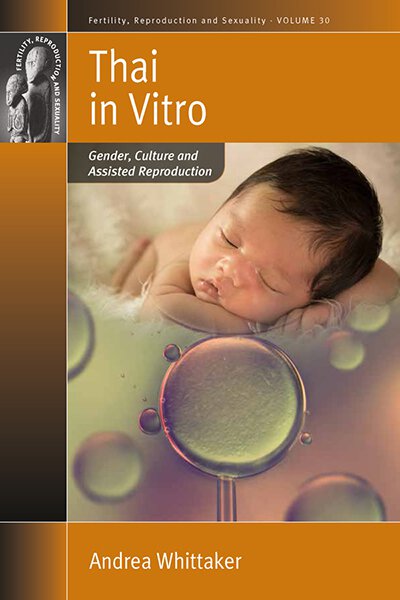
THAI IN VITRO
Gender, Culture and Assisted Reproduction
Andrea Whittaker


Continue reading “Fertility, Reproduction and Sexuality”

Roots and Recovery: Anthropologists Study Anorexia from all Angles

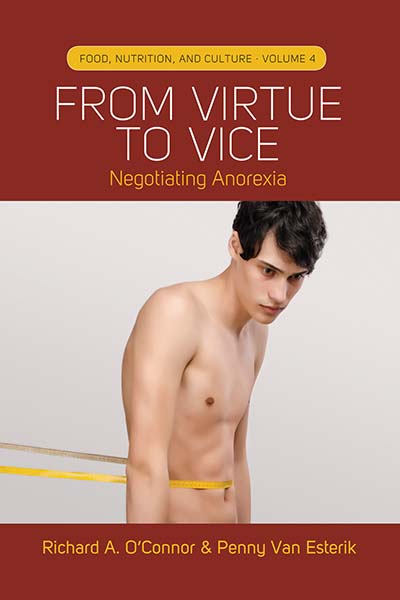
How do sufferers of anorexia recover? Richard A. O’Connor and Penny Van Esterik seek answers to this question, first by identifying root causes of the disease and then by sharing the stories of those who have made a full recovery.  From Virtue to Vice: Negotiating Anorexia, the book that resulted from their research, does not look at the affliction of anorexia from behind a glass, in fact, O’Connor’s connection to the work is deeply personal. He explains in his own words below.


_______________________


Every book has a back story. Mine is no big secret. When my daughter Amorn became anorexic it turned our family upside down. Carolyn [my wife] and I desperately wanted answers. We got a great counselor but nothing worked. The explanations we got made no sense. That wasn’t our daughter. Of course we worried we were in denial—that we just didn’t want to face the truth—and that silenced me at the time. I understood clinicians have to put people in categories and few fit perfectly. So I settled into accepting my daughter was an exception, an outlier. What mattered most was working with her caregivers for recovery.


Continue reading “Roots and Recovery: Anthropologists Study Anorexia from all Angles”

National Women’s History Month

Women’s History Month is an annual declared month that highlights the contributions of women to events in history and contemporary society. It is celebrated during March in the United States, and across Europe, corresponding with International Women’s Day on March 8. All around the world, National Women’s History Month & International Women’s day present an opportunity to celebrate the achievements of women while calling for greater equality!


Berghahn invites you to explore a special issue of Aspasia devoted to International Women’s Day. The year 2010 marked the centennial of International Women’s Day, and the year 2011 marked the centennial of its first celebrations. Inspired by these events, this issue deals with “A Hundred Years of International Women’s Day in Central, Eastern and Southeastern Europe.” Read more.


Berghahn is also pleased to offer a 25% discount on any of our Gender Studies books on orders placed within the next 30 days. At checkout, simply enter the code IWD15.


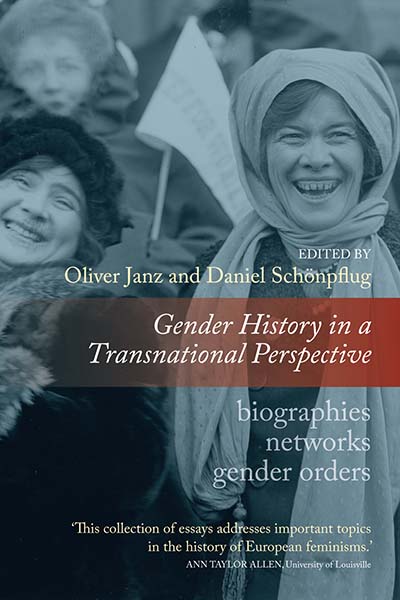
GENDER HISTORY IN A TRANSNATIONAL PERSPECTIVE
Networks, Biographies, Gender Orders
Edited by Oliver Janz and Daniel Schönpflug


Continue reading “National Women’s History Month”

Getting Reacquainted with The Cambridge Journal of Anthropology

The Cambridge Journal of Anthropology


We are delighted to announce that 2015 marks the fourth volume year that the Cambridge Journal of Anthropology has been published through Berghahn. The original journal of this name was an in-house publication based at Cambridge University, with a remit to provide a space in which innovative material and ideas could be tested.


The new Cambridge Journal of Anthropology builds on that tradition and seeks to produce new analytical tool-kits for anthropology or to take all such intellectual exploration to task. Re-acquaint yourself with the journal by exploring the special sections outlined below.


We hope you’ll be inspired by these innovative approaches that push at the boundaries of anthropology to bring you fresh insights from pioneering scholars in the field.


Volume 32
Number 2, Autumn 2014
Special Section: Risks, Ruptures and Uncertainties: Dealing with Crisis in Asia’s Emerging Economies
Asia’s ongoing economic transformation has created a variety of unexpected ruptures, discontinuities and opportunities in the lives of local citizens across the region. The articles in this section contribute to an understanding of local responses to, and strategies for coping with, risk and uncertainty as multidimensional, interwoven aspects of daily life, guided by social, economic and moral considerations.

  
Volume 32
Number 1, Spring 2014
Special Section: Epidemic Events and Processes
The articles in this collection bring together epidemiology and social anthropology. They take us through epidemics critically distinguished as crises and as events, and through epidemics understood analytically as syndemics and as productive of both proliferating ‘projects’ and a compelling quest for ever-growing intelligence and ‘real-time’ surveillance. In this collection, we see the importance of a social anthropological understanding of the human subjects that epidemics, and responses to them, can constitute–and we glimpse some of the interagentivity in the treatment responses through which the lethal problem of ‘resistance’ can be created. In the case of ‘epidemics’ in this present issue, we see the import of anthropological material as it brings to the fore issues which, in another disciplinary language, are the historically contingent ‘externalities’ of ‘disease events’.

  
Volume 31
Number 1, Spring 2013
Special Section – Climate Histories and Environmental Change: Evidence and its Interpretation. Guest Editor David Sneath
The papers in this special section explore different visions of the environment and how they engender particular ways of seeing evidence of climatic and environmental change. A key aspect of such distinctive understandings seems to be the attribution of agency within conceptions of the environment that in each case are entangled with humans. Notions of the anthropogenic and non-equilibrial environments are explored in several of the papers collected here, along with ongoing debates surrounding the concept of the Anthopocene. An awareness of climate change has brought new urgency to the project of grasping our entangled environments in the diversity of their human understandings.

  
Volume 30
Number 2, Autumn 2012
Special Section
Thisspecial section reconsiders recent anthropological accounts of ‘Naturalism’, a term increasingly used as a shorthand for a bundle of purportedly western attitudes to nature, reality and mind/body distinctions. Anthropologists and others tend to invoke ‘Naturalism’ as a foil for descriptions of alternative ontologies elsewhere (such as animism or perspectivism), or alternatively, as a philosophical account of the world which is belied by Euroamericans’ own practices. By contrast, the papers in this section attempt to take naturalism seriously as an ethnographic object in its own right: who, if anyone, is a ‘naturalist’ and what do naturalist commitments look like and entail in practice?


For a free sample issue of the journal, click here.

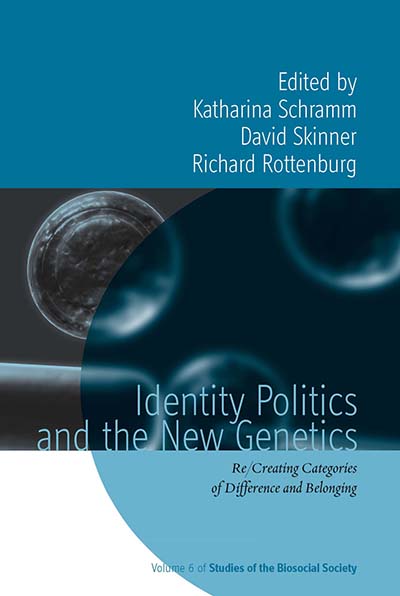
Identity at the Intersection of Science and Culture

Drawing on the work of medical researchers, anthropologists, historians of science, and sociologists, Identity Politics and the New Genetics: Re/Creating Categories of Difference and Belonging explores how science and culture are used to create and perpetuate ideas of race and ethnicity. The volume was published as a paperback in November. Following, David Skinner, who co-edited the volume with Katharina Schramm and Richard Rottenburg, reflects on the volume’s reception and its distinction from other volumes on genetics and social history.


As the attention devoted to science journalist Nicholas Wade’s recent book A Troublesome Inheritance: Genes, Race, and Human History illustrates, discussion of race and genetics is habitually deemed ‘difficult’ or ‘controversial’. Wade is one of a long line of writers who portray themselves as fearless truth-seekers battling the politically correct consensus that races are social not biological types.

Continue reading “Identity at the Intersection of Science and Culture”

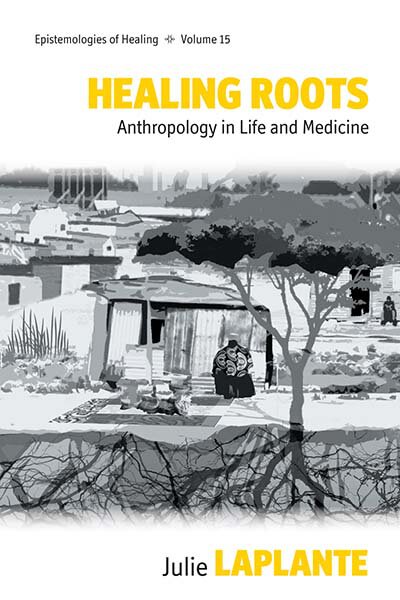
‘Healing Roots’: Author Traces Life of Wild Plant from Farm to Pharm

The healing powers of a plant in sub-Saharan Africa, long used for indigenous medicine, are now being harnessed as a pharmaceutical to be more widely produced and sold. Author Julie Laplante follows this path of production of Artemesia Afra from a wild-growing bush to a processed, controlled substance in her soon-to-be-published monograph, Healing Roots: Anthropology in Life and Medicine. Following, Laplante shares how her own path led her from researcher to author.


_________________________________


The journey told in the book began in August 2006 within the Biomedicine in Africa research group at the Max Planck Institute für etnologische forshung in Halle (Saale), Germany, as we were invited to explore how biomedicine is both shaping and being shaped through its practices in Africa. My own research project entitled ‘South African Roots towards Global Knowledge’ namely intended to find out how this is done through the practices of clinical trials as they aim to ‘recognize’ indigenous medicine.

Continue reading “‘Healing Roots’: Author Traces Life of Wild Plant from Farm to Pharm”