World Breastfeeding Week

World Breastfeeding Week (WBW) is an annual celebration which is held yearly from 1st to 7th of August in more than 120 countries.

Being organized by WABA, WHO and UNICEF, the goal is to promote exclusive breastfeeding for the first six months of life which yields tremendous health benefits, providing critical nutrients, protection from deadly diseases such as pneumonia and fostering growth. To learn more please visit www.worldbreastfeedingweek.org

Berghahn is delighted to present some of its relevant titles:


Fertility, Reproduction and Sexuality Series

Understanding the complex and multifaceted issue of human reproduction has been, and remains, of great interest both to academics and practitioners. This series includes studies by specialists in the field of social, cultural, medical, and biological anthropology, medical demography, psychology, and development studies.


Volume 26

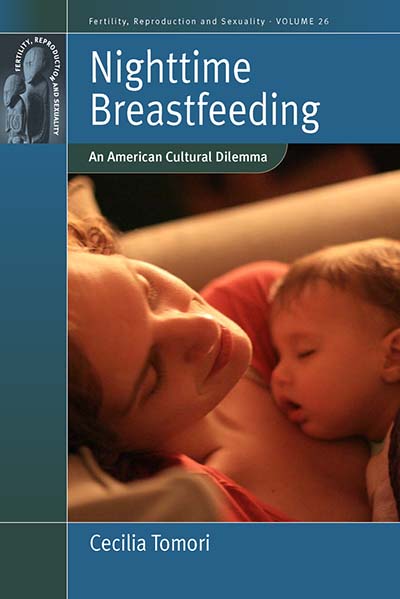
NIGHTTIME BREASTFEEDING
An American Cultural Dilemma
Cecilia Tomori Continue reading “World Breastfeeding Week”

Populist radical right parties and (trans)national environmental issues

Nature and CultureThis is a guest post written by Bernhard Forchtner, contributor to Volume 10: Issue 2 of the journal Nature and Culture . Bernhard Forchtner is a contributor to the article titled “The Nature of Nationalism: ‘Populist Radical Right Parties’ on Countryside and Climate.”

Conversations about “populist radical right parties” (Cas Mudde) in contemporary Europe usually turn to issues such as asylum seekers, ‘foreigners’ and the European Union. What tends to surprise audiences, however, are stories about far-right ecology. Environmental issues are, after all, issues supposedly covered by ‘the left’. However, even if far-right actors across Europe have hardly prioritised environmental protection over the last decades, these actors do intervene in such debates, making the latter meaningful on the basis of their nationalist stance. And maybe, this should not surprise us in the first place given that nature protection, in its beginnings in the 19th century, was often pushed by rather conservative forces.

In the article The Nature of Nationalism, my colleague Christoffer Kølvraa and I thus ask whether and how different types of “populist radical right parties”, the more mainstream Danish People’s Party and the more radical British National Party, have addressed the topic of the national countryside and the transnational issue of climate change.

Although differences in the ‘radicalism’ of the position of these actors exist, these differences are not fundamental. Instead, there is a fundamental difference in how national countryside and transnational climate are assessed. With regards to the countryside, both parties are ardent defenders of what they view as a quintessential national space, a position underpinned by what we call a nationalist symbolic aesthetics. That is, both parties frame the countryside in terms of its natural splendour coupled with a claim for historical continuity of the national community in this territory, thereby making manifest the political sovereignty the people enjoy over the land. In relation to the nature of climate too, the British National Party goes much further than the Danish People’s Party, the former voicing strong scepticism (if not denial) regarding the thesis of (man-made) climate change – something the latter rather insinuates. However, both parties share a symbolic materialism via which international bodies, arguably necessary in the fight against an inherently transnational phenomenon, are criticised as they apparently endanger national sovereignty and classical nationalist ideas of self-sufficiency. When nationalists justify their stance on environmental issues and claim that “we all hold our land in trust for future generations” (British National Party), one should not simply dismiss their arguments as strategic in order to attract voters. Instead, their notion of ecology and environmental protection is deeply embedded in their ideology.

While the topic has received rather scant attention in the literature to date, and thus research charters much previously unmapped territory, the topic has also proven to be challenging – something noticeable in particular in conversations with environmental activists. While the climate politics of “populist radical right parties” are easily rejected by these activists, many of their more subtle positions, for example on invasive species, cannot easily be distinguished from mainstream and even left-wing arguments. Where they exist, these similarities need to be taken seriously! As the modernization of the far-right across Europe does not seem to lose steam, more and more related, counter-intuitive cases emerge. Currently, a group of German neo-Nazis (Balaclava Küche) promotes veganism within their scene. Partly due to environmental concerns, they do so through their YouTube channel but have also offered catering service at neo-Nazi concerts, etc. In a series of interviews conducted after the completion of The Nature of Nationalism, actors (previously) belonging to “populist radical right parties” voiced ‘traditional’ views on a far-right ecology. For example, interviewees lamented about what they perceive as a cultural crisis which ignores the laws of nature. Instead, nations should be viewed as (eco)systems which – if too much alien elements enter – lose their natural equilibrium and collapse. Subsequently, “nomadic cultures and races” were rejected in favor of rooted (“sesshafte”) people who supposedly care for the environment. This can easily take an anti-Semitic twist but definitely contains a rejection of “foreigners” who are not committed to the beauty of ‘our’ country the way ‘natives’ supposedly are.

What these interviews have shown is that differences between these groups are worth investigating. While our paper foregrounds similarities based on a shared ideological ground, subsequent case-studies should equally focus on differences between various actors within a national space or across boundaries. There is work to do as these actors seem to have a future in, at least European, politics.

Learn more about the journal Nature and Culture

July is National Park & Recreation Month

Each year since 1985, Americans have celebrated National Park and Recreation Month during the month of July to recognize the importance of parks and recreation in establishing and maintaining the quality of life for, and contributing to the physical, economic and environmental well-being of communities.


Berghahn is happy to present some of its relevant Environmental Studies titles:

_________________________________________________________________


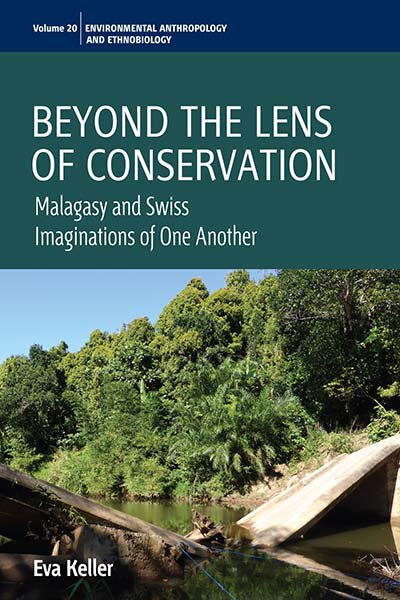
BEYOND THE LENS OF CONSERVATION
Malagasy and Swiss Imaginations of One Another
Eva Keller

Volume 20, Environmental Anthropology and Ethnobiology

Continue reading “July is National Park & Recreation Month”

Demystifying “Austerity”: Series Editors Reflect on Greek Crisis

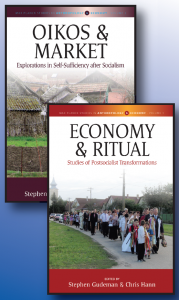
The following is a guest blog post written by Stephen Gudeman, Professor of Anthropology at the University of Minnesota and co-editor for the Max Planck Studies in Anthropology and Economy series.  Below, Gudeman discusses connections between the current Greek Crisis and the first two volumes of this series.
 
The first two volumes in the Max Planck Studies in Anthropology and Economy series, which are edited by Chris Hann and myself, bring to mind the current Greek crisis. I wish I had been a fly on the wall throughout the negotiations, been able to interject a word or two, and talked to a few Greeks and other Europeans for their thoughts. From afar, I see they featured feisty personalities, as well as different visions about how economy operates, wellbeing, and the purpose of economic life. They reflect cultural differences within the Euro zone.
 

Continue reading “Demystifying “Austerity”: Series Editors Reflect on Greek Crisis”

Flexible Bureaucracy & The “Public Good”: Land Restitution in Post-Apartheid South Africa

The Cambridge Journal of AnthropologyIn its spring 2015 volume, The Cambridge Journal of Anthropology published the special issue “Remaking the Public Good: A New Anthropology of Bureaucracy”, edited by Laura Bear and Nayanika Mathur. In this blog post, Olaf Zenker – contributor of the article De-judicialization, Outsourced Review and All-too-flexible Bureaucracies in South African Land Restitution – describes how he came across the peculiar case analysed in his article and how this land claim ended up speaking about the “Remaking of the Public Good” in South Africa and beyond.


How is the new South African state imagined, enacted and contested, when citizens engage officials in the attempts to get back their land lost through racist colonial and apartheid dispossessions? What kinds of “public goods” are brought into play, by whom and with what effects, when the post-apartheid state simultaneously functions as the main driving force behind this land restitution process, as its judicial arbiter through the specialist Land Claims Court, and as its core reference point, as all claims are lodged against the state? Questions like these have driven my intermittent ethnographic fieldwork on South African land restitution since 2010 – not only with regard to claimant communities, but especially also concerning the operations within the two relevant state agencies: the Land Claims Commission and the Land Claims Court.


Continue reading “Flexible Bureaucracy & The “Public Good”: Land Restitution in Post-Apartheid South Africa”

Simulated Shelves: Browse June 2015 New Books

We’re delighted to offer a selection of latest releases from our core subjects of Anthropology, Cultural Studies, Genocide Studies, History, Medical Anthropology, Museum Studies, Social Anthropology, Sociology, and Urban Studies, along with a selection of our New in Paperback titles.

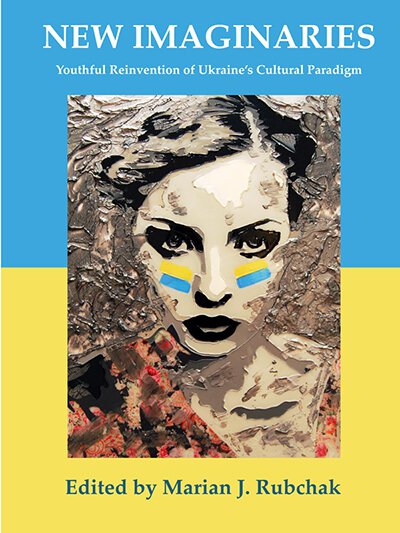
We are especially excited to announce the publication of New Imaginaries, edited and translated by Marian J. Rubchak.

“Instead of pointing out how ‘different’ Ukrainian feminism/gender studies/women’s studies is from ‘Western’ (or other) feminisms, this volume has potential to contribute to our understanding of the exciting and complex ways that feminist thought travels as one of the most important ‘ideascapes’ (à la Appadurai) of our time.” · Sarah D. Phillips, Indiana University

———————————————————————————————————————————–

NEW IMAGINARIES
Youthful Reinvention of Ukraine’s Cultural Paradigm
Edited and Translated by Marian J. Rubchak
Foreword Martha Kichorowska Kebalo

Continue reading “Simulated Shelves: Browse June 2015 New Books”

Anthropology Resources for Students and Young Scholars

Image result for London Anthropology DayJune 30 is London Anthropology Day, held at the British Museum’s Education Clore Centre, where participants get to learn what anthropology is about, the types of careers anthropologists have, and gain hands-on experience of what it is like to study the subject at university.

London Anthropology Day is organised by the Royal Anthropological Institute’s Discover Anthropology Education Outreach Programme in collaboration with the British Museum and participating universities.

———————————————————————————————————————————–

In the spirit of engaging young anthropologists, Berghahn is happy to present a selection of Anthropology Resources for Students and Young Scholars:

Continue reading “Anthropology Resources for Students and Young Scholars”

In History

June 25, 1991: Croatia and Slovenia Declare Independence; War Between Croatia and Serbia Begins:

The provinces of Croatia and Slovenia declare their independence from Yugoslavia. Slovenia breaks off without violence. However, within two days the Yugoslav army, representing Serbia, attacks Croatia and a long war between the two countries begins. This is the start of nearly a decade of conflict in the region as Yugoslavia slowly breaks apart.

______________________________

On related subjects from Berghahn Central & Eastern Europe List:

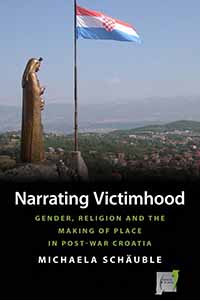
NARRATING VICTIMHOOD
Gender, Religion and the Making of Place in Post-War Croatia
Michaela Schäuble

Volume 11, Space and Place

Continue reading “In History”

World Refugee Day

The United Nations’ (UN) World Refugee Day is observed on June 20 each year. This event  draws public’s attention to the millions of refugees and Internally displaced persons worldwide who have been forced to flee their homes due to war, conflict and persecution.


“These problems do not disappear just because we do not hear about them. There is so much more happening around the world than what is communicated to us about the top stories we do hear. We all need to look deeper and discover for ourselves…. What is the problem? Where is it? How can we help to solve it?” – ANGELINA JOLIE, Notes from My Travels: Visits with Refugees in Africa, Cambodia, Pakistan and Ecuador

———————————————————————————————————————————–

In marking this year’s observance, Berghahn is pleased to feature a selection of books of related interest, and offer a 25% discount on all Refugee and Migration Studies titles. For the next 30 days use discount code WRD15 at checkout.

Continue reading “World Refugee Day”