Excerpt: Austrian “Gypsies” in the Italian archives

Paola Trevisan


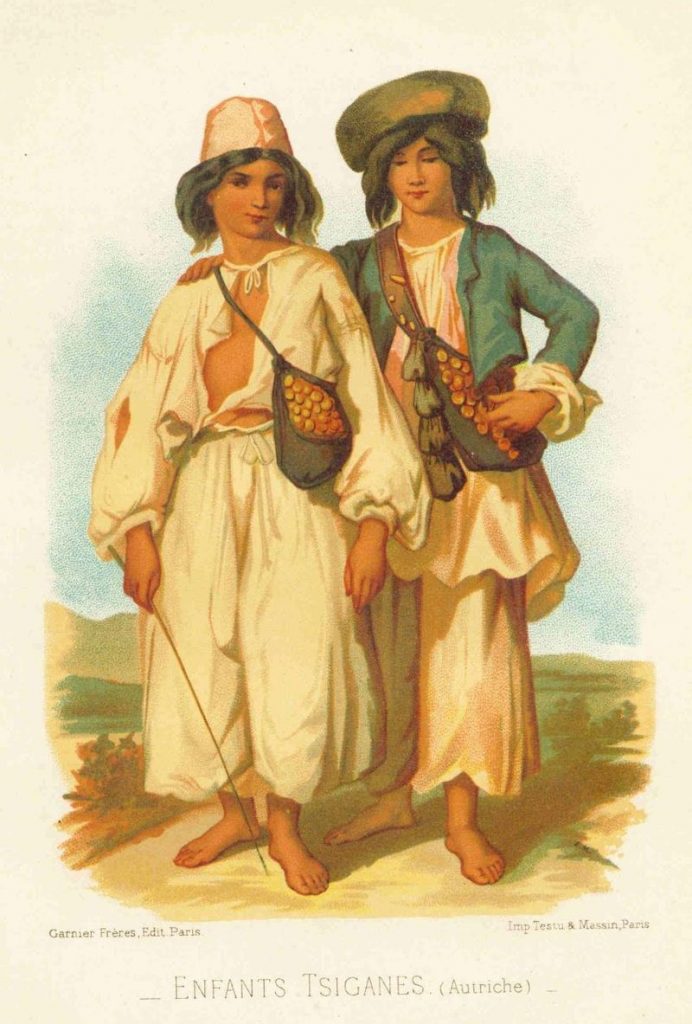
In the spirit of Gypsy, Roma, Traveller History Month in June, we invite you to read the following excerpt from “Austrian ‘Gypsies’ in the Italian archives: Historical ethnography on multiple border crossings at the beginning of the twentieth century” by Paola Trevisan.

This article is featured in Focaal: Journal of Global and Historical Anthropology, a part of the Berghahn Open Anthro collection of open-access journals.

Pictured: Chromolithograph entitled Enfants Tsiganes (Autriche) [Gipsy Children, Austria]; published by Garnier, Paris, printed by Testu & Massin, Paris (Public Domain)


Continue reading “Excerpt: Austrian “Gypsies” in the Italian archives”

Excerpt: Navigating Shifting Regimes of Ocean Governance

Ana K. Spalding and Ricardo de Ycaza


In the spirit of World Environment Day on 5 June, we invite you to read the following excerpt from “Navigating Shifting Regimes of Ocean Governance: From UNCLOS to Sustainable Development Goal 14” by Ana K. Spalding and Ricardo de Ycaza (Environment and Society: Advances in Research, Vol.11: Issue 1), a part of the Berghahn Open Anthro collection of open access journals.

Continue reading “Excerpt: Navigating Shifting Regimes of Ocean Governance”

TRANSBORDER MEDIA SPACES: AYUUJK VIDEOMAKING BETWEEN MEXICO AND THE US

Ingrid Kummels

As a response to the Covid-19 pandemic, social arrangements allowing people to carry on despite the restrictions on mobility forced upon them became predominant across the world. From work (home office) and education (home schooling) to birthday parties, meetings, conferences and political campaigns (Zoom, etc.) diverse aspects of life were reoriented to adapt to the requirements of “social distancing” – although this term is a misnomer, since the actual challenge consists of overcoming physical distance. Even countries that are leaders in high-tech have had a hard time adjusting, since they had failed to consider the necessary widespread availability of equipment, training and creativity to remotely organize a community, its social life and leisure for long periods of time.

Continue reading “TRANSBORDER MEDIA SPACES: AYUUJK VIDEOMAKING BETWEEN MEXICO AND THE US”

On Archival Access in a Pandemic

Catherine A. Nichols

Exchanging Objects and my broader research agenda considers how and why certain objects left museums, institutions so often associated with preservation, archiving, and keeping. It can be an odd thing, to go to a museum to intentionally study things that aren’t there. When the idea for this research was suggested to me by anthropologist Nancy Parezo, I admit I was first puzzled, then intrigued.

Continue reading “On Archival Access in a Pandemic”

Marcel Mauss, a gift to the social sciences

mauss

Marcel Mauss (May 10, 1872—Feb. 10, 1950), celebrated author of The Gift and nephew of Émile Durkheim, was a French sociologist and anthropologist whose contributions include a highly original comparative study of the relation between forms of exchange and social structure. His views on the theory and method of ethnology are thought to have influenced many eminent social scientists.

In the spirit of his birthday, we are delighted to present volumes from the Publications of the Durkheim Press series, with special attention to The Nature of Sociology and Techniques, Technology, and Civilization. Recently released in paperback, these volumes offer students an ideal introduction to Mauss’s writings and theories.


Continue reading “Marcel Mauss, a gift to the social sciences”

Karl Marx as a Young Journalist

By Rolf Hosfeld

HosfeldKarl

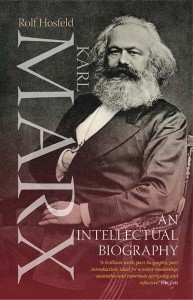
Excerpted by Karl Marx: An Intellectual Biography by Rolf Hosfeld, Translated from the German by Bernard Heise

Karl Marx was born May 5, 1818. As a young man he was a journalist and an editor for Rheinische Zeitung, a liberal-socialist newspaper published in Germany. The paper was previously edited by Adolf Friedrich Rutenberg, who favored opinionated feuilletons, before Marx replaced him and gained recognition for his practical, evidence-based approach.

Moses Hess was the first communist Karl Marx personally encountered. Both were from the Rhineland, came from bourgeois families, and were under the influence of Hegel’s philosophy. Marx made an “impos­ing impression” on Hess upon their first acquaintance in Septem­ber 1841. After their initial encounter Hess had the sense of having met the “greatest, perhaps the only real philosopher now living,” one who would soonHess was referring here to the lecture halls of Bonn Univer­sity“draw upon him the eyes of Germany.”
Continue reading “Karl Marx as a Young Journalist”

Chapter Excerpt: Exoticizing the Familiar, Domesticating the Foreign

Ethnic Food Restaurants in Korea

Written by Sangmee Bak

Excerpted from RE-ORIENTING CUISINE: East Asian Foodways in the Twenty-First Century
Edited by Kwang Ok Kim


A food connoisseur whose job allows him to travel abroad frequently, Mr. Lee telephoned an Indian restaurant near a university in Seoul to make a reservation for dinner with a group of colleagues.

Continue reading “Chapter Excerpt: Exoticizing the Familiar, Domesticating the Foreign”