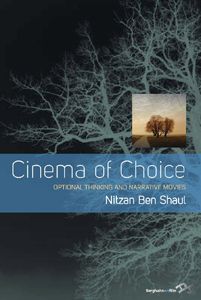
In 1992, a bill was signed into law designating May as Asian-Pacific American Heritage Month. According to the Asian-Pacific Heritage website, “The month of May was chosen to commemorate the immigration of the first Japanese to the United States on May 7, 1843, and to mark the anniversary of the completion of the transcontinental railroad on May 10, 1869.” Commemorate this month with the following selection of Asia-Pacific titles, and view the complete list here.
This month, Berghahn’s library will expand by eleven books. The soon-to-be-published titles make up a distinct lot, ranging from Abigail Loxham’s Cinema at the Edges to Anne Eriksen’s Antiquities to Heritage to Philip Ther’s The Dark Side of Nation-States.The following list of new volumes is complete with brief descriptions of the books and a peek at each cover.
This week hundreds of museums across the United Kingdom and Europe are participating in Twitter’s first Museum Week campaign. Each day during this week is associated with a hashtag, from #DayInTheLife to #MuseumMemories, all intended to hit on various delightful aspects of the museum world. Today’s hashtag, #AskTheCurator is an opportunity to engage with museum experts. But for those who prefer to engage with experts the classic way — by way of their books — we have curated a collection of some of our Museum Studies titles in the following gallery.
By exploring the processes of collecting, which challenge the bounds of normally acceptable practice, this book debates the practice of collecting ‘difficult’ objects, from a historical and contemporary perspective; and discusses the acquisition of objects related to war and genocide, and those purchased from the internet, as well as considering human remains, mass produced objects and illicitly traded antiquities. Much of the book engages with the question of the limits to the practice of collecting as a means to think through the implementation of new strategies. Continue reading “Marking Museum Week: #AskTheCurator or View the Book” →
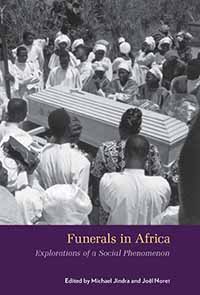
Funerals in Africa: Explorations of a Social Phenomenon, originally published in September 2011, was released this month in paperback form. Below, co-editor Michael Jindra shares the root of his interest in this cultural phenomenon, and discusses the collection and what became its purpose: to shed light on funerary traditions and to inspire other scholars.
One could say the genesis of this book was way back in 1984, when I went to Cameroon as a Peace Corps Volunteer, fresh out of university. I worked with rural credit unions (village banks), and at times when I showed up at a village for a meeting, I would find out the meeting was cancelled because of a “death celebration.”
As anthropologists who have worked in the Pacific Islands since the 1990s, we both felt that most political analyses of the region have been flawed for one simple reason: they overlook the enormous but complex political influence of Christian churches. This influence does not always take the form that observers of American politics might expect, where particular churches take explicit stances on political issues or support particular candidates or parties. The political influence of churches in Oceania is both more subtle and more pervasive than that. Time and again during our fieldwork in Fiji and Solomon Islands, we saw how the words of preachers and pastors, activities of Christian organisations, and interpretations of the Bible shaped how people understood their place in political communities. In Oceania, like everywhere else, there is no single Christianity, making it frustratingly difficult to generalize about ‘Christian politics’. Although anthropologists have increasingly turned attention to Christianity, little attention has yet been given to the ways that rival churches position themselves against each other. Our ethnographic research led us to see denominationalism as key source of social friction and creative energy, essential to any understanding of politics in the region.
For these reasons, we began talking with our colleagues about working on a project to understand Christian politics in the Pacific. The result is this book, from which we would like to quote the following edited passage from the introduction:
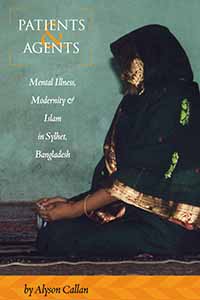
Note: Berghahn has just published Alyson Callan’s Patients and Agents: Mental Illness, Modernity and Islam in Sylhet, Bangladesh, an ethnographic study that explores how changes in the global economy have led to an increase in daughters marrying outside of their local kinship network, which in turn has increased their vulnerability to mental illness. An excerpt with images from Chapter 6 follows an introductory note from the author.
__________________________________________
Bangladesh is one of only five countries in the world where women have a shorter life expectancy than men. The low status of women in Bangladesh is underpinned by the virilocal rule of residence. As daughters leave their natal home to live with their husband’s family at the time of marriage, it is argued that nurturing them is regarded as a relative waste of resources, compared to nurturing sons who will stay and contribute to the wealth of the household.
However, women’s oppression is not experienced in a uniform way. Older women achieve a higher status as mothers, and, as mother-in-laws, may oppress their sons’ wives. The concept ‘woman’ does not occupy a single analytical category and the status of women varies according to the role they occupy. In this excerpt I suggest that the ‘Ma’ icons seen in most rural households provides evidence that the mother is revered on a par with Allah.
The mother in symbolic opposition to Allah
[There is] a tension evident in Bengali culture between the law of the father and the law of the mother. The popular Indian conception of the mother as self-sacrificing overlies an unconscious fantasy of the phallic, castrating mother (Nandy 1990). Bagchi (1990) suggests that Bengali culture is particularly prone to employing this threatening aspect of the mother. The powerful and murderous Kali, who dances on the corpse of her consort Shiva, is a goddess who enjoys greatest popularity amongst Bengalis (Fuller 1992). Wilce (1998a) argues that in Bangladesh mothers are feared and placed in symbolic opposition to Allah. He cites this famous passage from the Hadith: in answer to the question, ‘To whom do I owe the most respect?’ the Prophet replied, ‘Your mother.’ His answer remained the same when pressed to declare the second and third persons deserving respect. ‘Father’ was listed fourth [1998: 108].
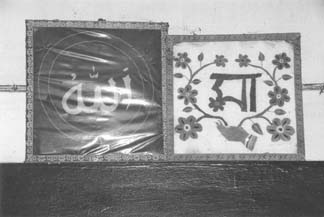
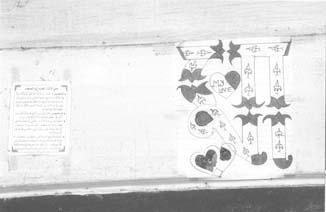
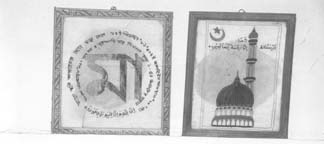
Another quotation commonly recited in Sylhet is ‘Heaven is under the mother’s feet’, meaning that obedience to the mother is the path to heaven. Yet whilst the mother-in-law in Sylhet is feared, conscious representations of the mother portray her to be loving and all-forgiving, if not to say indulgent. This latter attribute seems to me to be diametrically opposed to Allah who takes a meticulous account of his subjects’ good and bad works, doling out punishment and rewards as appropriate on Judgement Day. That the mother is revered on a par with Allah is demonstrated by the prevalence of ‘Ma’ iconography (ma is short for amma – mother). (Muslim) lorry drivers have ‘Ma’ painted on the front of their trucks; posters are sold reproducing poems and pictures celebrating the mother. Most strikingly of all, ‘Ma’ embroidery samplers and other ‘Ma’ icons are hung up on the wall next to Islamic icons – Allah’s name in Arabic, Qur’anic verse, pictures of Mecca. I saw these ‘Ma’ icons in every rural household that had grown-up children present; it was explained that ‘we have maya (love) for Allah and amma above everything else; for amma because she has suffered greatly for us’.
Figure 6.1: A ‘Ma’ embroidery sampler is hung to the right of Allah’s name in Arabic
Figure 6.2. Lines from the Qur’an on the left; handwritten ‘Ma’ decoration on the right
Figure 6.3. Left: Ma icon commemorating the date of death of the household’s mother; the Arabic reads: ‘Allah, we came from you and we will return to you’. Right: the mosque at Madina with lines from the Qur’an.
Alyson Callan is a psychiatrist and anthropologist. She currently works as a consultant psychiatrist in Brent for the Central and North West London NHS Foundation Trust.
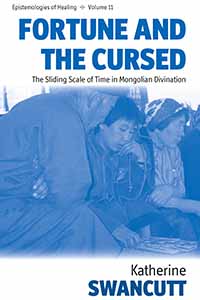
Note: Berghahn recently published Katherine Swancutt’s Fortune and the Cursed: The Sliding Scale of Time in Mongolian Divination, an ethnographic study of the world of Buryat Mongol divination. An excerpt from the book follows a note from the author which places it in the context of her larger argument.
It’s common knowledge that, when under duress, many people turn to religion. Yet the human penchant for inventing new magical practices during this ‘turn to religion’ is rarely revealed.
When I first went to Mongolia, I wanted to uncover how a shamanic cosmology comes to be reinvented over time. My plan was to document the shamanic practices – and especially the divinations (aka ‘fortune-tellings’) – undertaken by Buryat Mongols at the northeastern fringes of the country. These shamans manage everything from major health and business crises to everyday fluctuations in a person’s fortune, which, I learned, is not just a kind of luck-filled prosperity that can rise or fall dramatically. Fortune is also a driving force behind Buryat innovation-making. Continue reading “An Excerpt from Fortune and the Cursed: The Sliding Scale of Time in Mongolian Divination” →
 Join our Email List




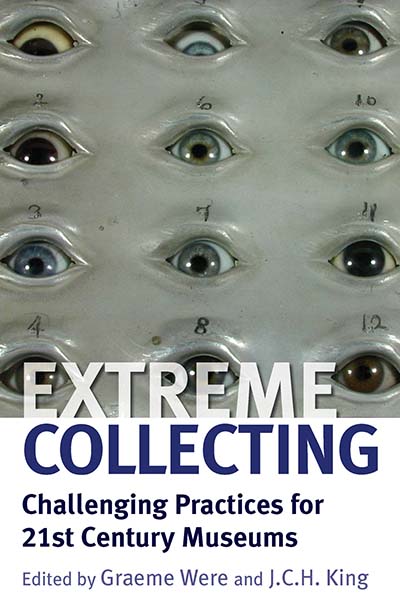 EXTREME COLLECTING
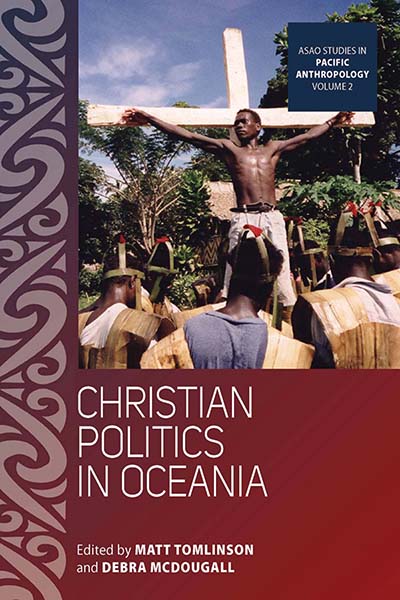 As anthropologists who have worked in the Pacific Islands since the 1990s, we both felt that most political analyses of the region have been flawed for one simple reason: they overlook the enormous but complex political influence of Christian churches. This influence does not always take the form that observers of American politics might expect, where particular churches take explicit stances on political issues or support particular candidates or parties. The political influence of churches in Oceania is both more subtle and more pervasive than that. Time and again during our fieldwork in Fiji and Solomon Islands, we saw how the words of preachers and pastors, activities of Christian organisations, and interpretations of the Bible shaped how people understood their place in political communities. In Oceania, like everywhere else, there is no single Christianity, making it frustratingly difficult to generalize about ‘Christian politics’. Although anthropologists have increasingly turned attention to Christianity, little attention has yet been given to the ways that rival churches position themselves against each other. Our ethnographic research led us to see denominationalism as key source of social friction and creative energy, essential to any understanding of politics in the region.
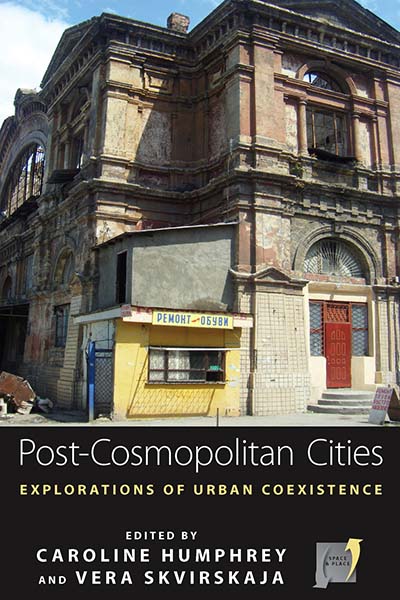 Post-Cosmopolitan Cities: Explorations of Urban Coexistence