Is All Repression Created Equal?

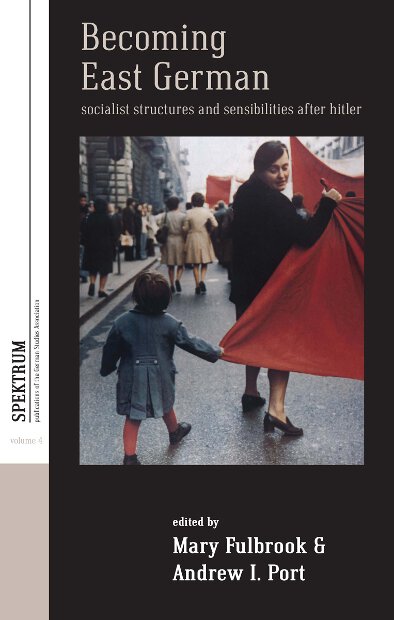
The recent revelations by Edward Snowden about the extensive online information-gathering activities of the National Security Agency (NSA) have led to a flurry of comparisons in the German media between the American agency and the infamous East German Ministry for State Security, or Stasi. According to a popular statistic, the Stasi could have filled 42,000 filing cabinets with the information it had gathered over 40 years—the NSA 48,000,000,000! Chancellor Angela Merkel, a former East German herself, has rejected such comparisons as crude and misleading. Below, in an excerpt from the introduction to Becoming East German: Structures and Sensibilities after Hitler, to be published this month, co-editor Andrew I. Port discusses the extent to which such comparisons are appropriate and potentially valuable.


___________________________________

Let us pose a rhetorical question that is sure to raise some hackles: was the GDR truly more repressive than the Federal Republic—or other Western states, for that matter?

Continue reading “Is All Repression Created Equal?”

Life Beyond Earth? Survey Says…

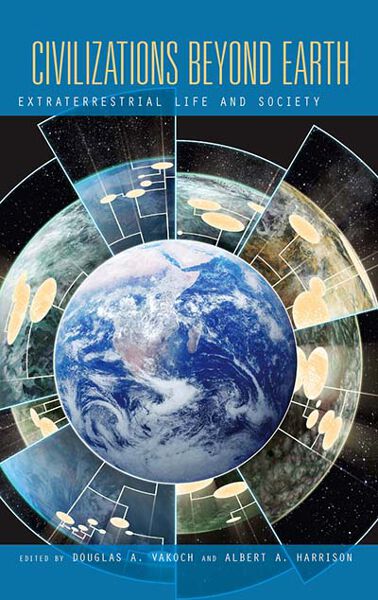
In 2005, a survey of 1,000 U.S. men and women of various backgrounds revealed that 6 in 10 Americans believe in the possibility of extraterrestrial life. If this slice of the public is correct, what does it mean for our world? That is one of the questions editors Douglas A. Vakoch and Albert A. Harrison attempt to answer through the collection Civilizations Beyond Earth: Extraterrestrial Life and Society, which was released in paperback August 2013. Below, volume contributor George Pettinico begs the question of the American reaction: How will the U.S. react if we discover life outside of our blue planet?

_____________________________________________


Imagine the day, if and when it should come, that the Search for Extraterrestrial Intelligence (SETI) confirms there is indeed intelligent life on other planets.


Continue reading “Life Beyond Earth? Survey Says…”

Hot Off the Presses – New Journal Releases for August

Journeys
Volume 14, Issue 1
This issue discusses railway guides in South Wales, the work of Wilfred Thesiger, tourist blogs in Southwestern Ethiopia, and a former Soviet prison camp. It also features book reviews.

Anthropology of the Middle East
Volume 8, Issue 1
This is a very particular issue, and its topic–art in the Middle East–is new. All of the writers seem deeply involved in their subject and present their research in a fresh and spirited way.

Museum Worlds
Volume 1, Issue 1
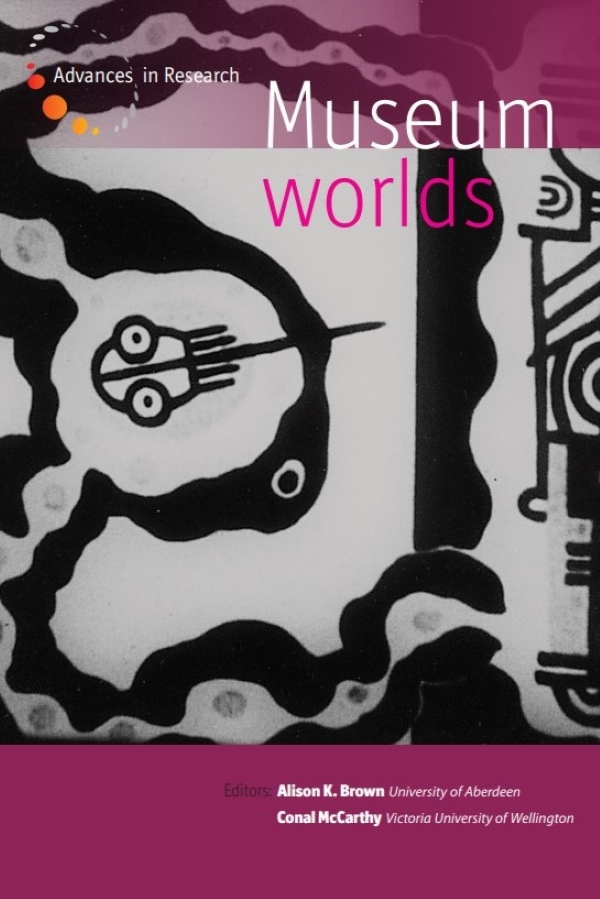
This is the first issue of our newest journal. Museum Worlds represents trends in museum-related research and practice and builds a profile of various approaches to the expanding discipline of museum studies.

Transfers
Volume 3, Issue 2
This issue features articles exploring many subjects within mobility scholarship as well as film, museum, and book reviews. 

German Politics & Society
Volume 31, Issue 2
This special issue is devoted to the experience surrounding migration from Turkey to Germany and was motivated by the 50th anniversary of the first Turkish migrant marked in 2011.

Anthropology in Action
Volume 20, Issue 2
This special issue on the study of organizations investigates the dynamic nature of boundaries arising from historical and social contexts. 

French Politics, Culture, and Society
Volume 31, Issue 2
This journal explores modern and contemporary France from the perspectives of the social sciences, history, and cultural analysis. It also examines the relationship of France to the larger world, especially Europe, the United States, and the former French Empire. 

Historical Reflections/Reflexions Historiques
Volume 39, Issue 2
This special issue comprises articles exploring issues of genocide and the Holocaust, especially as they relate to notions of betrayal, justice, and social bonds. 

Regions and Cohesion
Volume 3, Issue 2
This journal promotes the comparative examination of the human and environmental impacts of various aspects of regional integration across geographic areas, time periods, and policy arenas.

Sibirica
Volume 12, Issue 2
This special issue comprises articles based on papers presented at the session “Baikal Issues under Persistent State Care” at the 2012 Annual Meeting of the Association of American Geographers.


A Matter of Morality

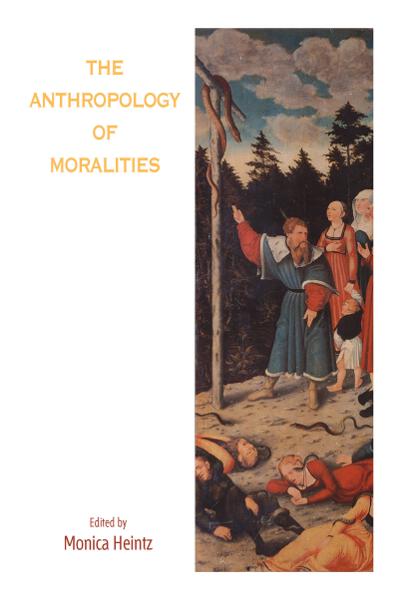
Originally published in 2009, The Anthropology of Moralities, edited by Monica Heintz, will be published in paperback this month. The collection deals with the collision of moralities as human beings exist on a more and more globalized scale. Below, the editor discusses what first interested her in a moral study and what made it, and keeps it, important to the field of anthropology.


____________________________________________


Somehow after 1989 the Eastern bloc got obsessed with values. How could it be otherwise for people who had lived with double sets of values in the public and private spheres and who saw all their public values officially collapse in one night?
Continue reading “A Matter of Morality”

Blackface in Berlin Play: Racism or Tradition?

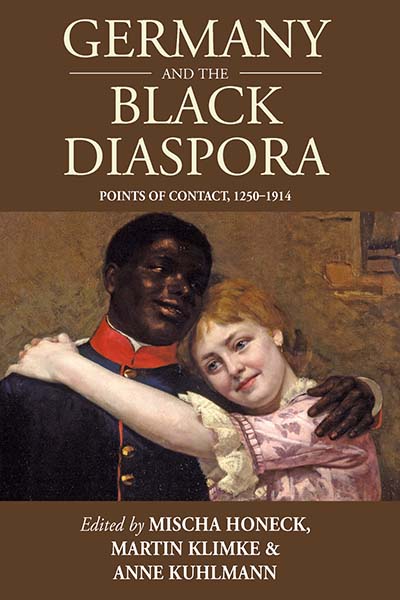
In January 2012, a white man was cast for the part of an African American man in “I’m Not Rappaport” for the German adaptation of the U.S. play. The plan to use blackface makeup—common in American theater up until the Civil Rights movement—to change the man’s appearance stirred controversy, and was called out as racist. Co-editor of Germany and the Black Diaspora: Points of Contact, 1250-1914, Martin Klimke addresses the sensitive subject of race in Germany in light of this event.

_________________________________________


Germany’s place in the Black Atlantic might have been peripheral in a geographical sense. Intellectually and discursively, however, it played an often underestimated but significant role in the formation of modern social, racial, and national identities.


Continue reading “Blackface in Berlin Play: Racism or Tradition?”

The ‘Life-World’ of Translation

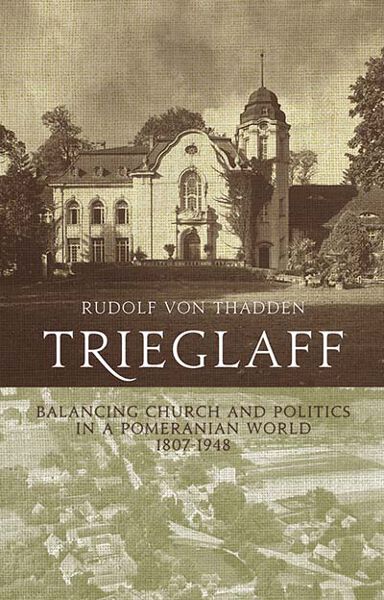
Some words escape translation—a fact Stephen Barlau discovered quickly when he set about translating Rudolph van Thadden’s novel, originally published as Trieglaff. Eine pommersche Lebenswelt zwischen Kirche und Politik 1807-1948. Barlau brought the work into English as Trieglaff: Balancing Church and Politics in a Pomeranian World, 1807-1945, which was published this month by Berghahn. Below, the translator shares the importance of care and nuance when translating five generations worth of stories to English.


_____________________________________


The breadth and depth of meaning of German Lebenswelt, used in the original subtitle of Trieglaff, escapes capture in English.


It refers to the world of daily life in all its elements. Setting is immanent, environment is conjured; life extends beyond daily to happenings for an extended period with its characterizing features; both dynamic living and graphic life are encompassed. All these elements are denoted, not connoted; meaning fails if any are absent—or perhaps the word is all connotation, all shadow implication of meanings.


Continue reading “The ‘Life-World’ of Translation”

Where High Housing Prices Meet Activism

Earlier this year, Sam Beck, co-editor of Toward Engaged Anthropology, earned the Daisy Lopez Award of Churches United for Fair Housing. He earned the award for his work to help further the mission of CUFFH—that is, to provide affordable housing in North Brooklyn, where property values have skyrocketed in recent decades. Below, Beck discusses the work that helped him earn the award and why it is important.


_________________________________________

I received the 2013 Daisy Lopez Leadership Award of Churches United for Fair Housing (CUFFH). This organization’s mission is to promote the sustainability of the North Brooklyn Latino community by advocating affordable housing. This part of Brooklyn experienced the dramatic withdrawal of capital and city services in the 1970s, whose Puerto Rican and Dominican population suffered the consequences of low incomes, dilapidated housing, poor schools, and inadequate health care.

Continue reading “Where High Housing Prices Meet Activism”

Down, Not Out: Ethiopian Youth on the Street

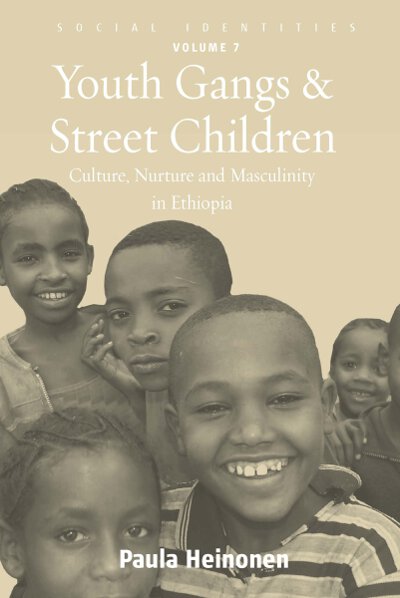
Paula Heinonen’s decade of research and reflection led to the publication of Youth Gangs and Street Children: Culture, Nurture, and Masculinity in Ethiopia, which was published as a paperback in June 2013. Based on careful observations and interviews, the volume provides insight into common misconceptions of why  Ethiopian boys and girls take to the street.  


______________________________________________

Before embarking on my six years longitudinal field research and four years of follow-up enquiry and reflection, I read extensively on the street children phenomena worldwide.

Continue reading “Down, Not Out: Ethiopian Youth on the Street”

Occupy Morality: Soldiering in Conflict Zones

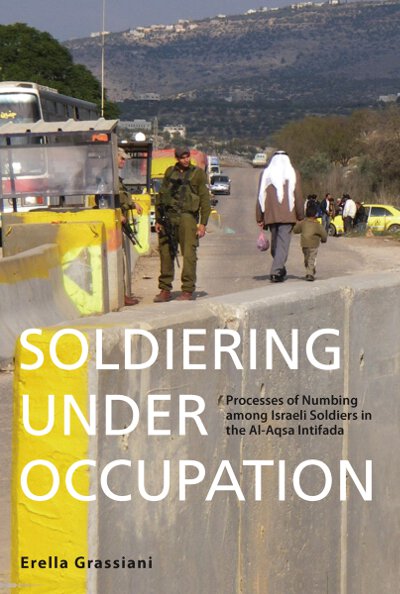
Understanding a soldier is key to understanding the effect of militarism on a broader society, according to Erella Grassiani, author of Soldiering Under Occupation: Processes of Numbing among Israeli Soldiers in the Al-Aqsa Intifada. The volume, published in July, offers insights into the physical and mental effects that operating in occupied zones has on soldiers. Below, Grassiani discusses the volume, her occupation, and how she enjoys her down time.


__________________________________________________

Berghahn Books: What drew you to the study of the Israeli military? And why is this topic important?


Erella Grassiani: I was born in Israel and even though I was raised largely in the Netherlands, Israel stayed close to my heart. When I went back to Israel to study at the Tel Aviv University I came across ideas about militarism for the first time and the way the military influenced civilian life. Continue reading “Occupy Morality: Soldiering in Conflict Zones”

Hot Off the Presses – New Paperback Releases

CoyHolyNewly released paperbacks from Berghahn:

Foodways and Empathy: Relatedness in a Ramu River Society, Papua New Guinea, Anita von Poser

Weimar Publics/Weimar Subjects: Rethinking the Political Culture of Germany in the 1920s, Kathleen Canning, Kerstin Barndt, and Kristin McGuire

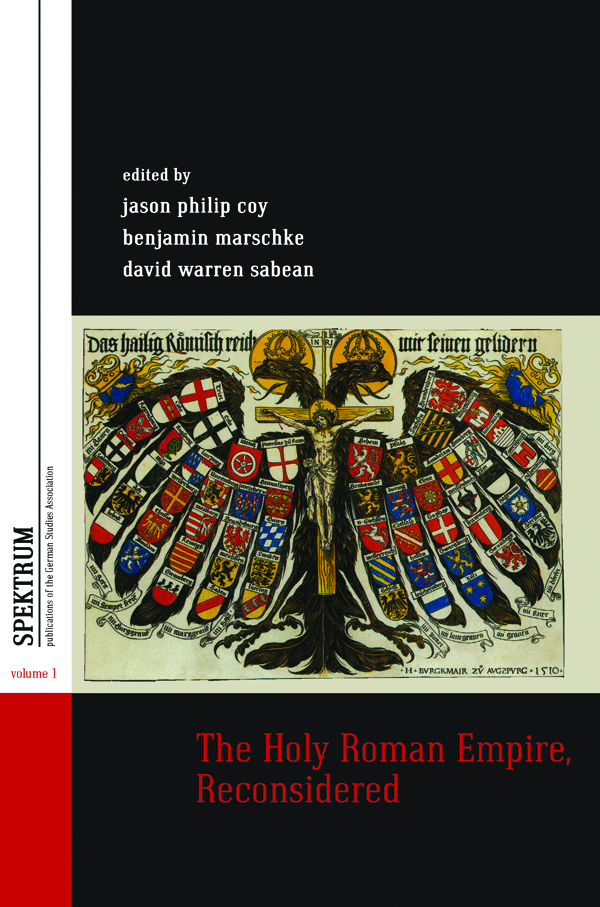
The Holy Roman Empire, Reconsidered, Jason Philip Coy, Benjamin Marschke, and David Warren Sabean

Power and Society in the GDR, 1961-1979: The ‘Normalization of Rule’?, Mary Fulbrook

“Vienna is Different”: Jewish Writers in Austria from the fin de siècle to the Present, Hillary Hope Herzog

Divided, but not Disconnected: German Experiences of the Cold War, Tobias Hochscherf, Christoph Laucht, and Andrew Plowman