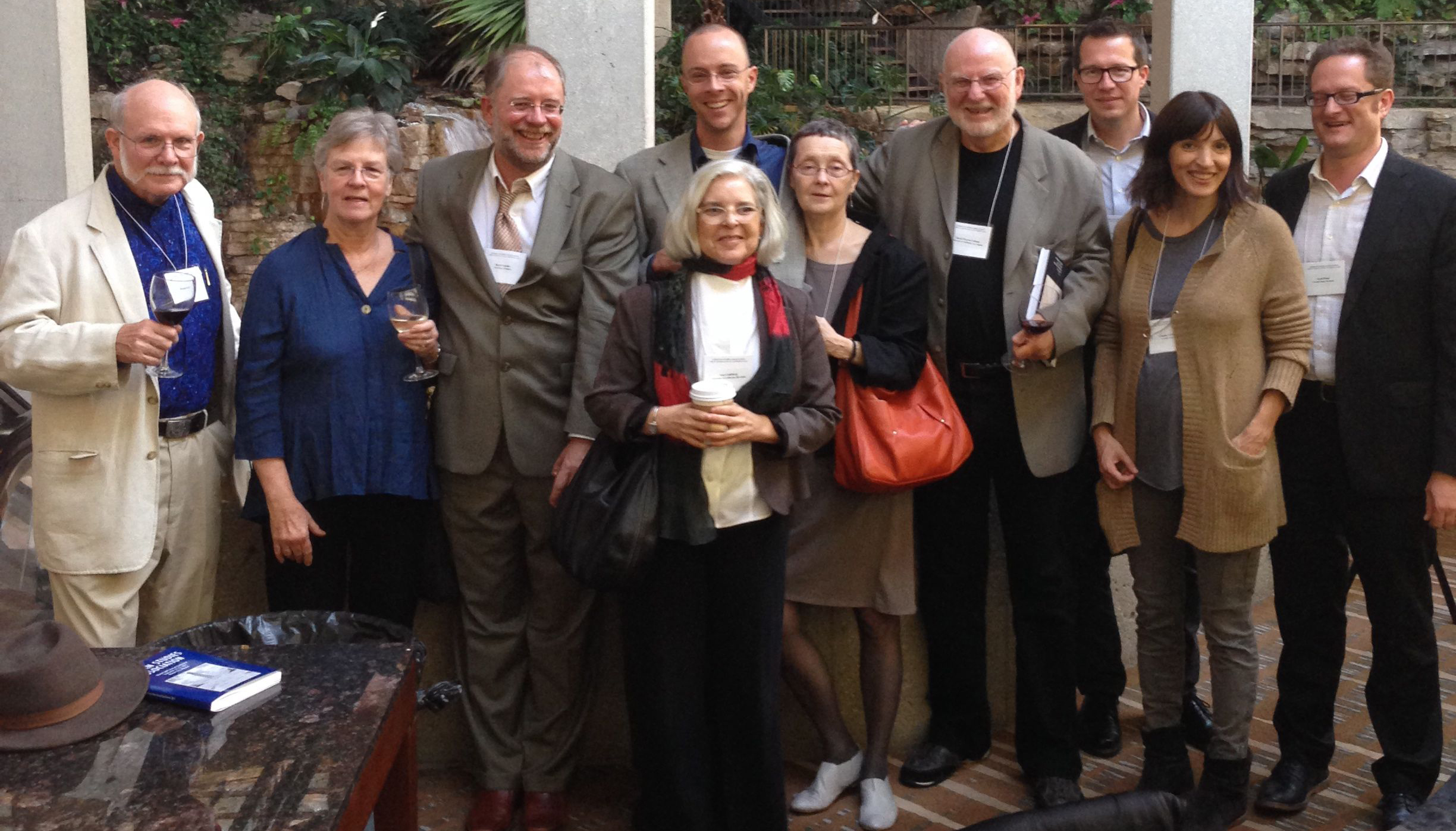
Homage to a Historian: A Festschrift for David Warren Sabean

This post was submitted to Berghahn by the authors of Kinship, Community, and Self: Essays in Honor of David Warren Sabeanforthcoming in December 2014.


5


A Festschrift celebrates a scholar’s entire career. A collection of essays written by students or those inspired by the academic’s work, a Festschrift is typically presented to the honoree on the occasion of her or his 75th birthday.

Continue reading “Homage to a Historian: A Festschrift for David Warren Sabean”

Migration: A World on the Move

On this day, November 12, 1954, Ellis Island, the gateway to America, shut it doors after processing more than 12 million immigrants since opening in 1892. Today, an estimated 40 percent of all Americans can trace their roots through Ellis Island, located in New York Harbor off the New Jersey coast.

United Nations has estimated that more people than ever are living abroad. In 2013, 232 million people, or 3.2 percent of the world’s population, were international migrants, compared with 175 million in 2000 and 154 million in 1990. The magnitude and complexity of international migration makes it an important force in development and a high-priority issue for both developing and developed countries.


———————————————————————————————————————————–

Browse some of Berghahn relevant titles on Refugee & Migration Studies:


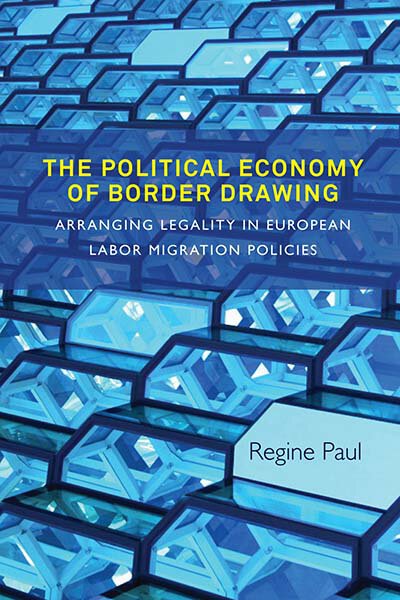
THE POLITICAL ECONOMY OF BORDER DRAWING
Arranging Legality in European Labor Migration Policies
Regine Paul

Continue reading “Migration: A World on the Move”

Lanes of Trade and Belonging in London

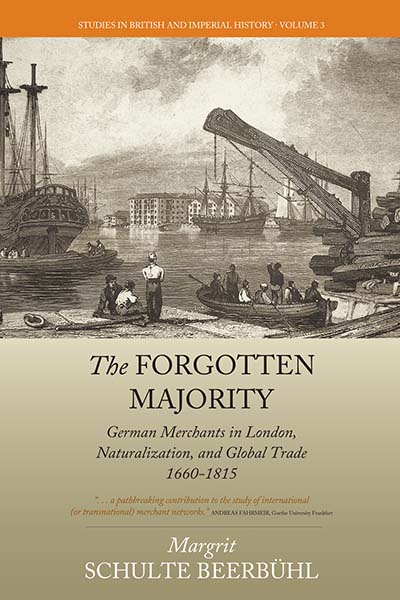
Though their significance in London society is not much discussed in historical study, German merchants had a major impact on social and commercial life in England from the seventeenth through nineteenth centuries. Author Margrit Schulte Beerbühl explores this topic in The Forgotten Majority: German Merchants in London, Naturalization, and Global Trade 1660-1815. Following, the author gives a bit more insight into her love of subject and the work to turn this enthusiasm into a book.


________________________________________


What drew you to the study of German merchants in London during this specific time frame (1660-1815)?


That period was a black hole in historical research. Academic studies on Germans in London ended with the closure of the Hanseatic Steelyard about 1600 and did not set in again before the end of the Napoleonic Wars.

Continue reading “Lanes of Trade and Belonging in London”

25th Anniversary of the Fall of the Wall

From 1961 to 1989, the city of Berlin was divided by the most visible sign of the Cold War: a wall more than 140km (87 miles) long. On 9 November 1989, East German authorities announced they would allow free access between east and west Berlin. Crowds of euphoric East Germans crossed and climbed on to the wall, leading to a reunited Germany.


Berlin is marking the 25th anniversary of the fall of the wall by “rebuilding” it with glowing white balloons. Some 8,000 illuminated helium balloons will trace a 15km-long section of the wall, snaking around the city, for just one weekend (7 to 9 November). The installation will come to an end on the evening of 9 November, when volunteers will release the balloons and set them free, soaring into the night sky to the strains of Beethoven’s 9th Symphony, played by the European Youth Orchestra. The balloons are made out of a biodegradable material so will not harm the environment. For a full story and more information on the event please visit ibtimes.co.uk


———————————————————————————————————

Browse Berghahn relevant titles:
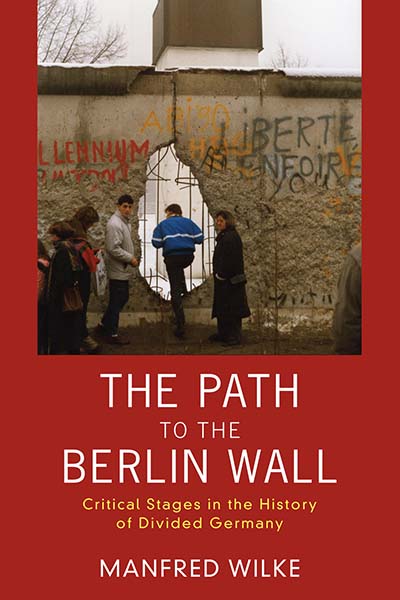
 

THE PATH TO THE BERLIN WALL
Critical Stages in the History of Divided Germany
Manfred Wilke
Translated from the German by Sophie Perl

Continue reading “25th Anniversary of the Fall of the Wall”

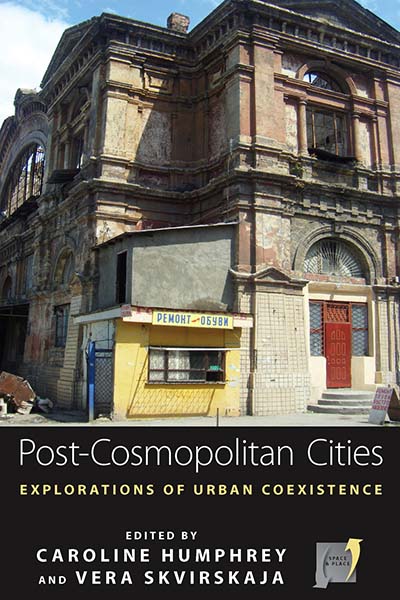
Reflecting on ‘Post-Cosmopolitan’ Odessa

Recently published in paperback, Post-Cosmopolitan Cities: Explorations of Urban Coexistence offers readers an in-depth view into the lives of urban dwellers in six cities, from Venice to Warsaw and Odessa to Thessalonica. Below, volume editors Caroline Humphrey and Vera Skvirskaja reflect on the content of their volume and how the study sites and subjects may have changed in the two years since its original publication.


__________________________________


Our book Post-Cosmopolitan Cities: Explorations of Urban Coexistence contains three chapters about Odessa, the port city on the Black Sea, but they were written before the recent events in Ukraine. We argued that cities famed for their cosmopolitanism, including the ‘merry’, ‘worldly’ Odessa, deserve deeper investigation of what lies beneath the surface and the uncertain effects of the past on the present.

Continue reading “Reflecting on ‘Post-Cosmopolitan’ Odessa”

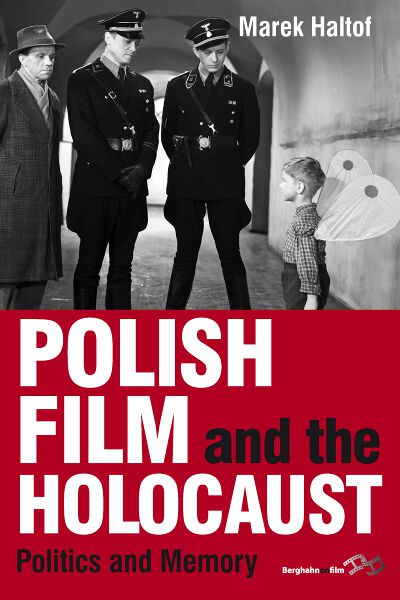
Cameras on the Nation’s Darkest Hour

Recent BBC Culture article, Christian Petzold: How Germans today confront the Nazis, takes a look at how the attitude of German filmmakers has changed in the past 15 years and how the cinema is turning the cameras on the nation’s darkest hour in films and TV. Read more on what Nina Hoss, an actress in the latest German film to address the war and its aftermath Christian Petzold’s Phoenix, has to say bbc.com/culture

———————————————————————————————————————————–

Browse some of Berghahn’s relevant titles on the topic of Nazi portrayal and postwar cinema in Germany & Europe.


POLISH FILM AND THE HOLOCAUST
Politics and Memory
Marek Haltof

Continue reading “Cameras on the Nation’s Darkest Hour”

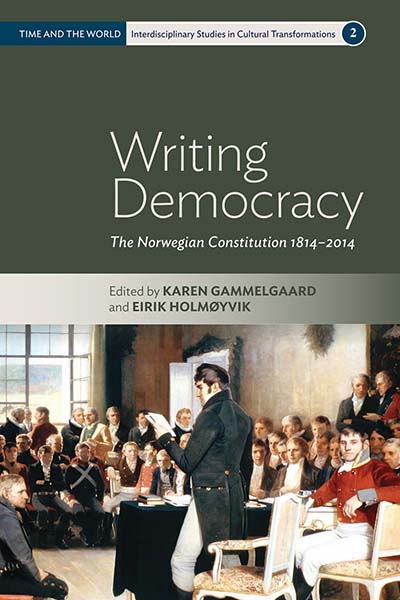
The Norwegian Constitution, A ‘Living Document’


When it was signed May 17, 1814, the Constitution of Norway was considered one of the most radical Constitutions of the day. To celebrate the 200th year since it was first enacted, editors Karen Gammelgaard and Eirik Holmøyvik and their contributors have written a collection of historical accounts about the document. Their book Writing Democracy: The Norwegian Constitution 1814-2014 was published this month. Following, the editors provide more information about the history of this guiding document as well as the history of the volume.


What drew you to the study of the Norwegian Constitution?


For researchers in Norway it has been impossible not to be drawn to the Norwegian Constitution these last few years due to the bicentenary in 2014.

Continue reading “The Norwegian Constitution, A ‘Living Document’”

“When I read Machiavelli, Marx rang true”

The below is a special guest post written by Manjeet Ramgotra, contributor to Theoria, Issue 139, and author of ‘Conservative Roots of Republicanism.’


My article “Conservative Roots of Republicanism” is a result of research I conducted for my PhD.  Initially, I had begun to work on Rousseau.  I developed a critique of Pocock’s understanding of republicanism as antithetical to liberalism founded on a discourse of rights and the social contract.  I contended that as Rousseau combines republicanism, rights and the social contract, that Pocock’s view must be ill-founded.  As I began to work on Rousseau and a critique of Pocock’s Machiavellian Moment, my advisers recommended that I read Montesquieu who influenced Rousseau and Machiavelli, the central character of Pocock’s work.  I included these thinkers in my study and was further advised to examine Cicero.  On reading works of Cicero, I realized that although all individuals can promote the public good, not all participate on an equal basis in the political realm.  In fact, the people participate only on a partial basis to protect their freedom to live in security from the arbitrary domination of the nobility.  On reading Machiavelli’s Discourses, it became clear that the class struggle between the nobles (the haves) and the people (the have-nots) was essential to his republicanism.  In fact the unequal participation of each class to protect its own interests – political authority and control for the nobles and political liberty or the freedom to live in security and without fear of arbitrary domination for the people – made Marx’s claim that history is about the struggle between social classes ring true.  However, I did not adopt a structuralist or a Marxist approach; rather much of my argument is a result of exegetical and contextual analysis. Continue reading ““When I read Machiavelli, Marx rang true””