In the latest issue of the Anthropological Journal of European Cultures, Ullrich Kockel opens the discussion on the 21 years of AJEC‘s history with his own reflections:
“As I settle down to put together this issue, it occurs to me that the development of AJEC in its various phases displays an uncanny correspondence with my personal professional trajectory so far. Its inception and first volume happened during my postdoctoral fellowship when I was happy to place one of my first (coauthored) academic articles in its inaugural issue. The remainder of AJEC’s first approximate decade coincides with my time as a lecturer. At the time I took up my first chair, the format of AJEC changed, eventually turning it, for a while, into a Yearbook rather than a journal. And in the year I moved to my second chair, I was invited to take on the editorship of AJEC, which would now be published by Berghahn and returning to the format of two issues per year. This correspondence raises a curious question: What significant turning point for the journal will correspond with my own as I am becoming an emeritus professor?”
To continue reading a free PDF of his editorial in its entirety, click here.
Nature and Culture Volume 7, Number 3, Winter 2012
Including articles on the Second Darwinian Revolution, environmentalism in Iran, what is necessary for sustainability in the water sector, and the environmental impacts of militarization.
Transfers Volume 2, Number 3, Winter 2012
Featuring a Special Section on Cultural Appropriation containing articles that comment on the “cultural appropriation” of, respectively, literary genres, stories, and sausages.
Theoria Volume 59, Number 133, Winter 2012
With articles on the national debt to Africa, democracy and democide in the Weimar Republic, moral relativism, the politics of theatre, and the revival of political philosophy.
Journal of Romance Studies Volume 12, Number 3, Winter 2012
With a special focus on Antonia Gramsci, exploring various intersections between culture and politics, fostering the cross-fertilization of new Gramscian specialisms and traditional disciplines.
Focaal Volume 2012, Number 64, Winter 2012
Featuring a theme section on the anthropology and radical philosophy of Antonio Negri and Michael Hardt, as well as articles on issues in China, West Bengal, and South Korea.
Note: Berghahn recently released the paperback edition of Laurence Grove’s Comics in French and also publishes the journal European Comic Art, which he co-edits. Here he discusses his current work on an exhibit of comics for the Hunterian Art Gallery in Glasgow.
__________________________________________
One of the inspiring things about co-editing European Comic Art, apart from the buzz of working with Ann Miller and Mark McKinney, is the connections it creates. In recent times we have had the pleasure of receiving scholarship on comic art from England, France, Greece, Canada, Italy, Spain, Argentina and Germany, and from the eighteenth century to the twenty-first. It is not long before you are reminded that whatever your speciality, there are unexpected link-ins elsewhere and contradictions to the knowledge we might have taken for granted.
It may seem strange, therefore, that one of my current projects is to prepare an exhibition whose provisional title, Scotland and the Birth of Comics, could appear to bask in positivist certainties. The display, which will open in Glasgow’s Hunterian Art Gallery before touring, will bring to light a little-known work of primary importance, The Glasgow Looking Glass of 1825. The Looking Glass appears to be the world’s oldest comic, predating the earliest published ‘comics’ by Rodolphe Töpffer by eight years, Le Charivari by seven, and Punch by sixteen. Building on the historic angle and taking the notion of graphic narrative in its widest sense, the exhibition will allow us to showcase Hunterian treasures from the Roman period to Hogarth and on to contemporary selections, as well as key manuscripts and printed works from Glasgow University Library’s Special Collections and certain related items from Glasgow’s museums.
“Consumption of Smoke: Present” and “Consumption of Smoke: Future” From Vol. 1, no. 8: Northern Looking Glass, 17th September 1825 With the permission of Special Collections, University of Glasgow Library. (Sp Coll Bh14-x.8)
At the initial research stage (I have the Glasgow Looking Glass in front of me as I write) I have been struck by the intertwining connections. The Looking Glass inspired Punch, but its characters—the street musicians, the clergymen, the medics, and so on—also offer firm reminders of the styles of Töpffer, Rowlandson, and Hogarth. It is thus inevitable that the exhibition will lure the visitor in with the promise of newly-found canonical certainties (comics started in a specific time and place, and that is Glasgow in 1825), only then to make it clear that the complexities are so that such certainties must be flawed.
“Domestic Intelligence: Home, Sweet Home”, From Vol. 1, No. 2: Glasgow Looking Glass, June 25th, 1825 With the permission of Special Collections, University of Glasgow Library (Sp Coll Bh14-x.8)
This week I am going to Geneva to meet with the Director of the Bibliothèque de Genève, Alexandre Vanautgaerden, and his team, with a view to a possible loan of a Töpffer manuscript. Ironically, having made the notion that Töpffer did not invent the comic strip (nor did anyone else) a central theme of my Comics in French (Berghahn Books), I am strangely excited about getting to see the Swiss schoolteacher’s creations in the flesh.It is the fact that life is a hybrid art full of contradictions that makes it such fun. A bit like comics.
__________________________________________
Laurence Grove is is Reader in French and Director of the Stirling Maxwell Centre for the Study of Text/Image Cultures at the University of Glasgow.
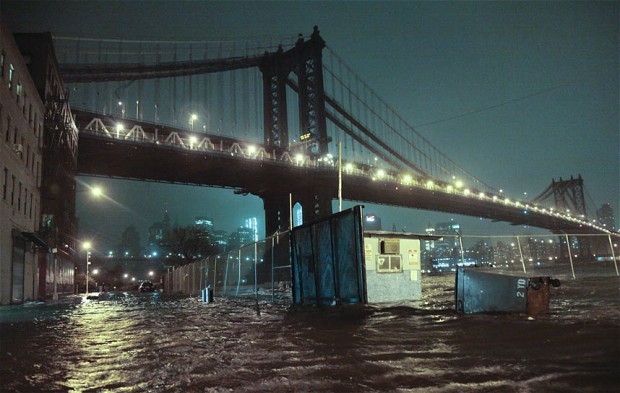
This was the scene just down the street from the Berghahn offices in DUMBO the night of Hurricane Sandy – our office is just outside the frame of this particular photo:
(Photo: AP Photo/Bebeto Matthews)
Over 3 million gallons of water have been pumped from the basement of our office building since then, and we are glad to report that everyone on staff made it through safe and sound (albeit without heat this week but we’re bundled up and hanging in there).
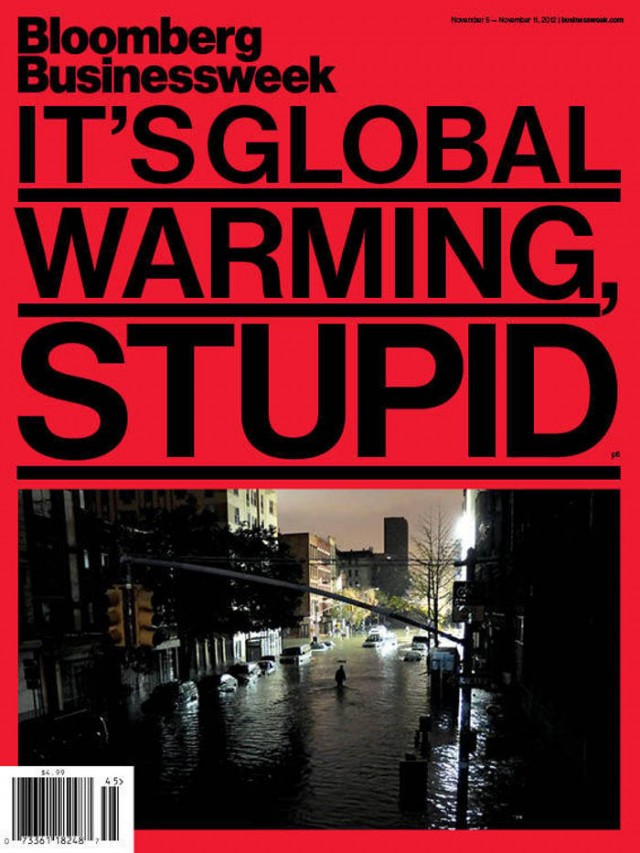
Though recovery has been fairly swift in our area, the images of the “Frankenstorm” and its aftermath have brought the issues of climate change and sustainability to the forefront of political discourse in the United States. Bloomberg Businessweek took the blunt approach:
(Photo: Bloomberg Businessweek)
At Berghahn Journals, we’re proud to publish a selection of journals that take a more scholarly approach to environmental issues.
In the next few weeks, we will be posting the online version of Environment and Society Volume 3, which focuses on Capitalism and the Environment. Preview the Table of Contents on the journal’s main page, here.
Next Spring, we are excited to be publishing Nature + Culture’s Special Symposium on “Nature, Science, and Politics, or: Policy Assessment to Promote Sustainable Development?”, the Table of Contents for which is posted on the journal’s main page, here.
In our most recent issue of Nature + Culture, several articles focus on approaches to sustainability:
Moving forward, we hope that the work of scholars such as those published in our journals will continue to contribute to the discourse on climate change.
Critical Survey Volume 24, Number 2, Summer 2012
Focusing on Shakespeare’s hometown, Stratford-upon-Avon, the essays in this special issue consider the various manifestations of the physical and metaphorical town on the Avon, across time, genre and place, from America to New Zealand, from children’s literature to wartime commemorations.
Historical Reflections/Reflexions Historiques Volume 38, Number 3, Winter 2012
Featuring a special section entitled “(Re)presenting Women, the Female, and the Feminine,” with articles that investigate the ways in which women are embodied by, or embody in themselves, the social, cultural, or political ethos of a particular era or region.
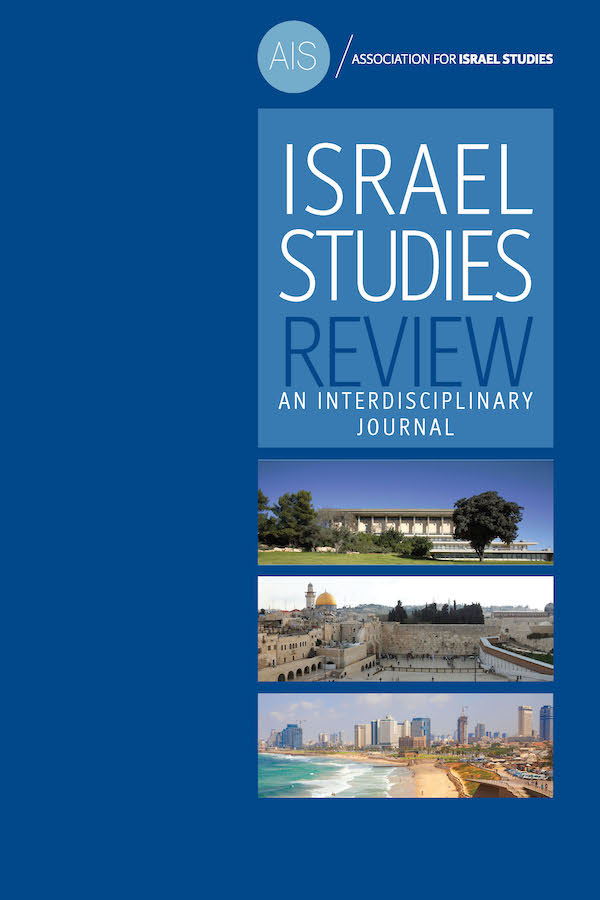
Israel Studies Review Volume 27, Number 2, Winter 2012
Guest edited by Gad Barzilai, this special issue of ISR focuses on “Law, Politics, Justice, and Society: Israel in a Comparative Context,” with articles that reveal, explain, and conceptualize these processes that have characterized Israeli politics, law, and society
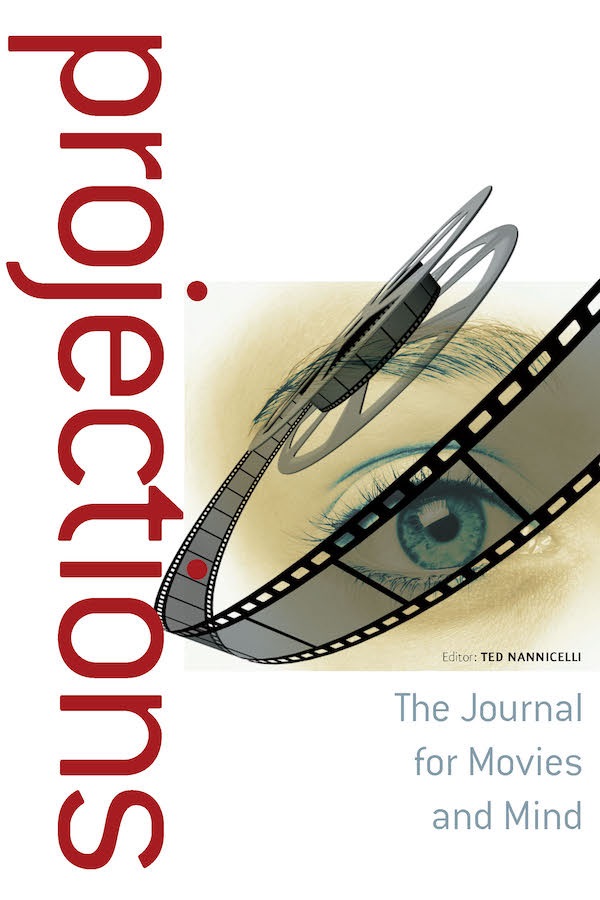
Projections Volume 6, Number 2, Winter 2012
Focusing on the psychological, social, and physiological constituents of meaning and emotion in cinema, the essays and book reviews illuminate the multiple dimensions that connect movies and mind.
Anthropology in Action Volume 19, Number 2, Summer 2012
Articles on the post-industrial urban neighbourhoods of the U.S.A., the U.K. and Europe, the visual-anthropological method of participatory video in Northeastern Brazil, and improving obstetric care in Burkina Faso. Also including an open letter to World Bank President Kim.
Contributions to the History of Concepts Volume 7, Number 1, Summer 2012
This issue includes articles on national histories, democracy in the Swedish Parliamentary Debates during the Interwar Years, conceptual history in Korean, the concept of Unnati (Progress) in Hindi, and the concept of nation in East-Central Europe.
Focaal Volume 2012, Number 63, Summer 2012
This issue focuses on changing flows in anthropological knowledge, with articles about Western anthropologists and Eastern ethnologists, cosmopolitan anthropology, inequality, labor, citizenship, and more.
French Politics, Culture & Society Volume 30, Number 2, Summer 2012
Special issue on The Rescue of Jews in France and its Empire during World War II: History and Memory, featuring articles on the French resistance and figures who played key roles in aiding the Jews in France during WWII.
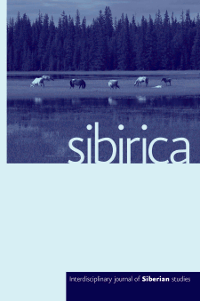
Sibirica Volume 11, Number 2, Summer 2012
Featuring two extensive articles on cattle economy and environmental perception of sedentary Sakhas in Central Yakuti, and genre differentiation in spontaneous Koriak storytelling.
Theoria Volume 59, Number 132, September 2012
Part two of a special issue on Freedom and Power. Articles examine the concepts of freedom and power, the dimensions of freedom in Plato’s Laws, and delves into Plato’s analogy between the structure of the soul and the polis.
Transfers Volume 2, Number 2, Summer 2012
Featuring a Special Section on Global Cycling examining the local meaning of bicycling in West Africa, Finland, Japan, and China. Articles also include reviews of the Gambiocycle, The National Carriage Gallery at the Cobb + Co Museum, and the movie Drive.
by Martha Hoffman, Journals Editorial and Production Manager
Maybe it’s my age, but sometimes I feel like two different people inhabit my mind: there’s the person that was obsessed with sociology in college, reading Critical Race Theory for fun and over-scheduling classes I didn’t need because I was genuinely excited at the thought of learning and figuring out what I was most passionate about. This is the half of me that feels most at home at Berghahn, the intellectually curious and studious parts of me thriving as I help in the production of academic and scholarly journals.
But there’s also the other part of me: the girl that loves reality television, blockbuster movies and popular music. I can spend hours looking for fun dance songs, watching network comedies and am willing to pay NYC movie theatre ticket prices to see a rom-com if a friend is willing to do the same.
The other day, I was working on creating an ad for a new issue of Girlhood Studies. I was looking at the last issue, and an article title caught my eye: “Some Assembly Required: Black Barbie and the Fabrication of Nicki Minaj.” The topic of Minaj has come up in my life from time to time, though it’s usually on the internet, radio or tv, and if anyone’s discussing her it’s usually not her merits or her culture significance but rather her butt, face or the fact that she can’t rap. It’s not that I think Minaj can’t rap, I’ve just noticed that the most vocal commentors of the artist are those insisting she’s not an artist to begin with. With any type of fame, knee-jerk vitriol seems to follow. Admittedly, my comments about her have often fallen into similarly shallow categories, albeit positive: I think she’s beautiful, funny and a decent rapper. However, other than those cursory observations, I don’t think I’ve ever stood back and thought about her in a larger context, whether it be from a gender-, race- or cultural standpoint.
New journal releases from Berghahn: Anthropology of Middle East, Volume 7, Number 1, Spring 2012
This issue focuses on the ethnography of contemporary Afghanistan, with articles village life, war, reconstruction, and more.
Social Analysis, Volume 56, Issue 1, Spring 2012
A special issue on “Cosmologies of Fortune: Luck, Vitality, and Uncontrolled Relatedness.” Articles examines “fortune” as it is present in a wide array of cultures spanning the globe, including the Amazon, Siberia, Mongolia, Malaysia, Japan, and others.
Although we’ve been in the midst of several heat waves here in New York City (if I hear the weatherman use the word “sweltering” one more time, I might cry!), I’m already starting to think about fall. In between dreaming of cozy sweaters and pumpkin pie, I’m hard at work coordinating our attendance at half a dozen academic conferences in some of our most important fields. A fan of checklists and packing, this is one of my favorite responsibilities. However, it can certainly also get a bit overwhelming making sure every part of the process gets taken care of while maintaining all of the different deadlines for each event. Continue reading “Exhibitor Tables at Academic Conferences in Theory and Practice” →
Whenever I watch the news these days, I know I’m in for a depressing half-hour, especially in New York, where crimes big and small seem to happen nonstop. Whether it’s a subway groper, a child falling out of a seventh story window, or the violence in Syria, I am starting to understand that no news really is the only good news.
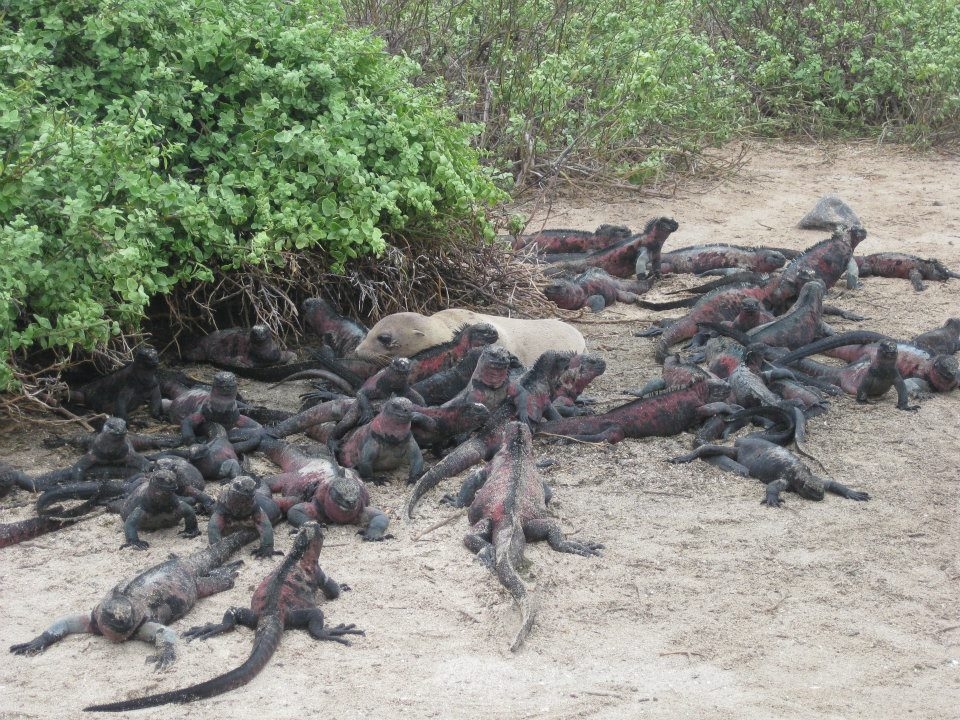
This steady stream of bad news makes me wish for a Garden of Eden on this world, a place that’s a little more innocent, and I’m reminded of a trip I took last December to the Galapagos Islands, famous for their role in the inception of Darwin’s theory of evolution. What struck me most about the islands was that, with wildlife galore and few predators, all the animals seemed to coexist so peacefully. Sea lions casually rested their heads on iguanas and birds never worried about their eggs being eaten. Tropical flamingos and penguins lived side-by-side. It was the oddest thing I had ever seen and it was inspiring. Continue reading “On the Evening News, the Galapagos Islands, and the Purpose of the Academy” →
 Join our Email List