Supernatural Powers and a “Discourse of Decline”

This post is the transcript of an electronic interview between D. S. Farrer and J. David Neidel. Farrer is the special issue editor for Social Analysis Volume 58, Issue 1, and Neidel is the author of the article “Discourse of Decline: Local Perspectives on Magic in Highland Jambi, Indonesia” appearing in that issue. Below, Neidel answers a series of questions related to her article in Social Analysis.

This is the sixth in a series of interviews with contributors to this volume. Find the previous contributions on our blog.


What drew you to the study of War Magic & Warrior Religion?

I conducted research for my Ph.D. dissertation in the highlands of Sumatra, Indonesia. My research project focused on a national park- community conflict, so I was not intending to study war magic. Supernatural powers, spirit possession, and other related phenomena, however, played such a large role in the local culture (as seen in legends, oral histories, village ceremonies, and actual practice) that I started collecting data on the subject as a side project.

Continue reading “Supernatural Powers and a “Discourse of Decline””

Why Every Country Must Become “An Immigrant Country”

TheoriaThis is a guest post written by Adam K Webb, contributor to Volume 62, Number 142 of the journal Theoria. Adam K Webb is the author of the article titled “Not an Immigrant Country? Non-Western Racism and the Duties of Global Citizenship.”


What is an “immigrant country”? The phrase brings to mind for most people countries like America and Australia made up largely of settlers from elsewhere and their descendants.

But the striking thing about the phrase is how often it is used in denial. Germany, despite receiving millions of guest workers from Turkey and elsewhere, insisted until the 1990s that it was “not an immigrant country,” before eventually having to recognise reality and adjust its laws to fit. Most of Europe now is made up of “immigrant countries,” so to speak. Continue reading “Why Every Country Must Become “An Immigrant Country””

Reading Hannah Arendt

Hannah Arendt

“There are no dangerous thoughts; thinking it-self is dangerous.” ― Hannah Arendt


Hannah Arendt (1906–1975) was one of the most influential political philosophers of the twentieth century. Born into a German-Jewish family, she was forced to leave Germany in 1933 and lived in Paris for the next eight years, working for a number of Jewish refugee organisations. In 1941 she immigrated to the United States and soon became part of a lively intellectual circle in New York. She held a number of academic positions at various American universities until her death in 1975. Read more about her life here.

Below, we’ve curated a reading list related to Hannah Arendt and her political philosophy from a selection of our books and journals.


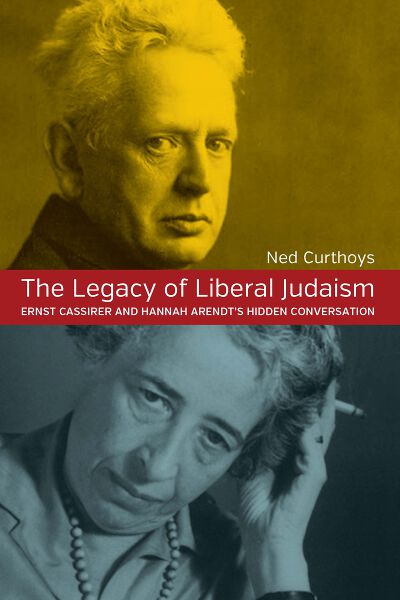
The Legacy of Liberal JudaismThe Legacy of Liberal Judaism:
Ernst Cassirer and Hannah Arendt’s Hidden Conversation
Ned Curthoys


“Most readers will finish this work with a renewed appreciation of the continuing significance of the moral vision articulated by these exemplars of liberal Judaism.” · Choice


“The book then provides various interesting challenges to scholarship on Arendt, as well as the material on thinkers brought together here as part of the tradition of Liberal Judaism. All this make The Legacy of Liberal Judaism of relevance beyond an exclusively scholarly debate.” · Patterns of Prejudice

Continue reading “Reading Hannah Arendt”

Hot Off the Presses – New Journal Issues Published in November


Anthropology of the Middle East

Volume 10, Issue 1

In this issue, we present contributions that deal with museums, museology and their approaches to the new social situations through which they must navigate.


Transfers

Volume 5, Issue 3

This issue features a special section on settler-colonial mobilities


Social Analysis

Volume 59, Issue 3

This issue covers a range of topics including fieldwork relations, street art, economic practices, and more.


Anthropological Journal of European Cultures

Volume 24, Issue 2

The thematic focus of this issue is Urban Place-making Between Art, Qualitative Research and Politics.


French Politics, Culture & Society

Volume 33, Issue 3

This issue explores themes of race and racism in France.


The Cambridge Journal of Anthropology

Volume 33, Issue 2

The issue’s special section on ‘Intimacy Revisited’ features articles that situate dominant understandings of ‘intimacy’ in its associations with sexuality, but then expand to examine intimacy as a much broader empirical issue.


Nature and Culture

Volume 10, Issue 3

This special issue is motivated by the question of why materiality is so difficult to deal with in terms of research methods. As a whole, the contributions illustrate the variety of research problems in the social sciences to which material agency matters, as well as the methodological challenges included in the empirical investigation of things.


Critical Survey

Volume 27, Issue 2

This special issue is devoted to Victorian literature and science.


James D. Sellmann: Thoughts on Magic-Religion

This post is the transcript of an electronic interview between D. S. Farrer and James D. Sellmann. Farrer is the special issue editor for Social Analysis Volume 58, Issue 1, and Sellmann is the co-author of the article “Chants of Re-enchantment: Chamorro Spiritual Resistance to Colonial Domination appearing in that issue. Below, Sellmann answers a series of questions related to his article in Social Analysis.


This is the fifth in a series of interviews with contributors to this volume. Find the previous contributions on our blog.


Continue reading “James D. Sellmann: Thoughts on Magic-Religion”

UN Climate Change Conference in Paris

The 2015 United Nations Climate Change Conference will be held in Paris from November 30 to December 11. It will be the 21st yearly session of the Conference of the Parties to the 1992 United Nations Framework Convention on Climate Change (UNFCCC) and the 11th session of the Meeting of the Parties to the 1997 Kyoto Protocol. The conference objective is to achieve a legally binding and universal agreement on climate, from all the nations of the world. Leadership of the negotiations is yet to be determined. Learn more about the conference here.

Below, we invite you to explore our latest titles related to climate change.


ACCESS A FREE VIRTUAL JOURNAL ISSUE ON CLIMATE CHANGE


RECLAIMING THE FOREST
The Ewenki Reindeer Herders of Aoluguya
Edited by Åshild Kolås and Yuanyuan Xie
Foreword by F. Georg Heyne


Continue reading “UN Climate Change Conference in Paris”

Margaret Chan: Understanding the Chinese Warrior-Defender of Boundaries

This post is the transcript of an electronic interview between D. S. Farrer and Margaret Chan. Farrer is the special issue editor for Social Analysis Volume 58, Issue 1, and Chan is the author of the article “Tangki War Magic The Virtuality of Spirit Warfare and the Actuality of Peace,” appearing in that issue. Below, Chan answers a series of questions related to her article in Social Analysis.
 

This is the fourth in a series of interviews with contributors to this volume. Find the previous contributions on our blog.

Continue reading “Margaret Chan: Understanding the Chinese Warrior-Defender of Boundaries”

A Philosopher Discusses Design Rhetoric

Below is an electronic interview between the Berghahn blog editor and Annina Schneller, contributor to the latest issue of the journal Nature and Culture. Annina Schneller is a contributor to the article titled “Design Rhetoric: Studying the Effects of Designed Objects” which appears in Volume 10, Number 3.


Annina Schneller, how come a philosopher does research about design?

Philosophy is a highly theoretical science and I always felt a lack of sensuality, a detachment from real experience and the problems we encounter in everyday life. I am interested in the practical aspects of ordinary life and in grasping‚ the bigger picture’, which also means to transcend disciplinary borders. In my research, conceptual, theoretical questions merge with practice-based questions of creation and effect in design.


You are following a rhetorical approach to design. What does that mean?

In analogy to rhetorics – the art of speech – I try to define a system that enables us to analyse design, but also to instruct designers for practice. Both rhetoric and design are intrinsically effect oriented. Their success lies in creating a certain reaction in a public. In my research, I try to find out which elements of design – colour, shape, material, composition etc. – are apt to create effects in the beholder or user and how this interrelation can be purposefully shaped. My article in Nature and Culture presents a design rhetorical view by referring to different practice-based research projects I have been working on. I particularly focus on the methodological problems that have occurred in identifying design effects and pinning down design rules.


How does this kind of design research link to the issues of Nature and Culture?

The impact of design is of concern for cultural studies, since design objects constitute a large part of human culture. Most of the things that surround us, we work with, we enjoy or that stand in our way are products of design. The boundary between natural and artificial objects can be questioned by reference to design: Many of the seemingly natural things such as plants or rivers can nowadays be seen as infiltrated by human design endeavours. So, if the apple in the supermarket has been designed to look fresh and crisp, does it belong to nature or culture now?


ANNINA SCHNELLER is a Philosopher and Researcher in Communication Design

at Bern University of the Arts, responsible for the research field of Design

and Rhetoric.