Join our Email List




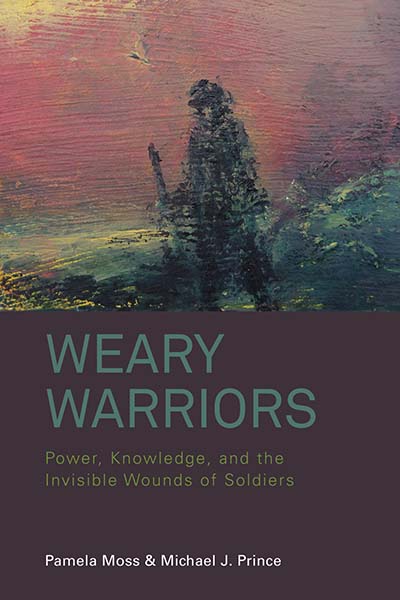 Just because one cannot see wounds does not mean they are not there. Pamela Moss and Michael J. Prince analyze war-derived psychological trauma in their co-authored volume, Weary Warriors: Power, Knowledge, and the Invisible Wounds of Soldiers. Following, the authors share their personal backgrounds and further insight into their volume.
________________________________
How were you drawn to the topic of invisible wounds of combatants?
Michael J. Prince: In a personal way, my interest in the subject of weary warriors comes from being the son of a Second World War veteran. My father served in the Royal Canadian Air Force overseas as flying officer, wireless operator and air gunner, so I grew up in a family in which these topics were, at times, discussed. In a professional way, my work on developments in welfare states highlighted the significant place of wars, soldiers, and veterans in the struggles around the formation of social programs.


 This is the third in a series of posts dedicated to celebrating the
 Anthropological Approaches