Celebrate International Day of Democracy with Berghahn Journals!

Democratic Theory

Dear Colleague,

In honor of the International Day of Democracy on September 15th, and to celebrate the recent publication of our newest journal Democratic Theory, we have compiled a list of articles on the topic of democracy and democratic issues. You may also view the table of contents for the forthcoming issue of Democratic Theory here. We hope you enjoy.

–Berghahn Journals

On Democracy:
Democratic Theory, Volume 1, Number 1


Regions & Cohesion, Volume 3, Number 1
 
Italian Politics, Volume 28, Number 1
 
 
French Politics, Culture & Society, Volume 26, Number 2
 
Theoria, Volume 58, Number 127
 
Learning and Teaching, Volume 2, Number 3
 
Asia Pacific World, Volume 2, Number 1
 
Sartre Studies International, Volume 11, Numbers 1-2
 
German Politics & Society, Volume 25, Number 2
 
French Politics, Culture & Society, Volume 20, Number 3
 
Nature and Culture, Volume 1, Number 2
 
Social Analysis, Volume 50, Number 1

Simulated Shelves: Browse September’s New Books

We are delighted to present a selection of our newly published, and soon to be published, September titles from our core subjects of Conflict Studies, Film Studies, Gender Studies, Genocide Studies, History and Religious Studies along with a selection of our New in Paperback titles.

——————————————————————————————————————–


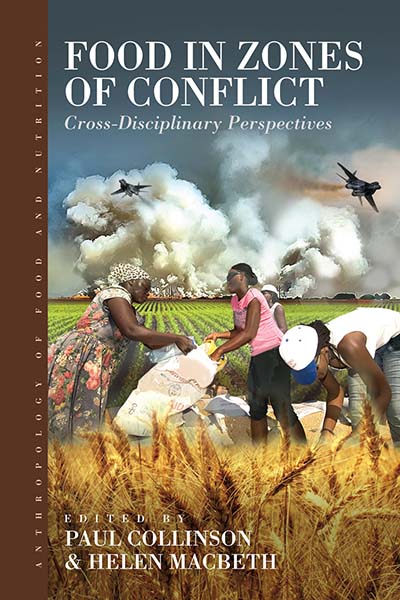
FOOD IN ZONES OF CONFLICT
Cross-Disciplinary Perspectives
Edited by Paul Collinson and Helen Macbeth
Foreword by Hugo Slim

Volume 8, Anthropology of Food & Nutrition Continue reading “Simulated Shelves: Browse September’s New Books”

Celebrate Women with Aspasia!

Today, September 4th, is the anniversary of the Fourth World Conference on Women in Beijing, where over 4,750 delegates from several countries were in attendance. Issues discussed at the conference included poverty, education, health, economic rights, and more.

From UNWomen.org: “The United Nations has organized four world conferences on women. These took place in Mexico City in 1975, Copenhagen in 1980, Nairobi in 1985 and Beijing in 1995. The last was followed by a series of five-year reviews. The 1995 Fourth World Conference on Women in Beijing marked a significant turning point for the global agenda for gender equality. The Beijing Declaration and the Platform for Action, adopted unanimously by 189 countries, is an agenda for women’s empowerment and considered the key global policy document on gender equality.”


To celebrate the anniversary of this historic conference and its benefit to women worldwide, we’d like to invite you to glance a free sample issue of Aspasiaor sign up for a 60-day free trial by clicking here.


About Aspasia

Aspasia is the international peer-reviewed annual of women’s and gender history of Central, Eastern, and Southeastern Europe (CESEE). It aims to transform European women’s and gender history by expanding comparative research on women and gender to all parts of Europe, creating a European history of women and gender that encompasses more than the traditional Western European perspective. Aspasia particularly emphasizes research that examines the ways in which gender intersects with other categories of social organization and advances work that explores transnational aspects of women’s and gender histories within, to, and from CESEE. The journal also provides an important outlet for the publication of articles by scholars working in CESEE itself. Its contributions cover a rich variety of topics and historical eras, as well as a wide range of methodologies and approaches to the history of women and gender.

Read the founding statement from the first issue of Aspasia here.


Back to School

“Accomplishment will prove to be a journey, not a destination.” – Dwight D. Eisenhower


As the summer ends and the weather turns, the new school year begins. Although the first day varies in different parts of the world, however normal pattern is for school to begin in late August or early September in the northern hemisphere. Berghahn is happy to welcome everyone back with some relevant Education Studies titles.

——————————————————————————————————————–


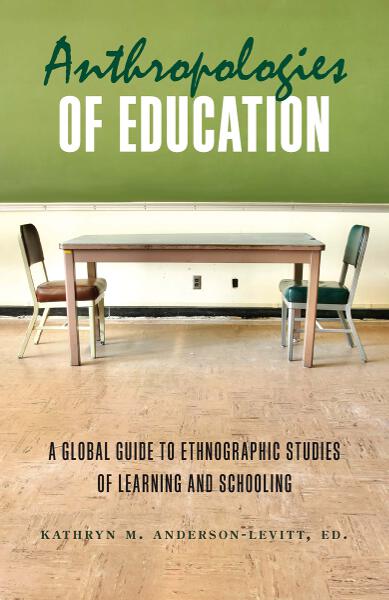
ANTHROPOLOGIES OF EDUCATION
A Global Guide to Ethnographic Studies of Learning and Schooling
Edited by Kathryn M. Anderson-Levitt

Continue reading “Back to School”

Venice Film Festival Kicking Off the Fall Movie Festival Season

The 71st Venice International Film Festival, organized by La Biennale di Venezia, opens today and runs through September 6th 2014, on the island of the Lido, Venice, Italy. Twenty films will be competing for the Golden Lion prize, and several dozen more will wrestle for the attention of critics and audiences.


The Venice Film Festival or Venice International Film Festival (Italian: Mostra Internazionale d’Arte Cinematografica della Biennale di Venezia, “International Exhibition of Cinematographic Art of the Venice Biennale”) is the oldest international film festival in the world. Founded by Count Giuseppe Volpi in 1932 as the “Esposizione Internazionale d’Arte Cinematografica”, the festival has since taken place every year in late August or early September on the island

For this year’s festival line-up, screening schedule and other information please visit Venice Film Festival official website.

——————————————————————————————————————–

In the interim, Berghahn is delighted to present its own line-up of Film Studies titles:


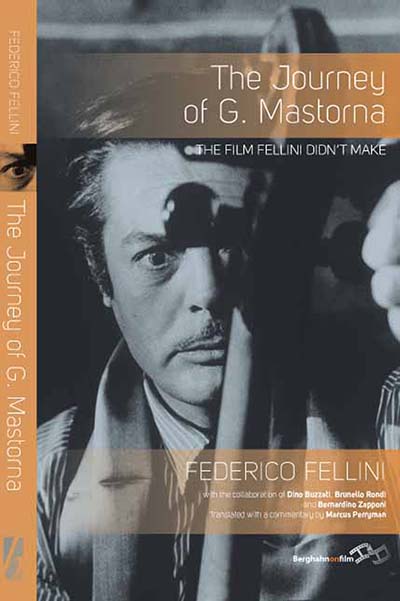
THE JOURNEY OF G. MASTORNA
The Film Fellini Didn’t Make
Federico Fellini
With the collaboration of Dino Buzzati, Brunello Rondi, and Bernardino Zapponi
Translated with a commentary by Marcus Perryman

Continue reading “Venice Film Festival Kicking Off the Fall Movie Festival Season”

The Political Backdrop of French Film

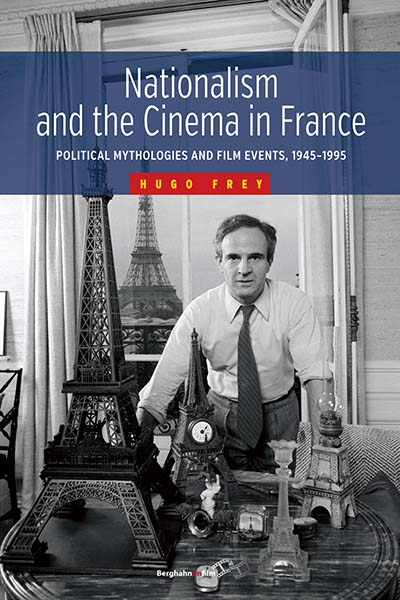
Fifty years of French cinema get their close-up in Hugo Frey’s Nationalism and the Cinema in France: Political Mythologies and Film Events, 1945-1995, published in July. Following, the author offers readers a new angle on the volume, which is itself a fresh perspective on French film against a nationalistic backdrop.


____________________________


Why did you write this book? What were your original aims?


The motivations for undertaking this research are complicated and now date from some time ago. Having written a study of the director Louis Malle (2004), I wanted to continue to develop my knowledge of French cinema, while still connecting to my other interests in national historiography and the collective memory of the Vichy period. However, I did not want to work on a conventional book about either ‘great French films of recent times’ or indeed something that just rehashed familiar debates already presented in titles such as Henry Rousso’s The Vichy Syndrome.

Continue reading “The Political Backdrop of French Film”

Mentoring: Doing and Theorising

Girlhood StudiesThe below is a special guest post written by Ann Smith, the Managing Editor of Girlhood Studies – An Interdisciplinary Journal.


While we work with many leading scholars and well-established authors, we also encourage new and inexperienced writers to contribute to Girlhood Studies so, as the managing editor, I see my task as necessarily including a great deal of mentoring. But, how does one talk about mentorship without sounding patronising? Being a mentor in this context is not difficult, if very time-consuming; I have never yet encountered any opposition from an inexperienced contributor to my guidance and suggestions and I often preface encouraging comments about improvements and progress in the development of a ms that is gradually becoming suitable for publication with a statement like: “I don’t mean to sound patronising but I do want to tell you how much better this version is” or something similar. Without exception so far, these authors voice gratitude and are willing to do whatever it takes. But being a mentor and talking about this process are two very different things.

When I say that I have mentored authors whose command of English indicates that this is their second (if not third) language I am already sounding like a colonial authority! There are many Englishes spoken around the world but I have to insist on a level of what might be called white Western English. When I describe an author’s command of academic language as poor or lacking I am insisting that she or he write in a way that is acceptable to a very tiny minority of readers. I find that hard to justify here although I know that what I am doing is the right thing to do in this particular context of editing an academic journal.

It is much easier to use an unoffending agentless passive voice construction to suggest to an author that a thesis put forward, say, in her abstract is being contradicted later in the article than it is to say here—in the brutally declarative active voice—that some authors appear to lack logic and seem to be unable to argue conclusively, true as this might be. And, in the work of new and inexperienced authors, it is easier to correct the misplaced modifiers (of which there have been very many over the years) and fix the incorrect punctuation (that seems to me to be endemic) than it is to say here that some writers have a poor grasp of basic English grammar.

But then, luckily, I am not often called upon to articulate why this mentoring is necessary; I just do it and the best part of it falls outside of any theorising—the recognition that Girlhood Studies has functioned as a launching pad for authors who are on their way to becoming the next generation of leading scholars, and that I have played a role in this process.

by Ann Smith, Managing Editor of Girlhood Studies

Follow Girlhood Studies on Twitter!

Simulated Shelves: Browse August’s New Books

We are delighted to present a selection of our newly published, and soon to be published, August titles from our core subjects of Anthropology, Environmental Studies, Film Studies, History and Politics, along with a selection of our New in Paperback titles.

———————————————————————————————————


BLOOD AND FIRE
Toward a Global Anthropology of Labor
Edited by Sharryn Kasmir and August Carbonella

Volume 13, Dislocations Series


Continue reading “Simulated Shelves: Browse August’s New Books”

Unmasking the Visages of Ukrainian Women

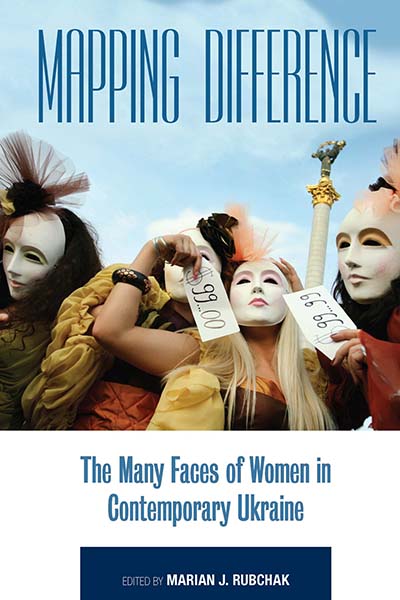
A look into the life of post-Soviet Ukrainian women, Mapping Difference: The Many Faces of Women in Contemporary Ukraine is now available in paperback. This book uncovers the virtues of women that sometimes lie just beneath negative gender stereotypes. Following, editor of the collection, Marian Rubchak, gives readers a deeper look into the volume via the book’s cover.


_________________________________


Since the demise of the Soviet “Empire of Nations”[i] in 1991 Ukraine’s women have lived in a world largely shaped by the rejection of communist values and efforts to transform a moribund socialist system into an open democratic society. Early in the transformative period this society gave rise to a small core of female activists who chose to work within the existing system, with its traditional values, to effect the changes that would return their voice to women. Although they disavowed the label of feminist as a self-descriptor their agendas clearly reflected feminist principles.

Continue reading “Unmasking the Visages of Ukrainian Women”