Hot Off the Press – New Journal Issues Published in December


Contributions to the History of Concepts

Volume 10, Issue 2

This issue features a special section on Medieval Concepts.


Theoria

Volume 62, Issue 145

This special issue poses the question: Is the Idea of Peace Relevant for the Age of Asymmetrical Warfare?


Israel Studies Review

Volume 30, Issue 2

This issue of Israel Studies Review examines a variety of issues and topics using some new lenses that we hope will provide novel perspectives.


Italian Politics

Volume 30, Issue 1

This issue focuses on Italian Political Events in 2014.


Girlhood Studies

Volume 8, Issue 3

“Visual Disruptions” is the theme of this seventeenth issue of Girlhood Studies.


Learning and Teaching

Volume 8, Issue 3

This special issue is titled Coping with Cultural Difference: Chinese Students and the Internationalisation of Higher Education.


Berghahn Books will be attending American Historical Association 2016 Meeting!

Berghahn-2016-HistoryWe are delighted to inform you that we will be attending the 2016 AHA Annual Meeting in Atlanta, January 7th-10th, 2016. Please stop by Booth #1409 to browse our latest selection of books & pick up free journals’ samples.


If you are unable to attend, we would like to provide you with a special discount offer. For the next 30 days, receive a 25% discount on all History titles found on our website. At checkout, simply enter the discount code AHA16. Visit our website­ to browse our newly published interactive online History 2016 catalog or use the new enhanced subject searching features­ for a complete listing of all published and forthcoming titles.


We hope to see you in Atlanta! Continue reading “Berghahn Books will be attending American Historical Association 2016 Meeting!”

Željko Jokić: Researching Assault Sorcery

This post is the transcript of an electronic interview between D. S. Farrer and Željko Jokić. Farrer is the special issue editor for Social Analysis Volume 58, Issue 1, and Jokić is the author of the article Shamanic Battleground: Magic, Sorcery, and Warrior Shamanism in Venezuela” appearing in that issue. Below, Jokić answers a series of questions related to her article in Social Analysis.


This is the eighth in a series of interviews with contributors to this volume. Find the previous contributions on our blog.


Continue reading “Željko Jokić: Researching Assault Sorcery”

Nationalism, Communal Violence, and Tamil Tiger Devotion

This post is the transcript of an electronic interview between D. S. Farrer and Michael Roberts. Farrer is the special issue editor for Social Analysis Volume 58, Issue 1, and Roberts is the author of the article Encompassing Empowerment in Ritual, War, and Assassination: Tantric Principles in Tamil Tiger Instrumentalities” appearing in that issue. Below, Roberts answers a series of questions related to her article in Social Analysis.

This is the seventh in a series of interviews with contributors to this volume. Find the previous contributions on our blog.


Continue reading “Nationalism, Communal Violence, and Tamil Tiger Devotion”

Material Agency as a Challenge to Empirical Research?

nature and cultureThe following is a guest blog post from Stefan Böschen, Jochen Gläser, Martin Meister, and Cornelius Schubert, guest editors of Nature and Culture Volume 10, Issue 3.


Our interest in compiling this special issue was sparked by a curious imbalance that prevails in the recent turn to materiality in social research. The current proclamations for (re)considering materiality are mostly levelled at theoretical conceptualizations. Framing materiality as a theoretical challenge is of course necessary, but this debate has little to say about how to deal with materiality in terms of empirical research. We think that considering materiality as a purely theoretical challenge is taking the second step before the first. What might be even worse is that decoupling conceptual treatments of material agency from empirical research makes the “material” of material agency itself disappear behind abstract concepts. It seems that although there is substantial interest in the research on materiality and agency, there also is a marked carelessness, if not helplessness, to how deal with this challenge in empirical research.


Continue reading “Material Agency as a Challenge to Empirical Research?”

Supernatural Powers and a “Discourse of Decline”

This post is the transcript of an electronic interview between D. S. Farrer and J. David Neidel. Farrer is the special issue editor for Social Analysis Volume 58, Issue 1, and Neidel is the author of the article “Discourse of Decline: Local Perspectives on Magic in Highland Jambi, Indonesia” appearing in that issue. Below, Neidel answers a series of questions related to her article in Social Analysis.

This is the sixth in a series of interviews with contributors to this volume. Find the previous contributions on our blog.


What drew you to the study of War Magic & Warrior Religion?

I conducted research for my Ph.D. dissertation in the highlands of Sumatra, Indonesia. My research project focused on a national park- community conflict, so I was not intending to study war magic. Supernatural powers, spirit possession, and other related phenomena, however, played such a large role in the local culture (as seen in legends, oral histories, village ceremonies, and actual practice) that I started collecting data on the subject as a side project.

Continue reading “Supernatural Powers and a “Discourse of Decline””

Why Every Country Must Become “An Immigrant Country”

TheoriaThis is a guest post written by Adam K Webb, contributor to Volume 62, Number 142 of the journal Theoria. Adam K Webb is the author of the article titled “Not an Immigrant Country? Non-Western Racism and the Duties of Global Citizenship.”


What is an “immigrant country”? The phrase brings to mind for most people countries like America and Australia made up largely of settlers from elsewhere and their descendants.

But the striking thing about the phrase is how often it is used in denial. Germany, despite receiving millions of guest workers from Turkey and elsewhere, insisted until the 1990s that it was “not an immigrant country,” before eventually having to recognise reality and adjust its laws to fit. Most of Europe now is made up of “immigrant countries,” so to speak. Continue reading “Why Every Country Must Become “An Immigrant Country””

Habits of Austerity

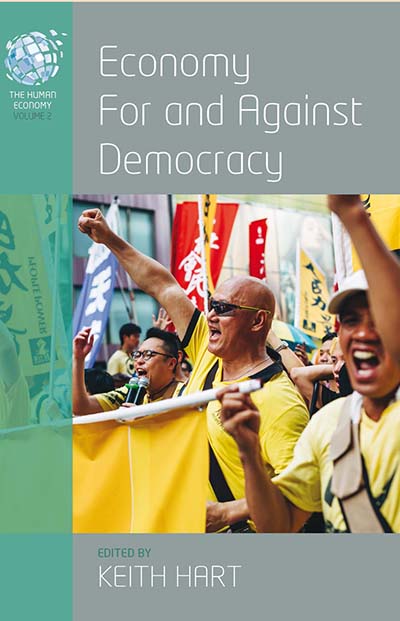
The following is a guest blog post written by Jürgen Schraten.  Below, Schraten discusses his chapter in the recently published book, Economy for and Against Democracy.


I wrote the first chapter of the book Economy For and Against Democracy, edited by Keith Hart and published this month by Berghahn Books – you can buy the book here with a 50% discount until 20 December; use the code HAR449. The chapter is titled “Habits of austerity: financialisation and new ways of dealing with money”. As the title suggests, it focuses on the financialisation of everyday life in South Africa within the global context of the concomitant expansion of financialised markets and government austerity policies.


Continue reading “Habits of Austerity”

Reading Hannah Arendt

Hannah Arendt

“There are no dangerous thoughts; thinking it-self is dangerous.” ― Hannah Arendt


Hannah Arendt (1906–1975) was one of the most influential political philosophers of the twentieth century. Born into a German-Jewish family, she was forced to leave Germany in 1933 and lived in Paris for the next eight years, working for a number of Jewish refugee organisations. In 1941 she immigrated to the United States and soon became part of a lively intellectual circle in New York. She held a number of academic positions at various American universities until her death in 1975. Read more about her life here.

Below, we’ve curated a reading list related to Hannah Arendt and her political philosophy from a selection of our books and journals.
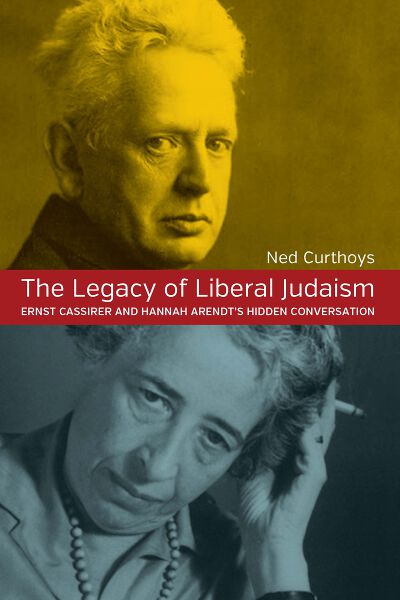


The Legacy of Liberal JudaismThe Legacy of Liberal Judaism:
Ernst Cassirer and Hannah Arendt’s Hidden Conversation
Ned Curthoys


“Most readers will finish this work with a renewed appreciation of the continuing significance of the moral vision articulated by these exemplars of liberal Judaism.” · Choice


“The book then provides various interesting challenges to scholarship on Arendt, as well as the material on thinkers brought together here as part of the tradition of Liberal Judaism. All this make The Legacy of Liberal Judaism of relevance beyond an exclusively scholarly debate.” · Patterns of Prejudice

Continue reading “Reading Hannah Arendt”