Join our Email List

Series
Volume 8
New Perspectives on Central and Eastern European Studies
See Related
History JournalsEmail Newsletters
Sign up for our email newsletters to get customized updates on new Berghahn publications.
Scientific Internationalism in Cold War Central and Eastern Europe
The Age of Reciprocity
Edited by Jan Surman and Tomáš W. Pavlíček
Afterword by Simone Turchetti
330 pages, 6 illus., bibliog., index
ISBN 978-1-80758-068-1 $135.00/£104.00 / Hb / Not Yet Published (November 2026)
eISBN 978-1-80758-069-8 eBook Not Yet Published
Reviews
This excellently composed volume brings together eminent experts in the history of science of East Central Europe. …The focus on two East Central European countries allows for an innovative view of the history of scientific relations, because it brings regions into focus that cannot simply be classified within narratives of post- or decolonial relations. In this way the volume successfully contributes to a de-centering of the history of science. Claudia Kraft, University of Vienna
Description
Focusing on cooperative exchanges between Czechoslovakia and Poland in the 1960s and 70s, this collection explores international science collaborations during the Cold War. During the era of real socialism, the states of Central and Eastern Europe were caught between the "East" and the "West." As members of the Eastern Bloc they had to adhere to Moscow centrism, yet partial autonomy in scientific internationalism and longstanding Western-oriented traditions created space for exceptions. The Contributors to this volume provide a nuanced understanding of socialist hierarchies and the knowledge transfers they facilitated, challenging the perception that socialist scholars acted solely according to rigid, reciprocal plans.
Jan Surman is a historian specializing in the intellectual and scientific history of Central and Eastern Europe. He earned his PhD in History at the University of Vienna and has held fellowships in Vienna, Moscow, Princeton, and Marburg before joining the Masaryk Institute and Archives of the Czech Academy of Sciences. His research explores the intersections of science, language, and politics. He has published widely on multilingualism in academia, the history of positivism, and knowledge circulation.
Tomáš W. Pavlíček specializes in the social and cultural history of Central Europe, oral history, and the history of science. He earned his PhD through a Czech–German program (LMU Munich–Charles University). As a historian at the Institute of History, Polish Academy of Sciences he leads international research on Czech–Polish scholarly networks and has published extensively on science, religion, and memory in nineteenth- and twentieth-century Europe.
Subject: History: 20th Century to Present
Area: Central/Eastern Europe
Contents
Of Related Interest...
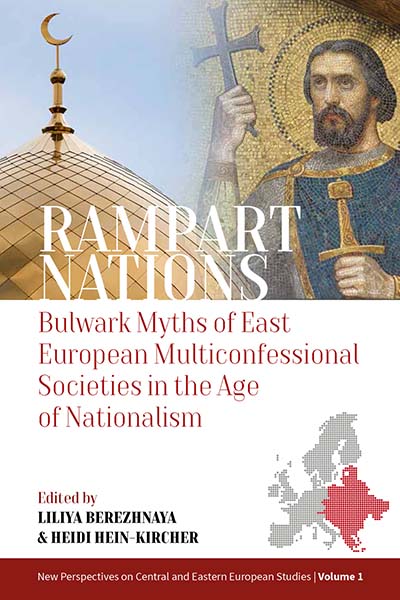
Rampart Nations
Bulwark Myths of East European Multiconfessional Societies in the Age of Nationalism
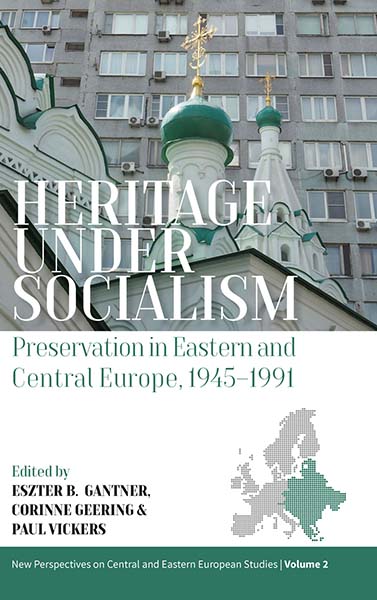
Heritage under Socialism
Preservation in Eastern and Central Europe, 1945–1991
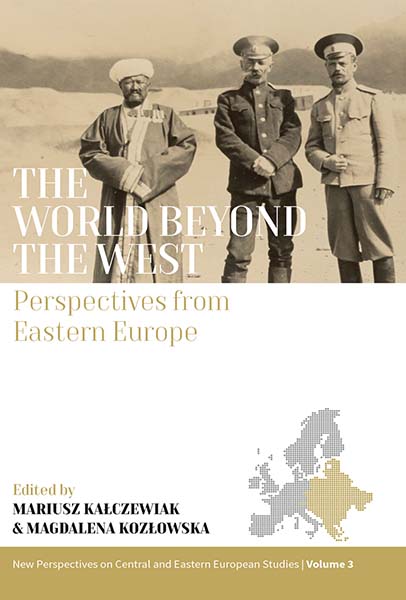
The World beyond the West
Perspectives from Eastern Europe