Join our Email List



See Related
Anthropology JournalsEmail Newsletters
Sign up for our email newsletters to get customized updates on new Berghahn publications.
Indigenous Communities and Cultural Transformation in the Trans-Himalaya
Vijay Kumar Sharma and Pankaj Gupta
328 pages, 30 b&w illus., bibliog., index
ISBN 978-1-80768-135-7 $135.00/£104.00 / Hb / Not Yet Published (April 2027)
eISBN 978-1-80768-136-4 eBook
Reviews
The manuscript iswell planned and carefully executed; it makes an important, original contribution to the anthropology of the Indian Himalayan Region. It is also one of the most detailed bio-anthropological and ethnographic studies of the Trans-Himalayan communities of Kinnaur and Spiti. Ivanov Andrey, Altai State Agricultural University
Description
Set in one of the world's most ecologically fragile cold-desert landscapes, the indigenous communities of Kinnaur and Spiti in the Trans-Himalayan region of Himachal Pradesh, have developed highly adaptive systems of knowledge in agriculture, resource governance, healthcare, ritual life, and material culture. Drawing on extensive ethnographic fieldwork, this book shows how the knowledge is shaped by ecological constraints, cosmological beliefs, and community institutions, moving beyond simple tradition-versus-modernity binaries to reveal indigeneity as a dynamic, negotiated process. Bridging anthropology, ecology, and development studies, it speaks to wider debates on sustainability, cultural heritage, and the value of indigenous knowledge in addressing global environmental change.
Vijay Kumar is a faculty member at the Department of Interdisciplinary Studies with extensive teaching, research, and fieldwork experience in the Indian Himalayan region. He has authored and co-authored several books and research publications on Himalayan societies, traditional ecological knowledge, ethnobotany, cultural heritage, and rural development. His research has appeared in national and international journals, with particular emphasis on indigenous communities of Himalayan regions. He has also worked as Co-Principal Investigator and consultant in multiple environmental and social impact assessment projects supported by government agencies and hydropower institutions in Himachal Pradesh.
Pankaj Gupta is a faculty member at the Department of Environmental Science, Himachal Pradesh University, Shimla. He is also a Fellow at the prestigious Indian Institute of Advanced Study, Rashtrapati Niwas, Shimla. He has authored and edited twenty-four books and published extensively on Himalayan ecology, ethnobotany, indigenous healthcare traditions, environmental governance, food systems, folk healing, climate change, and sustainable mountain development. He has had several research collaborations with institutions such as IGNOU, NABARD, WWF, Altai State Agricultural University, Russia, and Uppsala University, Sweden.
Subject: Anthropology (General)Sustainable Development Goals
Area: Asia
Contents
Of Related Interest...
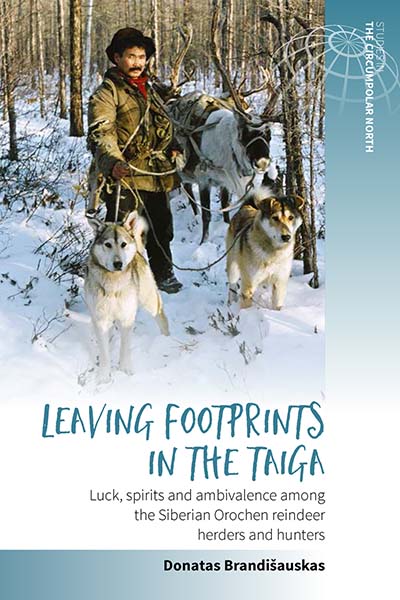
Leaving Footprints in the Taiga
Luck, Spirits and Ambivalence among the Siberian Orochen Reindeer Herders and Hunters

The Imbalance of Power
Leadership, Masculinity and Wealth in the Amazon
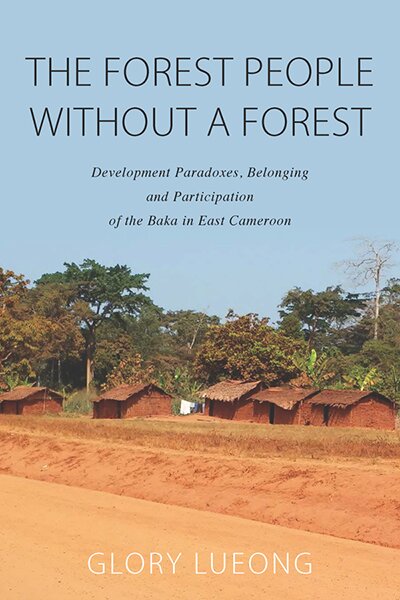
The Forest People without a Forest
Development Paradoxes, Belonging and Participation of the Baka in East Cameroon