Join our Email List




Series
Volume 28
Environment in History: International Perspectives
Email Newsletters
Sign up for our email newsletters to get customized updates on new Berghahn publications.
Moving Nature
Towards a Scandinavian Anthropocene
Edited by Marit Ruge Bjærke, Frida Hastrup and Kyrre Kverndokk
Made available under a CC BY-NC-ND 4.0 license with support from University of Copenhagen.
234 pages, 18 b&w illus., bibliog., index
ISBN 978-1-80768-048-0 $135.00/£104.00 / Hb / Not Yet Published (January 2027)
Reviews
‘[This book] provides valuable examples on how to approach the Anthropocene as a humanities scholar, and it takes an approach to the Anthropocene as a productive concept that itself moves and mobilizes humanities questions, study cases, ways of research and disciplinary collaborations.’
Sabine Höhler, KTH Royal Institute of Technology
Description
Moving Nature explores the Anthropocene in Scandinavia through the movement of organisms, substances and ideologies, from the mid-eighteenth century to the present. Case studies explore the Pacific oyster and wild boar as alien species, the production of Arctic animal museum specimens, changing Nordic livestock regimes, the afterlives of Swedish copper production, eighteenth century attempts to combat ‘evil herbs', and clearing of Argentinian rainforest by Swedish migrants. Collectively, they show how the Anthropocene in Scandinavia can be characterised by such movements, and how they promoted progress and related to the welfare state, whilst remaining entangled with transgressive and colonial forms of intervention.
Marit Ruge Bjærke is a Researcher in Cultural Studies at the Department of Archaeology, History, Cultural Studies and Religion, University of Bergen, Norway. Her research focuses on how environmental issues are understood and acted upon. She recently published Nature Gone Wild? Alien Species and We who Move Them (2025, in Norwegian).
Frida Hastrup is Professor in Ethnology at the Saxo Institute, University of Copenhagen, Denmark, where she directs the Centre for Sustainable Futures. Her current research focuses on livestock agriculture, climate change and environmental crisis, with special interest in the knowledge production and exchanges that underpin the intensified Danish livestock sector.
Kyrre Kverndokk is Professor of Cultural Studies at the Department of Archaeology, History, Cultural Studies and Religion, University of Bergen, Norway. He has published on the practice and politics of Second World War memory, the cultural history of natural disasters and climate change temporalities. He was PI of the interdisciplinary project ‘Gardening the Globe’.
Subject: Environmental Studies (General)Sustainable Development Goals
Area: Northern Europe
Moving Nature Edited by Marit Ruge Bjærke, Frida Hastrup and Kyrre Kverndokk is available as open access under a Creative Commons Attribution-NonCommercial-NoDerivatives 4.0 International License (CC BY-NC-ND 4.0) with support from University of Copenhagen.
OA ISBN: 978-1-80768-050-3
Contents
Of Related Interest...

Civilizing Nature
National Parks in Global Historical Perspective
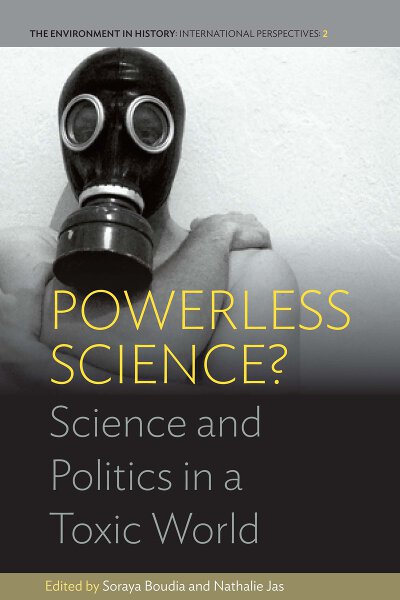
Powerless Science?
Science and Politics in a Toxic World
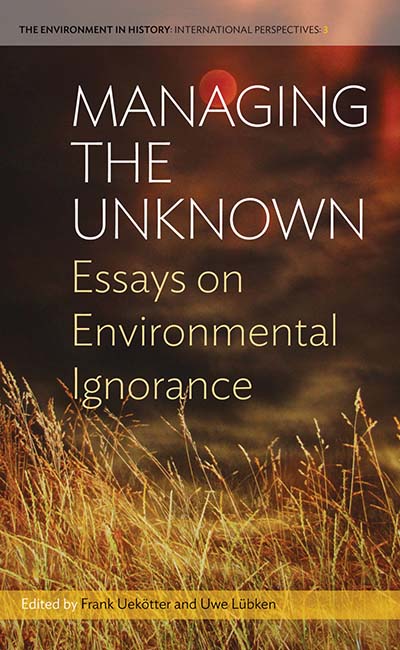
Managing the Unknown
Essays on Environmental Ignorance