 Get New Issue Alerts
Browse Archive
- Vol 44 Issue 1
- Vol 43 Issue 3
- Vol 43 Issue 2
- Vol 43 Issue 1
- Vol 42 Issue 3
- Vol 42 Issue 2
- Vol 42 Issue 1
- Vol 41 Issue 3
- Vol 41 Issue 2
- Vol 41 Issue 1
- Vol 40 Issue 3
- Vol 40 Issue 2
- Vol 40 Issue 1
- Vol 39 Issue 3
- Vol 39 Issue 2
- Vol 39 Issue 1
- Vol 38 Issue 3
- Vol 38 Issue 2
- Vol 38 Issue 1
- Vol 37 Issue 3
- Vol 37 Issue 2
- Vol 37 Issue 1
- Vol 36 Issue 3
- Vol 36 Issue 2
- Vol 36 Issue 1
- Vol 35 Issue 3
- Vol 35 Issue 2
- Vol 35 Issue 1
- Vol 34 Issue 3
- Vol 34 Issue 2
- Vol 34 Issue 1
- Vol 33 Issue 3
- Vol 33 Issue 2
- Vol 33 Issue 1
- Vol 32 Issue 3
- Vol 32 Issue 2
- Vol 32 Issue 1
- Vol 31 Issue 3
- Vol 31 Issue 2
- Vol 31 Issue 1
- Vol 30 Issue 3
- Vol 30 Issue 2
- Vol 30 Issue 1
- Vol 29 Issue 3
- Vol 29 Issue 2
- Vol 29 Issue 1
- Vol 28 Issue 3
- Vol 28 Issue 2
- Vol 28 Issue 1
- Vol 27 Issue 3
- Vol 27 Issue 2
- Vol 27 Issue 1
- Vol 26 Issue 3
- Vol 26 Issue 2
- Vol 26 Issue 1
- Vol 25 Issue 3
- Vol 25 Issue 2
- Vol 25 Issue 1
- Vol 24 Issue 3
- Vol 24 Issue 2
- Vol 24 Issue 1
- Vol 23 Issue 3
- Vol 23 Issue 2
- Vol 23 Issue 1
- Vol 22 Issue 3
- Vol 22 Issue 2
- Vol 22 Issue 1
- Vol 21 Issue 3
- Vol 21 Issue 2
- Vol 21 Issue 1
- Vol 20 Issue 3
- Vol 20 Issue 2
- Vol 20 Issue 1
- Vol 19 Issue 3
- Vol 19 Issue 2
- Vol 19 Issue 1
- Vol 18 Issue 3
- Vol 18 Issue 2
- Vol 18 Issue 1
- Vol 17 Issue 3
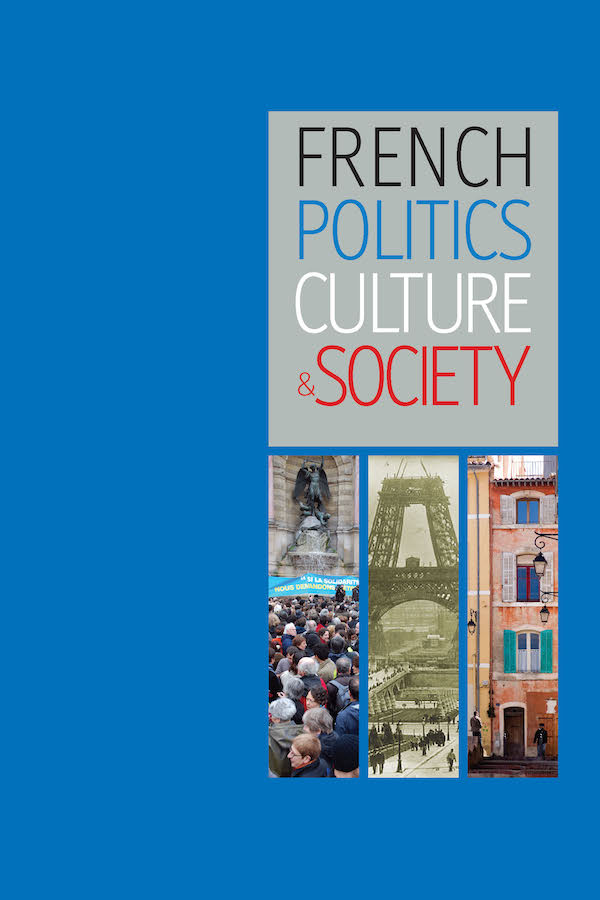
French Politics, Culture & Society
ISSN: 1537-6370 (print) • ISSN: 1558-5271 (online) • 3 issues per year
Volume 27 Issue 1
Ready for Progress?
Opinion Surveys on Women's Roles and Opportunities in Belle Epoque France
This essay uses readers' opinion surveys in Femina, a unique, high-circulation fashion magazine that championed women's rights, to study the reception of feminist ideas. The readers were fashion-conscious and well-off provincial bourgeoises, a group that might have had conservative attitudes on gender roles. Yet, the many thousands of responses reveal a profound desire to expand women's identities beyond domesticity. About a third of the readers were even indignant that women lacked the freedoms of men. Most others looked forward to a future when society would offer women more opportunities to utilize their talents while reaffirming the satisfactions of familial roles. The surveys show that Frenchwomen were redefining femininity in a more individualistic direction though national emergencies as 1914 approached would make them hesitant about pressing their cause.
Le débat autour de l'identité nationale dans la campagne présidentielle 2007
quelle rupture ?
The 2007 Presidential election has been the occasion of a fierce debate between Nicolas Sarkozy and Segolène Royal on the issue of national identity. The victory of Nicolas Sarkozy has led to the creation of a Ministry of National Identity and Immigration, linking in a controversial way the management of newcomers and their acceptance of allegedly historical national "values." This article examines the debate during the campaign. It provides an analysis of the reasons why the definition and defense of national identity was discussed in the course of the election, and outlines the viewpoints of the two candidates on this issue. Finally, it argues that the temptation to fix politically the content of national identity is an ancient one in France. What has been presented as part of Nicolas Sarkozy's "rupture" with the past in this domain is in fact the latest development of a form of "state nationalism" that has been prevailing in France in recent decades.
Regards croisés
La presse frontiste face aux mouvements des « sans » dans les années 1990
This article considers the ways that elements of the far-right press in France have dealt with the emergence of groups representing marginalized people—the unemployed, undocumented workers, the badly housed—during the 1990s. The first part considers the ideological leanings of the main far-right political group—the National Front—and of its press. The final part of the article analyzes the press's discourse on marginalized people and considers the political significance of such discourse.
AIDS and Postcolonial Politics
Acting Up on Science and Immigration in France
From a postcolonial left that challenges the French state over immigration policy and neoliberal globalization, Act Up has advocated for the social and political rights and needs of women, inmates, drug users, and immigrants with HIV/AIDS. This essay examines as well Act Up's engagement with science and globalization in response to new experimental medical trials in the Global South. Act Up's emphasis on local empowerment against global economic and social actors has earned criticism from American and South African AIDS activists, but at the same time these campaigns stress the universalist impulse imbedded in the Act Up brand of French Republican politics.
Les Parisiens sous l'Occupation, une exposition controversée
Last spring in France a controversy arose over an exhibit of André Zucca's photographs of Paris under German occupation. The well-known photo journalist worked for the Nazi magazine Signal during World War II. For that reason, some people disapproved of an exhibit on the work of a former "collaborateur," a man who, in a way, helped Hitler's Germany. Those who prepared the exhibit justified the project on the basis of the beauty of Zucca's colored photos and the rarity of wartime color photos. They insisted on the importance of his use of agfacolor film, which was generally available only to Germans. Critics of the exhibition found Zucca's privileged access all the more disturbing. An analysis of the archives from the period exposes the complexity of the affair and the need for further research. Evidence from documents on Zucca's activity and opinions during the war reveal a man little interested in the world except to photograph it.
Wartime Flânerie
The Zucca Controversy
This essay reviews an exhibition of André Zucca's photographs titled "Les Parisiens sous l'Occupation," which caused an uproar when it opened in March 2008 at the Musée de la Bibliothèque historique de la ville de Paris. Not surprisingly, the controversy centered on the collaborationist past of Zucca, a photographer for the Nazi wartime periodical Signal. Because Zucca chose to photograph the sunnier side of life in wartime Paris, the exhibition raised the question of just how much Parisians "suffered" during the Occupation. It also demonstrated the powerful role of photography in shaping national memory.
Liberté, Égalité, Parité
Joan Wallach Scott, Parité! Sexual Equality and the Crisis of French Universalism (Chicago: University of Chicago Press, 2005).
Eléonore Lépinard, L’Égalité introuvable. La parité, les féministes et la République (Paris: Presses de la Fondation nationale des sciences politiques, 2007).
Book Reviews
Cheryl B. Welch The Demands of Liberty: Civil Society in France Since the Revolution by Pierre Rosanvallon
Sylvia Schafer Sexing the Citizen: Morality and Masculinity in France, 1870-1920 by Judith Surkis
Patricia Tilburg Blessed Motherhood, Bitter Fruit: Nelly Roussel and the Politics of Female Pain in Third Republic France by Elinor Accampo
Max Likin Between Justice and Politics: The Ligue des Droits de l’Homme, 1898-1945 by William D. Irvine
Sean M. Kennedy French Anti-Americanism (1930-1948): Critical Moments in a Complex History by Seth D. Armus
Clifford Rosenberg God’s Eugenicist: Alexis Carrel and the Sociobiology of Decline by Andrés Horacio Reggiani
Julie Fette Crises of Memory and the Second World War by Susan Rubin Suleiman
Chris Howell Changing France: The Politics that Markets Make by Pepper D. Culpepper, Peter A. Hall, and Bruno Palier
Abstracts
Abstracts
Index to Volume 26 (2008)
Index to Volume 26 (2008)