 Get New Issue Alerts
Browse Archive
 PDF issue available for purchase
 Print issue available for purchase
- Vol 20 Issue 2
- Vol 20 Issue 1
- Vol 19 Issue 3
- Vol 19 Issue 2
- Vol 19 Issue 1
- Vol 18 Issue 3
- Vol 18 Issue 2
- Vol 18 Issue 1
- Vol 17 Issue 3
- Vol 17 Issue 2
- Vol 17 Issue 1
- Vol 16 Issue 3
- Vol 16 Issue 2
- Vol 16 Issue 1
- Vol 15 Issue 3
- Vol 15 Issue 2
- Vol 15 Issue 1
- Vol 14 Issue 3
- Vol 14 Issue 2
- Vol 14 Issue 1
- Vol 13 Issue 3
- Vol 13 Issue 2
- Vol 13 Issue 1
- Vol 12 Issue 2
- Vol 12 Issue 1
- Vol 11 Issue 2
- Vol 11 Issue 1
- Vol 10 Issue 2
- Vol 10 Issue 1
- Vol 9 Issue 2
- Vol 9 Issue 1
- Vol 8 Issue 2
- Vol 8 Issue 1
- Vol 7 Issue 2
- Vol 7 Issue 1
- Vol 6 Issue 2
- Vol 6 Issue 1
- Vol 5 Issue 2
- Vol 5 Issue 1
- Vol 4 Issue 2
- Vol 4 Issue 1
- Vol 3 Issue 2
- Vol 3 Issue 1
- Vol 2 Issue 2
- Vol 2 Issue 1
- Vol 1 Issue 2
- Vol 1 Issue 1
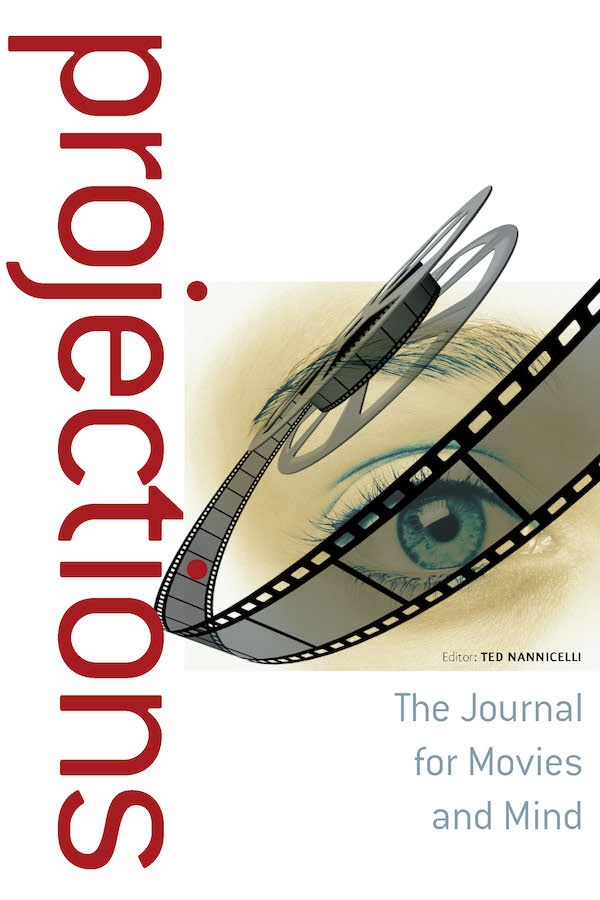
Projections
The Journal for Movies and Mind
ISSN: 1934-9688 (print) • ISSN: 1934-9696 (online) • 3 issues per year
Published Open Access as part of the Berghahn Open Society collection.
Since the early 1990s, phenomenology and cognitivism have become influential strands of inquiry in film theory. Phenomenological approaches remain focused on descriptive accounts of the embodied subject's experiential engagement with film, whereas cognitivist approaches attempt to provide explanatory accounts in order to theorize cognitively relevant aspects of our experience of movies. Both approaches, however, are faced with certain challenges. Phenomenology remains a descriptive theory that turns speculative once it ventures to “explain” the phenomena upon which it focuses. Cognitivism deploys naturalistic explanatory theories that can risk reductively distorting the phenomena upon which it focuses by not having an adequate phenomenology of subjective experience. Phenomenology and cognitivism could work together, I suggest, to ground a pluralistic philosophy of film that is both descriptively rich and theoretically productive. From this perspective, we would be better placed to integrate the cultural and historical horizons of meaning that mediate our subjective experience of cinema. The stories we tell each other, or present via mass media, are important components of the cultural ecology of a place and time. This article argues that Maurice Merleau-Ponty's existential phenomenology has been crucial to contemporary film-phenomenology, yet his later thought has not received the same attention. Drawing on “Eye and Mind” and other writings, I apply the philosopher's ontological concept of depth to the cinema. Using Laurie Anderson's In an age of ecological disasters and increasing environmental crisis, the experience of any cinematic fiction has an intrinsic ethical potential to reorient the spectator's awareness of the ecological environment. The main argument is that the spectator's sensory-affective and emphatically involving experience of cinema is essentially rooted in what I call “elemental imagination.” This is to say, first, that the spectator becomes phenomenologically immersed with the projected filmworld by a cinematic expression of the elemental world, and second, much like there is no filmworld without landscapes, the foundational aspect of elements are revealed as preceding and sustaining the narrative and symbolic layers of film experience. While suggesting the existential-ethical potential of this fundamental process of film experience, the second aim of this article is to show that this form of elemental imagination complements more mainstream “environmentalist” films, such as climate change documentaries and blockbuster apocalyptic genre films. Many contemporary applications of theories of affect to cinematic ethical experience focus on its consequences for empathy and moral allegiance. Such approaches have made advances in bridging phenomenological and cognitivist approaches to film-philosophy, but miss the importance of complex affects that problematize empathy and moral judgment. For example, the rendering of trauma in This article turns to the Maysles brothers’ 1975 film The screen is the material and imaginative interface where biology meets technology. It is the nexus between science and fiction, where technological and ethical concerns surrounding synthespians, representations of replicants, and manifestations of synthetic biology come into play. This analysis of digital imaging and cinematic imagining of virtual actors and synthetic humans in films such as Volume 13 Issue 2