 Get New Issue Alerts
Browse Archive
 PDF issue available for purchase
 Print issue available for purchase
- Vol 20 Issue 2
- Vol 20 Issue 1
- Vol 19 Issue 3
- Vol 19 Issue 2
- Vol 19 Issue 1
- Vol 18 Issue 3
- Vol 18 Issue 2
- Vol 18 Issue 1
- Vol 17 Issue 3
- Vol 17 Issue 2
- Vol 17 Issue 1
- Vol 16 Issue 3
- Vol 16 Issue 2
- Vol 16 Issue 1
- Vol 15 Issue 3
- Vol 15 Issue 2
- Vol 15 Issue 1
- Vol 14 Issue 3
- Vol 14 Issue 2
- Vol 14 Issue 1
- Vol 13 Issue 3
- Vol 13 Issue 2
- Vol 13 Issue 1
- Vol 12 Issue 2
- Vol 12 Issue 1
- Vol 11 Issue 2
- Vol 11 Issue 1
- Vol 10 Issue 2
- Vol 10 Issue 1
- Vol 9 Issue 2
- Vol 9 Issue 1
- Vol 8 Issue 2
- Vol 8 Issue 1
- Vol 7 Issue 2
- Vol 7 Issue 1
- Vol 6 Issue 2
- Vol 6 Issue 1
- Vol 5 Issue 2
- Vol 5 Issue 1
- Vol 4 Issue 2
- Vol 4 Issue 1
- Vol 3 Issue 2
- Vol 3 Issue 1
- Vol 2 Issue 2
- Vol 2 Issue 1
- Vol 1 Issue 2
- Vol 1 Issue 1
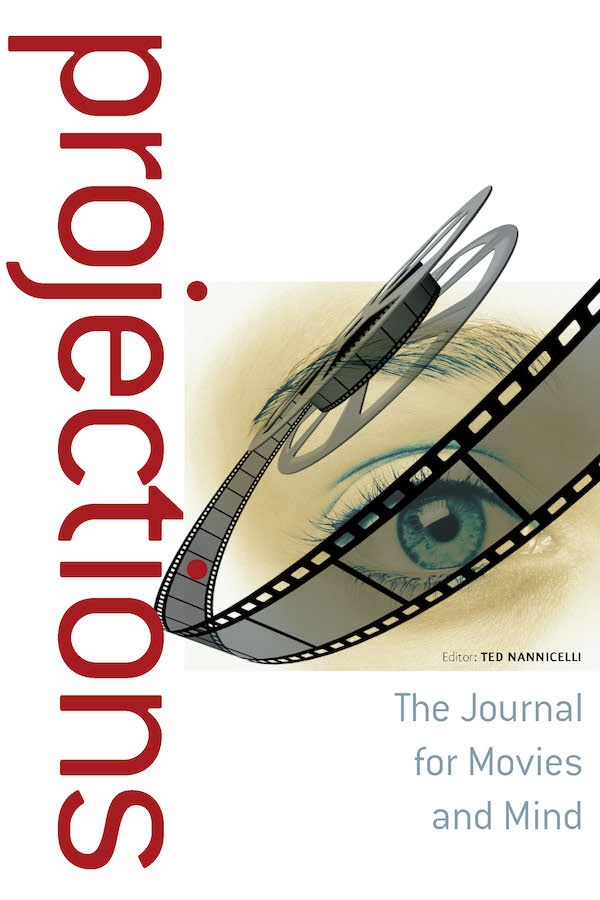
Projections
The Journal for Movies and Mind
ISSN: 1934-9688 (print) • ISSN: 1934-9696 (online) • 3 issues per year
Published Open Access as part of the Berghahn Open Society collection.
Welcome to the first issue of our first three-issue volume of We investigated physical changes over three versions in the production of the short historical drama, This article analyzes the unique historical collaboration between the revolutionary Russian film director Sergei Eisenstein (1898–1948), the cultural psychologist Lev Vygotsky (1896–1934), and the founder of contemporary neuropsychology, Alexander Luria (1902–1977). Vygotsky's legacy is associated primarily with the idea that cultural mediation plays a crucial role in the emergence and development of personality and cognition. His collaborator, Luria, laid the foundations of contemporary neuropsychology and demonstrated that cultural mediation also changes the functional architecture of the brain. In my analysis, I demonstrate how the Eisenstein-Vygotsky-Luria collaboration exemplifies a strategy of productive triangulation that harnesses three disciplinary perspectives: those of cultural psychology, neuropsychology, and film theory and practice. The acoustic blast is one of the most recurrent sound devices in horror cinema. It is designed to elicit the startle response from the audience, and thus gives them a “jump scare.” It can occur both in the form of a diegetic bang and in the form of a nondiegetic stinger (i.e., a musical blare provided by the score). In this article, I will advance the hypothesis that silence plays a crucial role in contemporary horror films, both perceptually, since it leaves the sound field free for the acoustic blast, and cognitively, since it posits the audience in an aversive anticipatory state that makes the startle more intense. I will analyze the acoustic startle using a neurofilmological approach, which takes into account findings from experimental sciences in order to better understand the relationship between physiological and psychological factors that make such an effect possible during the filmic experience. Many narrative films feature villains, major characters that audiences are meant to condemn. This article investigates the cognitive-affective underpinnings of audience antipathy in order to shed light on how filmic villainy is constructed. To that end, the article introduces an analytical framework at the intersection of cognitive film theory and moral psychology. The framework analyzes villainy into three categories: guilty intentionality, consequential action, and causal responsibility. Giorgio Biancorosso, Reviewed by Lea Jacobs, Reviewed by Miklós Kiss and Steven Willemsen, Reviewed by Steffen Hven, Reviewed by Volume 13 Issue 1