Join our Email List
Email Newsletters
Sign up for our email newsletters to get customized updates on new Berghahn publications.
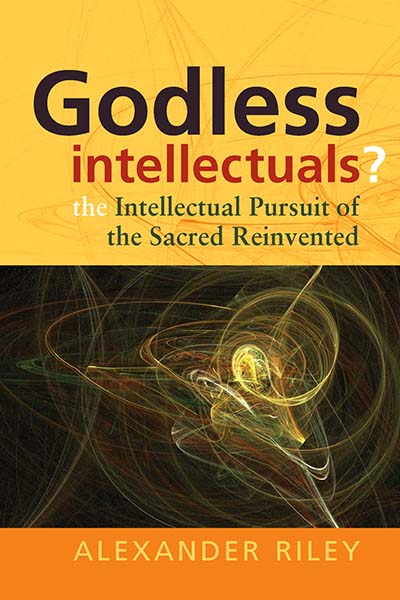
Godless Intellectuals?
The Intellectual Pursuit of the Sacred Reinvented
Alexander Tristan Riley
308 pages, bibliog., index
ISBN 978-1-84545-670-2 $135.00/£104.00 / Hb / Published (April 2010)
ISBN 978-0-85745-805-6 $34.95/£27.95 / Pb / Published (September 2012)
eISBN 978-1-80758-815-1 eBook
Reviews
“…offers readers a tour of twentieth-century French intellectual 10 history by one of the finest Durkheimian scholars writing today. At the heart of the book is Durkheim’s concept of the sacred. Yet despite the seemingly familiar starting point, Riley’s book sparkles with creative 15 ideas, intriguing concepts, and introductions to a broad class of characters… part of the book’s (mystic) charm is its comprehensive and suggestive nature.” · Sociology of Religion: A Quarterly Review.
“…an innovative, timely, ambitious, rigorous and stimulating work of Durkheimian sociology and social theory about the academic, existential, and political impact of the development of a rich Durkheimian culture sociologique from Durkheim’s day up to very recent poststructuralisms…Riley’s work is suggestive of possibilities for a renewed, empirically based, reflexive Durkheimianism.” · Durkheimian Studies
“Riley’s treatment of the ‘sacred’ is original and informative. Scholars interested in the history of the social sciences, in the production of knowledge, and in the formation of categories like ‘intellectual’ will find much to ponder and emulate here.” · Anthropology Review Database
“Through a close scrutiny of an impressive archive of unpublished, untranslated, or relatively unappreciated materials, [the author] conducts his own experiment or test by probing the scholarly journals, personal correspondence, social networks, educational institutions, and contextualizing political events that provided the scenes and settings for this uniquely “intellectual” experience of the sacred.” · American Journal of Sociology
“I recommend this book to any reader with an interest in Durkheimian sociology, intellectual history, post-structuralism or social theory. [It] extends the cultural sociology associated with Jeffrey Alexander and his colleagues to a unique exploration of one of the roots of that school of sociology. Thus, it would also make an interesting and accessible senior undergraduate course text in the sociology of knowledge, or in cultural theory.” · Canadian Journal of Sociology
“Few have failed to recognize the return of the religious as a factor in social theory. None, so far, has more cogently explained the contributions of French social thought to the challenge of the Sacred in our day than Riley.” · Charles Lemert, author of Durkheim's Ghosts
“Alexander Riley’s radically revisionist account throws down the gauntlet to the conventional wisdom of intellectual history. Riley offers a cultural sociology of intellectuals that explores the sacred narratives that motivate their life and work...original and compelling.” · Jeffrey C. Alexander, Lillian Chavenson Saden Professor of Sociology at Yale University
Description
The Durkheimians have traditionally been understood as positivist, secular thinkers, fully within the Enlightenment project of limitless reason and progress. In a radical revision of this view, this book persuasively argues that the core members of the Durkheimian circle (Durkheim himself, Marcel Mauss, Henri Hubert and Robert Hertz) are significantly more complicated than this. Through his extensive analysis of large volumes of correspondence as well as historical and macro-sociological mappings of the intellectual and social worlds in which the Durkheimian project emerged, the author shows the Durkheimian project to have constituted a quasi-religious quest in ways much deeper than most interpreters have thought. Their fascination, both personal and intellectual, with the sacred is the basis on which the author reconstructs some important components of modern French intellectual history, connecting Durkheimian thought to key representatives of French poststructuralism and postmodernism: Bataille, Foucault, Derrida, Baudrillard, and Deleuze.
Alexander Tristan Riley received his PhD from the University of California, San Diego in 2000. Currently he is Professor of Sociology at Bucknell University. He writes and teaches in the areas of cultural and social theory and cultural sociology.
Subject: SociologyAnthropology of Religion
Contents
Of Related Interest

Durkheim Today
Suffering and Evil
The Durkheimian Legacy
Turkish Culture in German Society