Film and Media Studies 10
(2.5Mb PDF file)

International Studies 10
(3.1Mb PDF file)

New Titles: Spring/Summer 10
(5.8Mb PDF file)

History 2010
(2.0Mb PDF file)

Anthropology Texts for Teaching
(5.7Mb PDF file)


advanced search

Browse all titles by:
Author | Title | Series
Celebrating 16 Years of Independent Publishing Last updated: July 27th, 2010


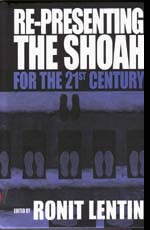
RE-PRESENTING THE SHOAH FOR THE 21ST CENTURY

Edited by Ronit Lentin


352 pages, index
ISBN 978-1-57181-802-7 Hb $75.00/£50.00 Published ( 2004)
Buy now and get 15% off listed price
Hb 
(may not yet be available for newest titles)
 Google Book Search

Despite Adorno's famous dictum, the memory of the Shoah features prominently in the cultural legacy of the 20th century and beyond. It has led to a proliferation of works of representation and re-memorialization which have brought in their wake concerns about a 'holocaust industry' and banalization. This volume sheds fresh light on some of the issues, such as the question of silence and denial, of the formation of contemporary identities — German, East European, Jewish or Israeli, the consequences of the legacy of the Shoah for survivors and for the 'second generation,' and the political, ideological, and professional implications of Shoah historiography. One of the conclusions to be drawn from this volume is that the 'Auschwitz code,' invoked in relation to all 'unspeakable' catastrophes, has impoverished our vocabulary; it does not help us remember the Shoah and its victims, but rather erases that memory.

Ronit Lentin was born in Haifa prior to the establishment of the State of Israel and has lived in Ireland since 1969. She is a well known writer of fiction and non-fiction books and is course co-ordinator of the MPhil in Ethnic Studies at the Department of Sociology, Trinity College Dublin. She has published extensively on the gendered link between Israel and the Shoah, feminist research methodologies, Israeli and Palestinian women’s peace activism, gender and racism in Ireland.


Contents

Acknowledgements

Introduction: Postmemory, Unsayability and the Return of the Auschwitz Code Ronit Lentin

Chapter 1. Categorial Murder, or: How to Remember the Holocaust Zygmunt Bauman Chapter 2. ‘The word passed away, as that world awakened’: On the (Im)possibility of Representation Heidrun Friese Chapter 3. Memory, Forgetting and Mourning Work: Deviant Narratives of Silence in the Gendered Relations between Israeli Zionism and the Shoah Ronit Lentin Chapter 4. Entering the World of a Holocaust Victim: Schoolchildren Discuss a Ghetto Memoir – a Case Study Janina Bauman Chapter 5. A Dual Perspective: Yaakov Shabtai and the Historian’s Account of the Deportation to Mauritius Dalia Ofer Chapter 6. Memory, Authenticity and Replication of the Shoah in Museums: Defensive Tools of the Nation Andrea Tyndall Chapter 7. Forbidden Laughter? The Politics and Ethics of the Holocaust Film Comedy Yosefa Loshitzky Chapter 8. Voice, Silence and Memory: The Escape from Auschwitz and the Israeli Historiography Ruth Linn Chapter 9. The Shoah and Marxism: Behind and Beyond Silence Philip Spencer Chapter 10. Re-presenting the Shoah in Poland and Poland in the Shoah Annamaria Orla-Bukowska Chapter 11. Denying the Holocaust where it Happened: Post-Communist East Central Europe and the Shoah Michael Shafir Chapter 12. Evoking and Revoking Auschwitz: Kosovo, Remembrance and German National Identity Christine Achinger Chapter 13. Exile, Daughterhood and Writing: Representing the Shoah as a Personal Memory Esther Fuchs

Notes on Contributors Index

Back to Top


If you have any questions or comments about this site, please email us
All prices listed on this website are subject to change without notice.