Join our Email List
Series
Volume 9
Polygons: Cultural Diversities and Intersections
Email Newsletters
Sign up for our email newsletters to get customized updates on new Berghahn publications.
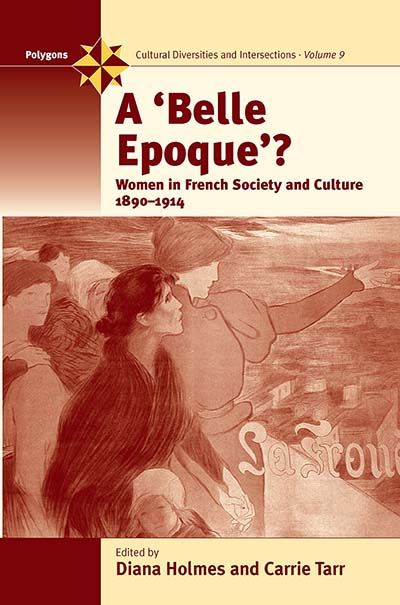
A Belle Epoque?
Women and Feminism in French Society and Culture 1890-1914
Edited by Diana Holmes and Carrie Tarr
364 pages, 30 illus., bibliog., index
ISBN 978-1-84545-021-2 $150.00/£115.00 / Hb / Published (January 2006)
ISBN 978-1-84545-094-6 $29.95/£23.95 / Pb / Published (February 2007)
eISBN 978-1-83695-997-7 eBook
Reviews
“…this volume makes a welcome contribution to the history of women, gender, and feminism…The essays, while brief, suggest interesting lines for further inquiry based on their creative use of printed sources…, as well as visual materials.” · H-France Review
“…many of the essays are extremely interesting and historians will find them valuable. The book’s brief conclusion emphasizes the achievements of the Belle Epoque: it altered ‘the sense of what it was to be a woman’ (307). Women did have a ‘Belle Epoque’, it seems, albeit a different one from men.” · European History Quarterly
Description
The Third Republic, known as the ‘belle époque’, was a period of lively, articulate and surprisingly radical feminist activity in France, borne out of the contradiction between the Republican ideals of liberty, equality and fraternity and the reality of intense and systematic gender discrimination. Yet, it also was a period of intense and varied artistic production, with women disproving the critical nearconsensus that art was a masculine activity by writing, painting, performing, sculpting, and even displaying an interest in the new "seventh art" of cinema. This book explores all these facets of the period, weaving them into a complex, multi-stranded argument about the importance of this rich period of French women’s history.
Diana Holmes is Professor of French at the University of Leeds, UK. She has published widely on French women writers, including Colette, Rachilde, Renée Vivien, and bestselling romantic authors of the Belle Epoque. Her recent publications include Rachilde – Decadence Gender and the Woman Writer (Berg, 2001), and she is working on a study of romance in 20th century France.
Carrie Tarr is a Research Fellow in the Faculty of Arts and Sciences, Kingston University London. She has published extensively on gender and ethnicity in French cinema. Her recent publications include Cinema and the Second Sex: Women’s Filmmaking in France in the 1980s and1990s (with B. Rollet, 2001) and Reframing Difference: beur and banlieue cinema in France (2005).
Subject: Gender Studies and SexualityCultural Studies (General)History: 18th/19th Century
Area: France
Contents
Of Related Interest
Sexual Politics and the European Union
The New Feminist Challenge
Women, Power, and the Academy
From Rhetoric to Reality
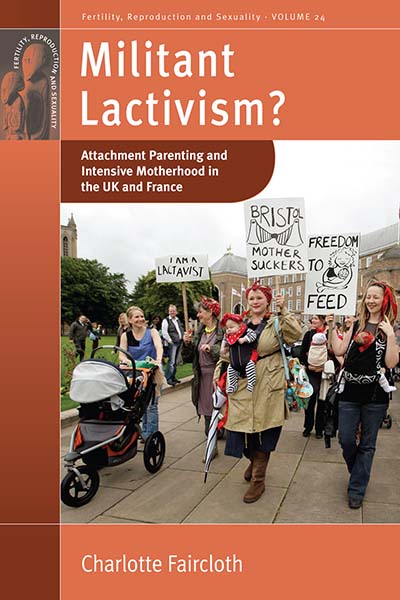
Militant Lactivism?
Attachment Parenting and Intensive Motherhood in the UK and France