Join our Email List
See Related
History JournalsEmail Newsletters
Sign up for our email newsletters to get customized updates on new Berghahn publications.
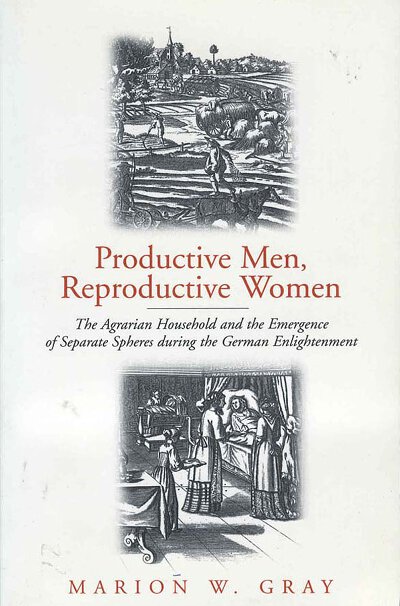
Productive Men and Reproductive Women
The Agrarian Household and the Emergence of Separate Spheres during the German Enlightenment
Marion W. Gray
256 pages, 10 illus., bibliog., index
ISBN 978-1-57181-171-4 $135.00/£104.00 / Hb / Published (January 2000)
ISBN 978-1-57181-172-1 $34.95/£27.95 / Pb / Published (January 2000)
Reviews
"A wonderfully nuanced study that will change the ways in which the separation of the spheres is studied and understood. It is deeply significant for scholars of German, economic, and gender history alike." · German History
"Suggestive, meticulous, and closely reasoned work. Densely structured, highly detailed notes; comprehensive bibliography; illustrations." · Choice
"(A) fascinating and original study." · The Times Literary Supplement
"An accessible book, beautifully produced." · Journal of European Area Studies
"Gray's study is a very readable, systematic, provocative, and important history of gender ideology, economic theory, and their inter-connectedness." · Central European History
Description
The debate on the origins of modern gender norms continues unabated across the academic disciplines. This book adds an important and hitherto neglected dimension. Focusing on rural life and its values, the author argues that the modern ideal of separate spheres originated in the era of the Enlightenment. Prior to the eighteenth century, cultural norms prescribed active,interdependent economic roles for both women and men. Enlightenment economists transformed these gender paradigms as they postulated a market exchange system directed exclusively by men. By the early nineteenth century, the emerging bourgeois value system affirmed the new civil society and the market place as exclusively male realms. These standards defined women's options largely as marriage and motherhood.
Marion W. Gray received his PhD from the University of Wisconsin, Madison. He studied in Göttingen, was a visiting faculty member at Gießen, and has worked at the Max Planck Institute for History in Göttingen and the Arbeitsgruppe Ostelbische Gutsherrschaft in Potsdam. Formerly a faculty member in History and Women's Studies at Kansas State University, he is currently Professor and Chair of the Department of History at Western Michigan University.
Subject: History: 18th/19th CenturyCultural Studies (General)Gender Studies and Sexuality
Area: Germany
Contents
Of Related Interest
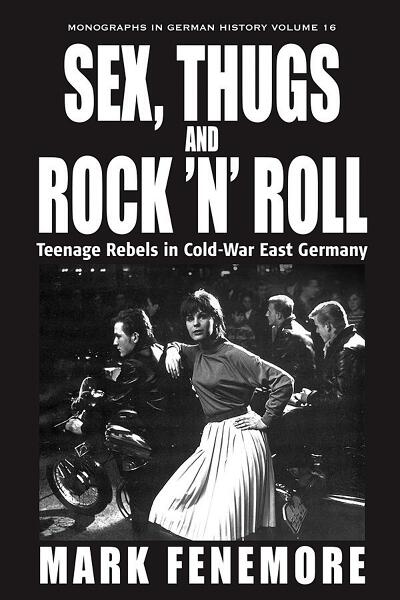
Sex, Thugs & Rock 'n' Roll
Teenage Rebels in Cold-War East Germany
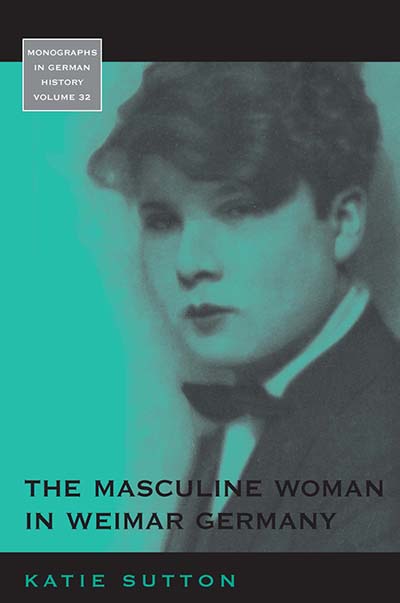
The Masculine Woman in Weimar Germany

The Devil's Wheels
Men and Motorcycling in the Weimar Republic