Chapter Excerpt: The Mosquito Taken at the Beer-Hall: Malaria Research and Control on Zambia’s Copperbelt

 Join our Email List





 World Health Day is annually held on April 7, under the sponsorship of the World Health Organization (WHO), to mark WHO’s founding, and is seen as an opportunity by the organization to draw worldwide attention to a subject of major importance to global health each year. For more information and this year’s theme please visit WHO webpage.
 We’re delighted to inform you that we’ll be present at MAGic2015, the EASA Medical Anthropology Network Conference at the University of Sussex, Brighton, UK from the 9th-11th September 2015. Please stop by our table to browse the latest selection of books at discounted prices and pick up some free journal samples.
 How do sufferers of anorexia recover? Richard A. O’Connor and Penny Van Esterik seek answers to this question, first by identifying root causes of the disease and then by sharing the stories of those who have made a full recovery. From Virtue to Vice: Negotiating Anorexia, the book that resulted from their research, does not look at the affliction of anorexia from behind a glass, in fact, O’Connor’s connection to the work is deeply personal. He explains in his own words below.
_______________________
Every book has a back story. Mine is no big secret. When my daughter Amorn became anorexic it turned our family upside down. Carolyn [my wife] and I desperately wanted answers. We got a great counselor but nothing worked. The explanations we got made no sense. That wasn’t our daughter. Of course we worried we were in denial—that we just didn’t want to face the truth—and that silenced me at the time. I understood clinicians have to put people in categories and few fit perfectly. So I settled into accepting my daughter was an exception, an outlier. What mattered most was working with her caregivers for recovery.
Continue reading “Roots and Recovery: Anthropologists Study Anorexia from all Angles”
With World Health Day coming up April 7, the paperback release of Kevin Dew’s exploration of public health is quite timely. The Cult and Science of Public Health: A Sociological Investigation was published originally in February 2012 and will be published as a paperback this month. Below is a brief description of the book, and the author’s reflection on its reception since the initial publication.
________________________________________________
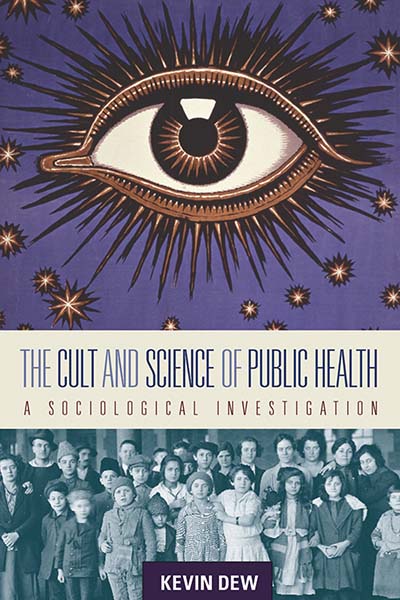
As a cult of humanity, public health provides a moral force in society that replaces ‘traditional’ religions in times of great diversity or heterogeneity of peoples, activities and desires. This is in contrast to public health’s foundation in science, particularly the science of epidemiology. The rigid rules of ‘scientific evidence’ used to determine the cause of illness and disease can work against the most vulnerable in society by putting sectors of the population at a disadvantage.
Continue reading “Examining ‘Public Health’: A Reflection on Reception”