Join our Email List

Series
Volume 4
Culture & Society in Germany
Email Newsletters
Sign up for our email newsletters to get customized updates on new Berghahn publications.
Coming Home to Germany?
The Integration of Ethnic Germans from Central and Eastern Europe in the Federal Republic since 1945
Edited by David Rock and Stefan Wolff
252 pages, 10 tables, bibliog., index
ISBN 978-1-57181-718-1 $135.00/£104.00 / Hb / Published (June 2002)
ISBN 978-1-57181-729-7 $34.95/£27.95 / Pb / Published (June 2002)
eISBN 978-1-78238-982-8 eBook
Reviews
“... a compelling investigation [that] unites political and policy analysis ... with cultural criticism and primary sources.” · German Studies Review
"The book addresses an important subject ... [and] provides new insights into the social, political, and economic challenges the expellees posed to the rival German states and sheds light on the contentious issue of German citizenship." · The International History Review
“[This] collection has many strengths. It provides a handy, concise introduction to a wide range of topics. The chapters are written in clear, lucid prose, and they reflect extensive research and expertise. ... The book should prove very useful for advanced students and others interested in the integration of ethnic German expellees and re-settlers in post-1945 Germany.” · H-German
Description
The end of World War II led to one of the most significant forced population transfers in history: the expulsion of over 12 million ethnic Germans from Central and Eastern Europe between 1945 and 1950 and the subsequent emigration of another four million in the second half of the twentieth century. Although unprecedented in its magnitude, conventional wisdom has it that the integration of refugees, expellees, and Aussiedler was a largely successful process in postwar Germany. While the achievements of the integration process are acknowledged, the volume also examines the difficulties encountered by ethnic Germans in the Federal Republic and analyses the shortcomings of dealing with this particular phenomenon of mass migration and its consequences.
David Rock teaches in the Department of Modern Languages at the University of Keele. He also edited Voices in Times of Change (Berghahn, 2000).
Stefan Wolff is Chair of Political Science at the University of Nottingham. He is co-editor of Peace at Last? with Jörg Neuheiser (Berghahn, 2003) and is editor of German Minorities in Europe (Berghahn 2001). He is also author of Disputed Territories (Berghahn, 2003).
Subject: Refugee and Migration StudiesHistory: 20th Century to Present
Area: GermanyCentral/Eastern Europe
Contents
Of Related Interest
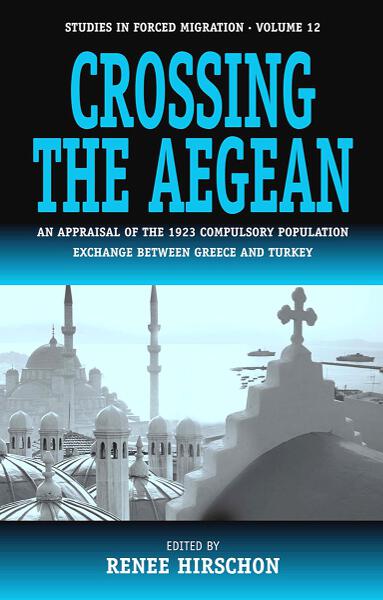
Crossing the Aegean
An Appraisal of the 1923 Compulsory Population Exchange between Greece and Turkey